Related: Vibrating Foam Rollers vs. Plain Foam Rollers: Which One Belongs in Your Living Room
I have spent twelve years as a physical therapist, roughly half of that in a clinic where the two most common sentences I heard were "my back just hurts" and "my legs won't loosen up." Recovery and posture gear is supposed to solve both of those problems. Mostly, it sells hope. The category has real tools inside it, but they are not interchangeable, and the marketing almost never tells you which one your body actually needs.
My rules are boring and specific. Two minutes per muscle group, pressure that is uncomfortable but not painful. Roll before a workout to prep, roll after to recover, and understand that those are two different jobs. A massage gun goes on muscle bellies, never on bones, joints, or your neck. A brace or a posture garment is a cue, not a cure. If you are crying during a session, you are not recovering, you are just having a bad time.
The four tools below are the ones I come back to when someone asks what to buy for a home routine. One rolls. One hammers. One cues your shoulders back. One supports a spine that needs help right now. I will tell you who each one is for, and who should keep their money.
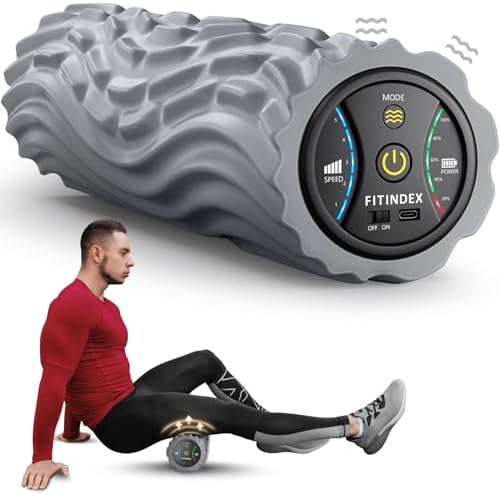
Best Overall: FITINDEX Vibrating Foam Roller
If you are buying one piece of recovery gear and you want it to cover the most ground, this is the category I point people toward. A vibrating roller with five speed settings and a rechargeable battery does not ask you to find an outlet, and it does not ask you to be a hero on the first pass.
The vibration does something firmness alone cannot do. It gives your nervous system a competing signal. For the people who guard, brace, and hold their breath the moment they feel pressure, that is the difference between a two minute set and a thirty second set that ends with the roller in the closet. Rolling works because of blood flow and nervous system tone, not because you pulverized a knot into submission. Anything that helps you stay on the roller long enough to get that effect is doing real work.
I have said for years that a good firm roller gets you about 80 percent of the way there, and I still believe that. Vibration is a luxury. It is just the luxury that makes the other 20 percent reachable for a normal person with a job, a commute, and a low tolerance for discomfort. On the lowest speed it is a gentle hum you can breathe through. On the higher speeds it is a serious input for quads and calves that have been locked up since a long run.
What I would look for in any vibrating roller: a low setting that is genuinely gentle rather than a token speed, a rechargeable battery instead of a drawer full of disposables, and a surface you can wipe down after a session. Check current Amazon price.
Who should skip it: anyone who is already consistent with a plain high density roller. This is an upgrade, not a fix. And if your goal is to destroy an IT band knot in one session, no roller on the market will do that for you, vibrating or otherwise.
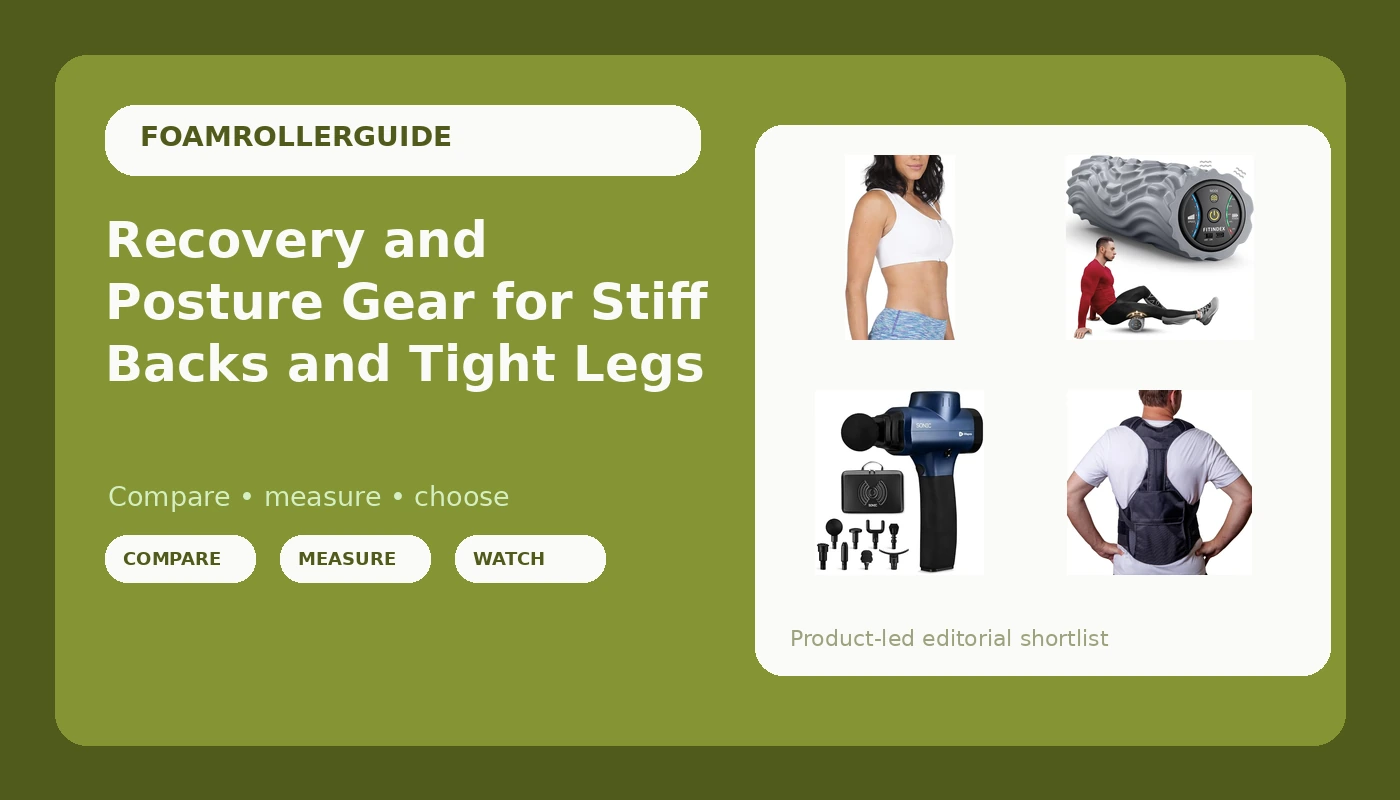
Best for Posture Cueing: ALIGNMED Women's Zipper Posture Sports Bra
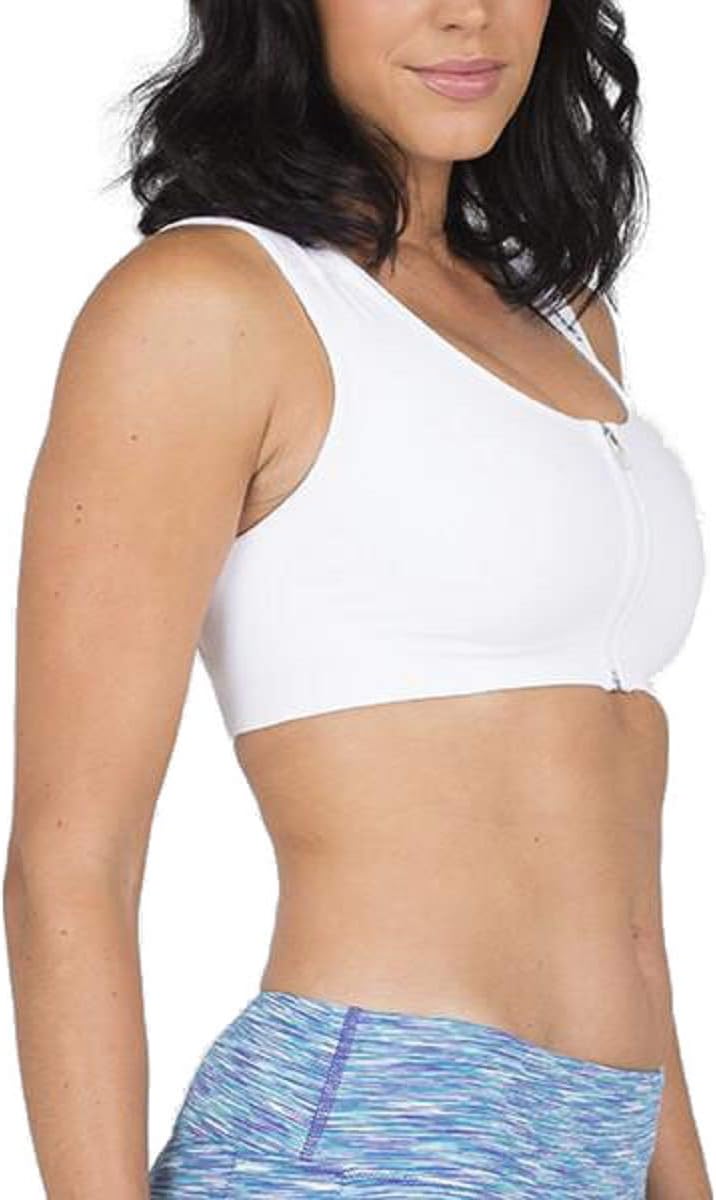
Posture garments work on one principle: they make the correct position easier to find, so you can notice when you leave it. That is a cue, and cues are genuinely useful. What they are not is strength. The muscles that hold your shoulders back still have to do the work, which is why I tell people to wear something like this for part of the day and then take it off.
The design choice that matters here is that it is a sports bra, not a medical device you have to build a routine around. It goes on with the rest of your clothes, and the front zipper means you are not wrestling a tight band over your head or dislocating a shoulder to get out of it. If a posture tool is annoying to put on, you will not put it on, and a posture garment in a drawer is worth exactly nothing.
Who should skip it: anyone expecting a garment to fix a shoulder problem with no other work involved. A posture bra is a reminder system, not a treatment plan. Pair it with something that actually trains the muscles, and it earns its place. If your shoulder pain is sharp, comes with numbness or tingling into the hand, or wakes you up at night, that is a conversation with a clinician, not a shopping decision. Check current Amazon price.
How I evaluate recovery gear
I run every tool through the same four questions before I would recommend it to anyone.
First, does the density or the setting match a real clinical need? A soft roller for a ribcage is correct. A soft roller for hamstrings is a lie, and the word "deep tissue" printed on a squishy surface does not change the physics. Second, can a normal person use it without hurting themselves? If the answer requires a demonstration and a spotter, it is not a home tool. Third, does it survive six months of real use? Rollers that flatten, inflatable rollers that pop mid-session, and motors that develop a rattle are all money set on fire. Fourth, would I hand it to a patient and feel good about it?
That last question filters out most of what is on the market. It is also why I do not recommend massage guns for the neck or the spine, ever. Percussion is a hammering action, and hammering a vertebra or a rib is not a recovery strategy. Muscle bellies only. And I will not use the phrase "break up scar tissue," because that is not what rolling does. It changes blood flow and it changes how your nervous system interprets input. That is plenty.
Analysis and notes
Density is about the target, not the price tag. A firm roller belongs under a quad, a glute, or a calf. A softer surface belongs against a ribcage, a lower back you are still getting to know, or any area that is currently angry. Buying one firm roller and using it on everything is how people end up sore in the wrong places.
Percussion is its own category with its own rules. A gun with eight heads and five speeds is useful mostly because the low speeds are usable and the soft heads let you work a quad without feeling like you lost a fight. The rounded ball head is the workhorse. The pointed heads are for pinpoint work on a muscle belly, and they should never touch bone. Thirty to sixty seconds per area, moving, not parked.
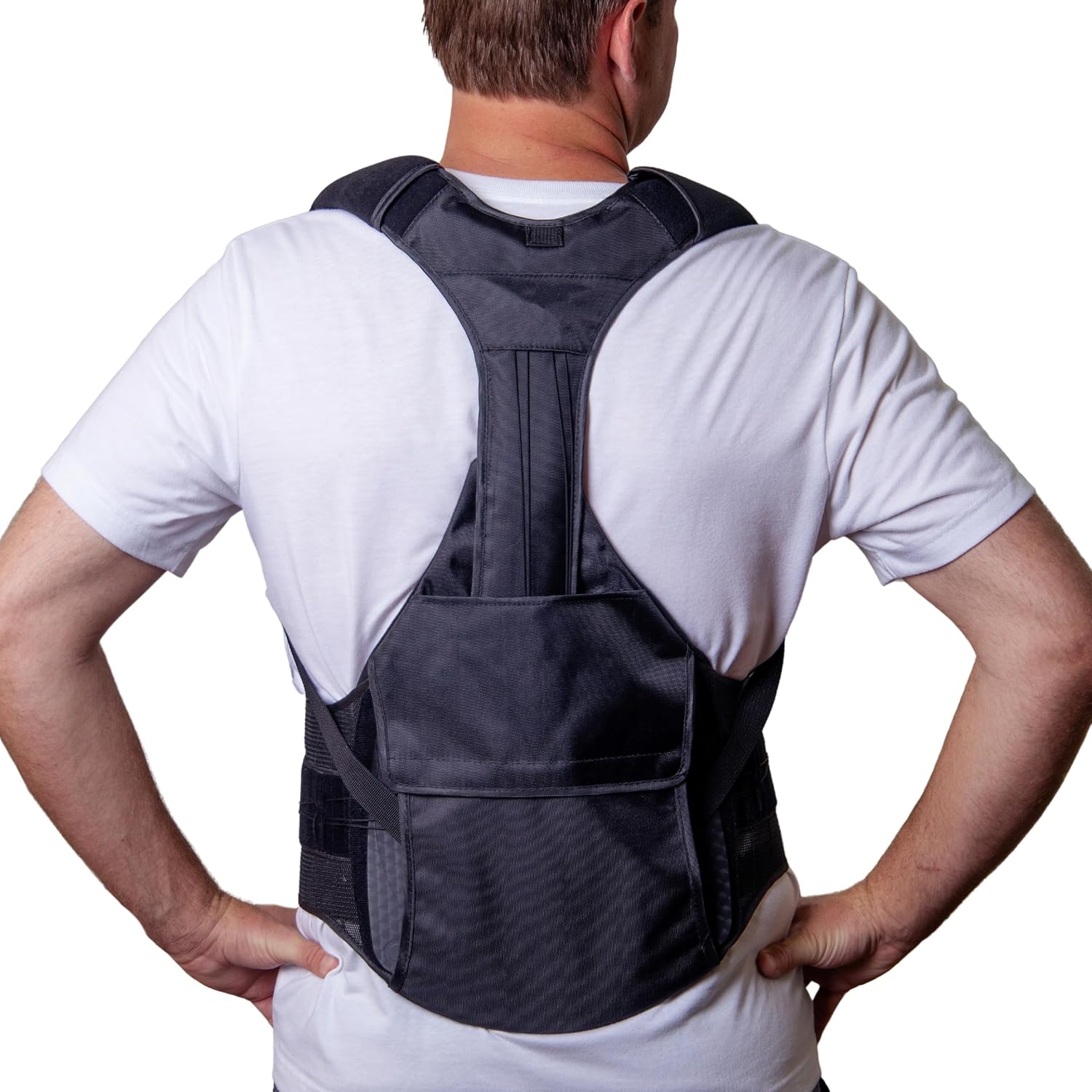
Braces deserve an honest conversation. A thoracic lumbar support brace is a support tool for a phase, whether that phase is a flare-up, a return to work, or a recovery window after an injury. It is not a lifestyle. Wear it when you need support, use the pain-free window it gives you to move and rebuild, and work with a clinician on the plan for coming out of it. A brace that becomes permanent is a brace that stopped doing its job.
Posture garments are the same idea in a smaller package. They cue. You still train.
And the timing rule that people get wrong constantly: rolling before a workout is preparation, rolling after is recovery. Static, long-hold stretching before a heavy session can dull your output. A few minutes of rolling to feel looser and warmer is fine. The long, slow, two minutes per muscle group work belongs after, or on its own, in the evening.
The recovery and posture gear reference table
This is the short version, the one I would text to a friend who asked what to buy.
| Tool | Best for | How to use it | Notes |
|---|---|---|---|
 Visit on Amazon → FITINDEX Vibrating Foam Roller |
Quads, calves, glutes, and anyone who tenses up under pressure | Start on the lowest speed, two minutes per muscle group, breathe through it | Rechargeable, five speeds, the most versatile single purchase here. Check current Amazon price |
 Visit on Amazon → LifePro Sonic Massage Gun |
Stubborn quads, hamstrings, and calves that will not let go | Lowest speed that feels productive, 30 to 60 seconds per area, keep it moving | Muscle bellies only. Never the neck, spine, or joints. Check current Amazon price |
| <img src="/images/products/B07CTMYFNF.jpg" alt="ALIGNMED Women's Zipper Posture Sports Bra | Support & Posture Corrector | Improve Shoulder & Body Strength | Pain Relief" width="340" style="border-radius:8px;max-width:340px;width:340px;height:auto;max-height:420px;object-fit:contain"> ALIGNMED Women's Zipper Posture Sports Bra |
 Visit on Amazon → ComfortCore TLSO Back Brace |
Thoracic and lumbar support during a flare-up or a return-to-work phase | Wear for the support you need, use the pain-free window to move | A phase tool, not a lifestyle. Check current Amazon price |
ComfortCore TLSO Back Brace - Thoracic Lumbar Support - L0457
A thoracic lumbar support brace covers more real estate than the little lumbar belts most people picture. It wraps the upper and lower back together, which is what you want when the whole segment is unhappy rather than one spot. The purpose of a brace is to reduce the demand on the tissue long enough for the irritated structure to calm down and for you to move without flinching. That window is the treatment. The brace is what buys you the window.
The mistake I see most is people treating a brace as a permanent solution. Support is not strength. If you are in a flare-up, or you are going back to a job that involves lifting before your back is ready, a brace earns its place for that stretch of weeks. Then you taper it while you rebuild capacity.
LifePro Sonic Massage Gun Percussion Muscle Massager, 8 Heads & 5 Speeds
A massage gun is not a replacement for a roller. It is a different tool for a different problem. The roller covers broad areas with your body weight doing the work. The gun gets into a specific quad or calf that has been tight for a week, and it does it while you sit on the couch, which means you will actually use it.
Eight heads and five speeds is more choice than most people need, but the range is the point. The lowest speed is the one that gets used most, and the soft round head is the one that stays on the device. The rule does not change: muscle bellies only, moving constantly, no parking on a spot, and never on the neck or spine. If you want one tool for recovery after a long run, this is the one that reaches the places a roller cannot.
Should you buy the FITINDEX Vibrating Foam Roller?
Yes, if you want one tool that does the most work for a home routine. The low speed is gentle enough to breathe through, the rechargeable battery keeps it on the floor instead of in a drawer, and the vibration gets people to stay on it long enough for rolling to actually do something. It will not out-perform consistency. Nothing does. But it removes the most common excuse, which is that rolling hurts too much to continue.
Should you buy the ALIGNMED Women's Zipper Posture Sports Bra?
Yes, with clear expectations. It cues shoulder position, it fits into a normal day, and the front zipper means you will not avoid it. It does not build the strength that holds your shoulders back, so pair it with actual training. Buy it as a reminder, not as a cure, and it will earn its place in your rotation.
The pattern across all four of these tools is the same one I repeat in the clinic every week. Support and recovery gear buys you a window. What you do inside that window is the part that changes anything. Buy the tool that fits your routine, use it for two minutes per muscle group, and keep it somewhere you can reach without standing up. The best piece of recovery gear is always the one you actually use.