Related: Foam Rolling for Upper Back Tension: A Physical Therapist's Routine
I have fit posture braces in a clinic for twelve years, and the first thing I tell anyone who asks about a posture corrector back brace is that it is a reminder, not a treatment. The brace does not strengthen your back for you. What it does is give your nervous system a gentle cue to bring the shoulders back and stack the ribcage over the pelvis, and that cue is useful for exactly as long as you keep doing the boring work: rows, carries, and time spent moving instead of sitting.
That is not a reason to skip one. Some people need a reminder they can feel. In the first few weeks, the habit of slumping is stronger than the intention to sit up, and a strap that pulls your shoulders back can interrupt the slump twenty times a day without you thinking about it. That is the whole mechanism, and it is a good enough reason to own one.
What I will not tell you is that a brace fixes anything permanently. Nothing you wear for an hour a day outworks eight hours of sitting. The brace buys awareness. Strength and movement buy posture. Both matter, and the brace is the easier half.
Before you order, measure your chest at the widest point and your underbust, not your waist. A brace that rides up into your armpits will be in a drawer by week two. Then decide how much support you actually want, because the four options below sit at very different points on that scale. I still start most patients with a roller for thoracic extension before I hand them a brace, and I still take the brace away once they can hold the position without it.
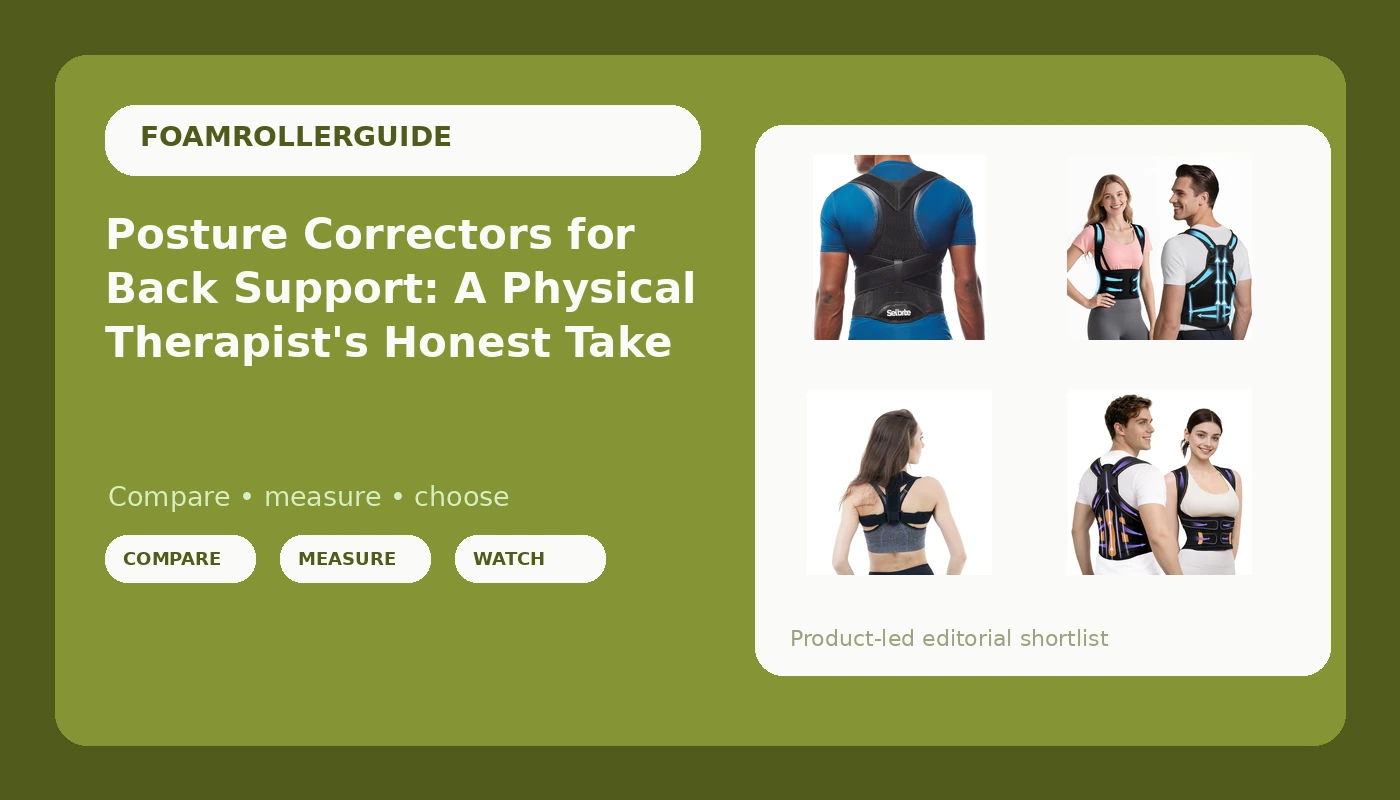
Most Coverage: Selbite Full Back Support Brace
The Selbite Posture Corrector is the widest-coverage design in this group. The straps come over the shoulders and cross at the back, and the back panel spans a good portion of the upper back rather than sitting as a narrow band between the shoulder blades. If your slump starts high, around the shoulders, that wider footprint is the part you will notice.
Fit is where this one lives or dies. Run a tape around your chest, not your waist, and check the underarm clearance before you tighten anything. The straps should sit in the soft tissue just inside the shoulder, not in the armpit itself. If you feel pressure in the armpit, the brace is sitting too low or the straps are too short for your torso.
Wear it in blocks. Twenty to thirty minutes at a time, once or twice a day to start, is plenty. Take it off before you drive if the straps limit your shoulder rotation, and never sleep in it. The point is to feel the position, remember it, and then reproduce it without the straps.
The trade-off is visibility. This is a full back support design, so it shows under a fitted shirt. If you need something you can wear to an office without anyone noticing, the lighter option below is a better match.
Firmest Reminder: Medical-Grade Back Brace
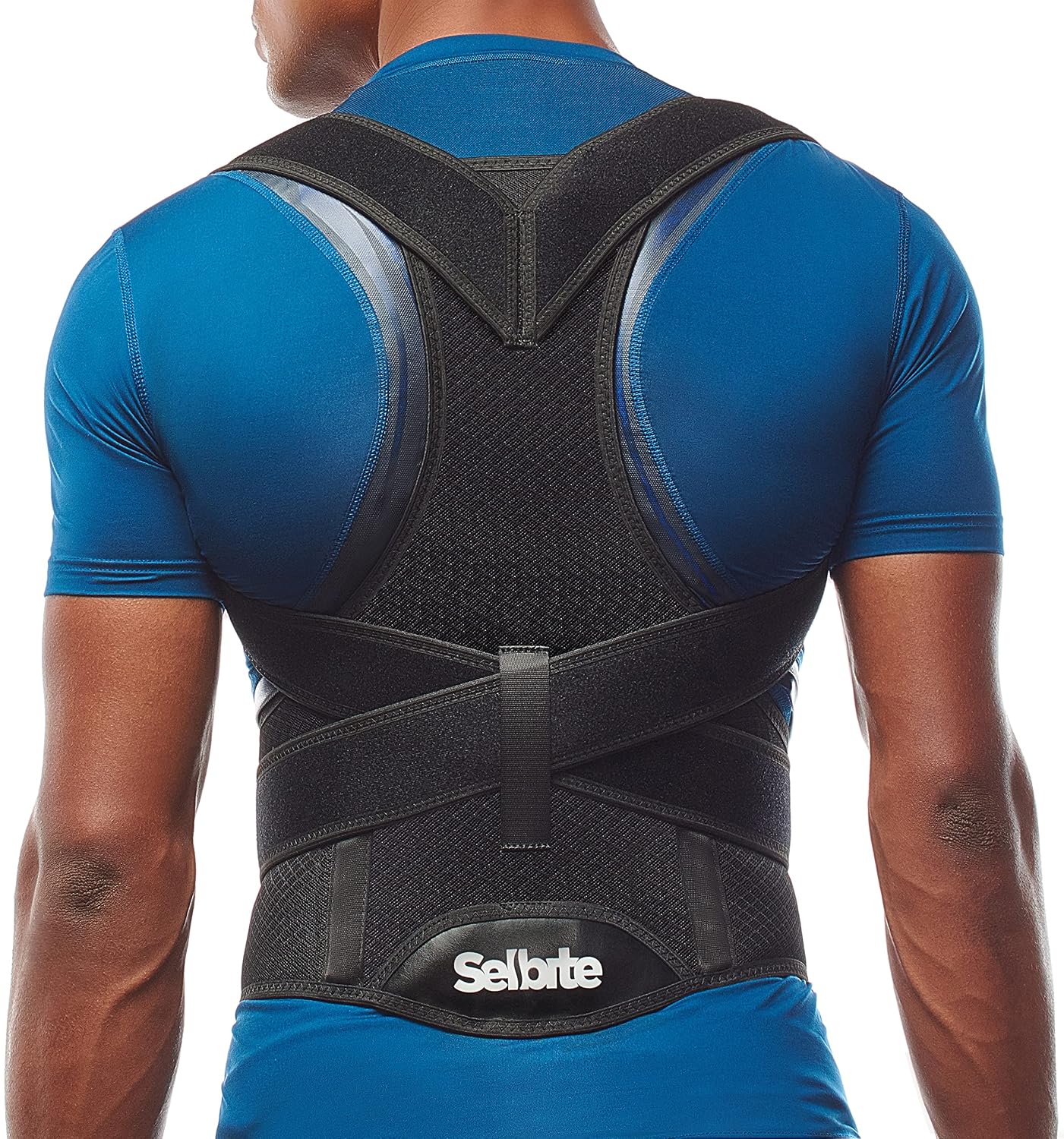
This is the firm end of the range. A medical-grade back brace is built with a stiffer structure and wider support surface, which means the cue is more insistent than a soft strap. For someone whose shoulders drift forward by mid-afternoon at a desk, that insistence is the feature.
It is also the one most likely to be worn wrong. Firm does not mean tight. I keep a pressure gauge in my treatment room for the "it hurts so it is working" crowd, and the answer is always the same: if you are gritting your teeth, you are not recovering, you are bracing against a device that is too small or too tight. Start at fifteen minutes, not an hour.
Because the structure is heavier, expect more heat and more visibility under clothing. That is normal. Wear it for the block of your day when your posture actually falls apart, then take it off. Do not treat it as a full-day garment, and do not wear it to bed.
One more thing. A firmer brace can mask weakness. If you can only hold your shoulders back while the straps are on, the brace is doing the work and your mid-back is not. That is a signal to add pulling work, not to tighten the straps further.
Lightest Option: Back Straightener Brace
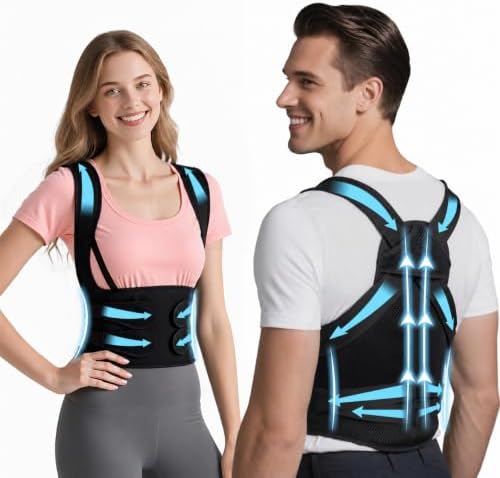
The back straightener brace is the simplest of the four. Thin straps, a light pull, and a low profile that disappears under a loose shirt. This is the one I suggest to people who are honestly not sure they will wear a brace at all, because the barrier to putting it on is almost zero.
The support level is light, and that is the honest trade-off. It will remind you to pull your shoulders back. It will not hold a heavy slump in place, and it will not give you the wide back panel coverage of the first option. For a first brace, or for travel, that is often the right call anyway. A brace you keep in the closet is a paperweight, no matter how much support it claims.
Two fit notes. Check that the straps do not roll into a thin cord under tension, and check the buckle position so it does not sit on a bony part of your spine. If the straps creep during the day, adjust them once and leave them alone. Constant fiddling is a sign the size is wrong.
This is also the easiest one to use as a training tool. Wear it for twenty minutes while you practice sitting tall, then take it off and see how long you can hold the position. That is the progression that matters.
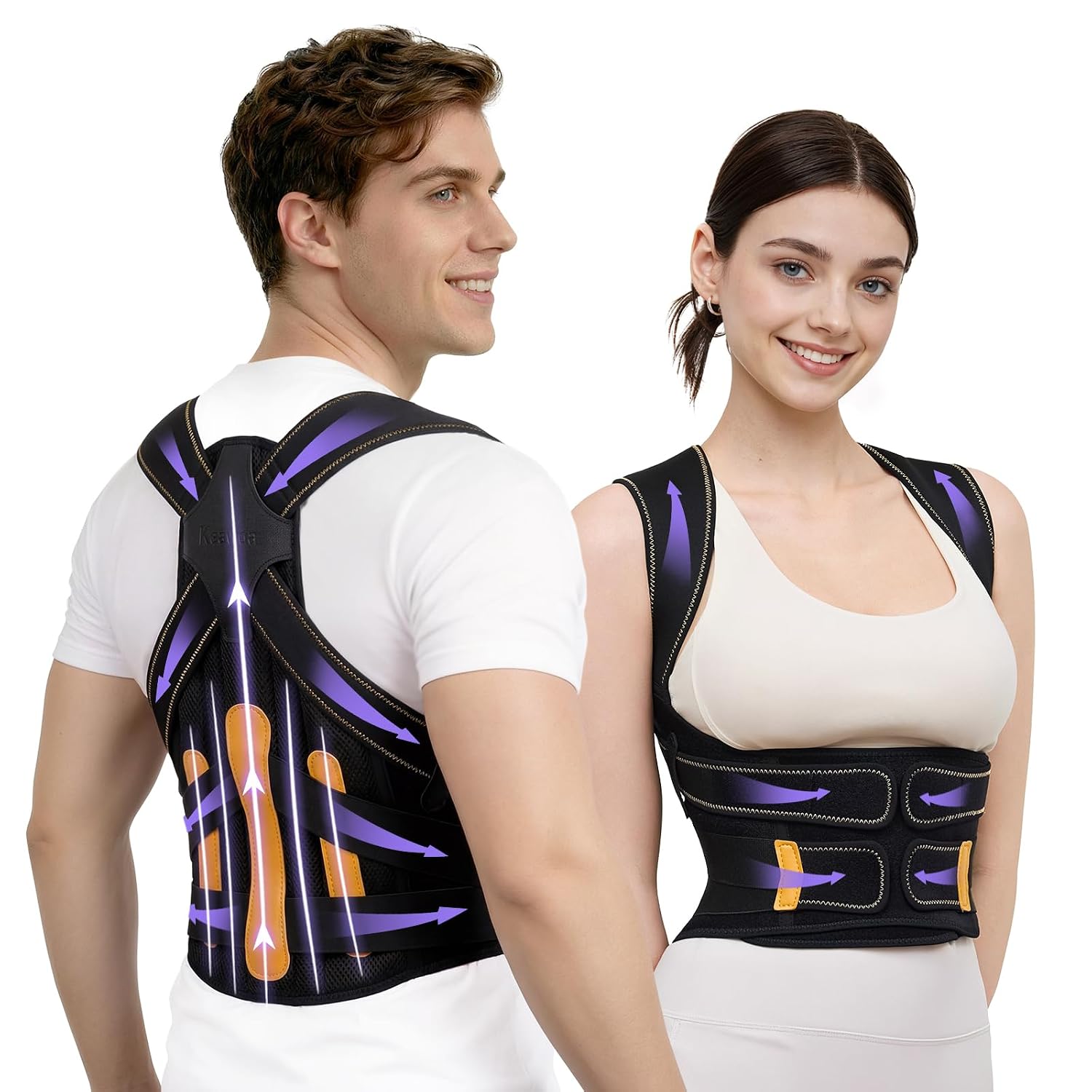
Sized Fit: 5x Enhanced Support Back Brace, Medium
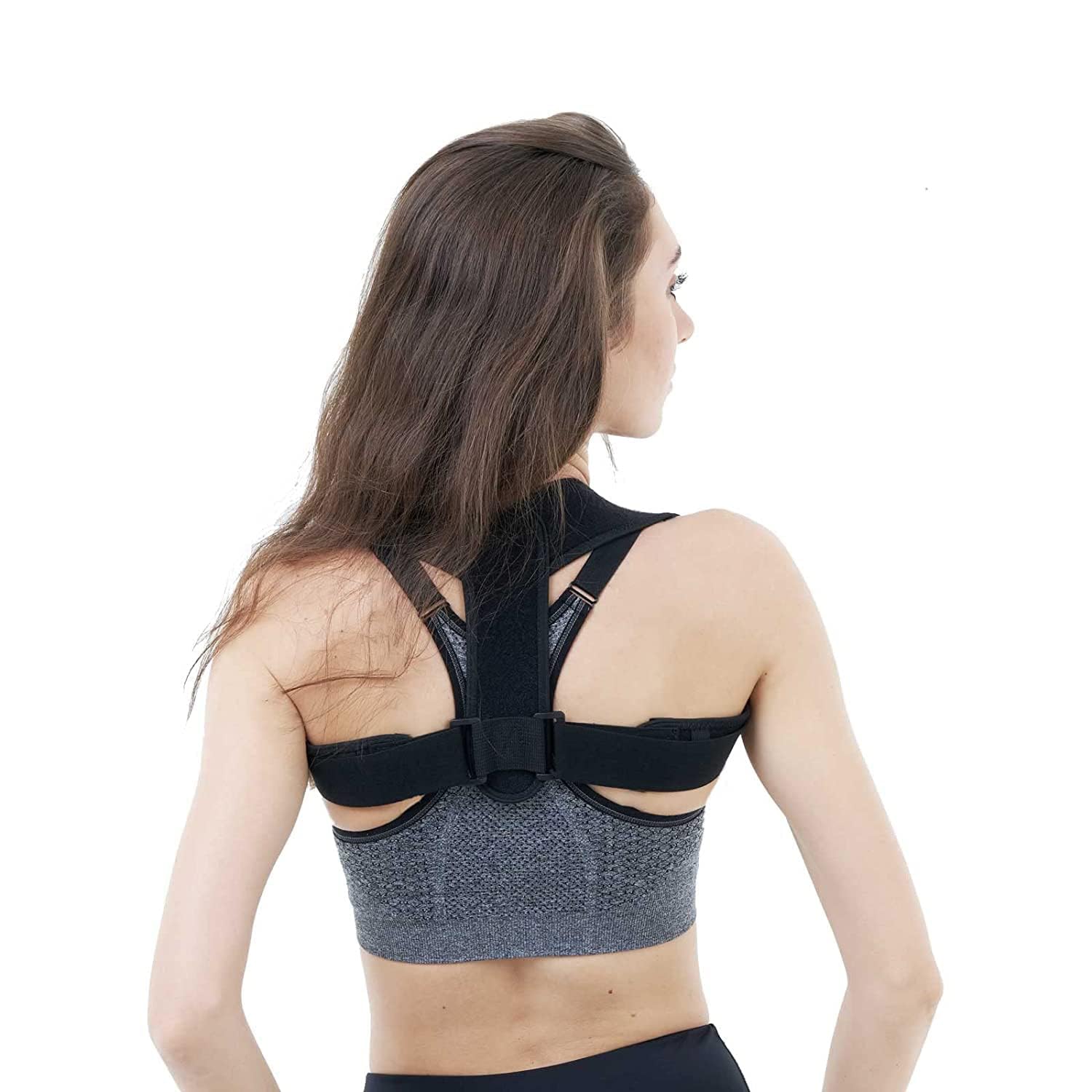
This one comes in sizes, and that is the detail worth paying attention to. A sized brace fits a defined chest range instead of relying on a single strap to cover every body, and a sized fit is the biggest single factor in whether a brace gets worn past the first week.
The name promises enhanced support, and the structure does sit between the light brace and the firm one. Adjustable straps let you dial the pull, which is useful if you want a lighter cue in the morning and a firmer one later. Ignore the number in the product name. It is marketing, not a measurement, and there is no standard it refers to.
Order by your chest measurement and check the chart before you commit. Too small digs into the ribs and armpits. Too large does nothing at all, because the cue never reaches your shoulders. If you land between two sizes, size up and use the adjusters.
Wear time is the same as everything else here: twenty minutes to start, build slowly, no sleeping in it, and no wearing it as a substitute for the pulling and carrying work that actually changes how you hold yourself.
How I evaluate a posture brace
I judge these the same way I judge them in the clinic, on a short list of things that decide whether a brace gets used or abandoned.
Underarm clearance comes first. If the straps press into the armpit when you reach forward, the brace is wrong for your torso length, and no amount of adjusting fixes it. Next is panel behavior. A back panel should lie flat against the upper back, without rolling or twisting when you move. Then strap width and hardware placement, because thin straps under tension turn into cords and hard buckles find the spine.
Adjustability matters more than peak firmness. A brace with a wide adjustment range can be dialed to a light cue for a first week and a firmer one later. Breathability matters in summer, and so does visibility under a normal shirt, because a brace you are embarrassed to wear is a brace you stop wearing.
Last, I look at the seams and the hook-and-loop closure. That is what fails first on cheap braces. If the closure stops gripping, the brace is done, no matter how good the panel is. This is the same checklist I use for rollers, and it is why I do not trust a firmness claim printed on a package.
Analysis: what the differences actually mean
All four of these work through the same mechanism, which is proprioception. The straps pull your shoulders back, your nervous system notices the change, and for a little while you hold a better position on your own. Nothing is being "realigned" and nothing is being "broken up." I say this plainly because the marketing around posture gear has gotten creative, and because patients who expect structural change from a strap quit when the strap comes off.
Dosage is the part people get wrong. Twenty to thirty minutes, once or twice a day, is a real protocol. All day is not. The brace is a teaching tool, and teaching tools work in short, repeated sessions, not in one long marathon. If you want a rule: the brace comes off before you forget you are wearing it.
Pair it with something. A few minutes of thoracic extension over a roller before you put the brace on makes the position easier to find, and a set of rows after you take it off makes it easier to keep. That sequence, roll, cue, strengthen, is the whole program. The brace is one line of it.
And if you are dealing with pain that shoots down an arm or leg, numbness, or pain that wakes you at night, skip the brace and get evaluated. A posture strap is for healthy people with a habit problem, not for a nerve problem.
The posture corrector reference table
This is the comparison I use when a patient asks which one to start with. Support level is my read of how insistent the cue feels, not a manufacturer rating. Wear time is a starting dose for a healthy adult with no pain.
| Product | Best for | Support level | Price | Notes |
|---|---|---|---|---|
 Visit on Amazon → Selbite Full Back Support Brace |
Wide upper back coverage | Moderate | $29.99 | Measure chest, not waist |
 Visit on Amazon → Medical-Grade Back Brace |
Firmer reminder, desk fatigue | Firm | Check current Amazon price | Warm and visible under shirts |
 Visit on Amazon → Back Straightener Brace |
First brace, discreet wear | Light | $39.99 | Easiest to travel with |
 Visit on Amazon → 5x Enhanced Support Back Brace, Medium |
Sized, adjustable fit | Moderate to firm | $29.98 | Check the size chart first |
None of these columns tells you whether you will wear the thing. That is the only number that matters, and you are the one who knows it.
Should you buy the Selbite Posture Corrector?
Yes, if you want the broadest cue across the upper back and you are willing to measure your chest before ordering. It is the most coverage you get here, which makes it a good fit for a slump that starts at the shoulders. It is not discreet, and it is not a full-day garment. Wear it in twenty-minute blocks, then take it off and do the work.
Should you buy the medical-grade back brace?
Yes, if a soft strap is not enough and you want a firmer, wider structure for the hours when your posture actually collapses. Go in with realistic expectations. Firmer means warmer, more visible, and less forgiving of a bad fit, so start at fifteen minutes and check the underarm clearance first. If it hurts, it is too tight, not more effective.
Should you buy the back straightener brace?
Yes, if you are testing whether you will wear a brace at all. It is light, simple, and easy to hide under a shirt, which is exactly what a first brace should be. Do not expect it to hold a heavy slump in place. Expect it to remind you, and then expect to do the strength work yourself.
Should you buy the 5x Enhanced Support Back Brace?
Yes, if you want a sized, adjustable brace instead of a one-size strap. The sized fit is the reason to pick it, not the number in the name. Check the chart against your chest measurement, size up if you are between sizes, and use the adjusters to keep the pull light enough that you forget you are wearing it. That is when it is working.