Related: Foam Rolling for Lower Back Pain: What to Roll and What to Leave Alone
Most of the people who ask me about posture correctors and neck traction have already tried the obvious things. They have stretched their chest, they have rolled their upper back, and by 3 p.m. their shoulders are rounding forward again. So they go looking for a device.
I am not against devices. I am against devices used as a substitute for the thing that actually fixes the problem, which is moving joints through their range and loading muscles enough to hold a position. A brace can remind you where your shoulders belong. It cannot build the endurance to keep them there. That distinction decides whether a posture corrector helps you or becomes a closet ornament.
I have spent twelve years treating backs and necks in a clinic, and I have watched the recovery aisle fill up with products that promise alignment and deliver a receipt. The four tools below are the ones I get asked about most. Here is what each one is genuinely good at, how to dose it, and who should leave it on the shelf.
Best Overall: Medical-Grade Back Brace Posture Corrector
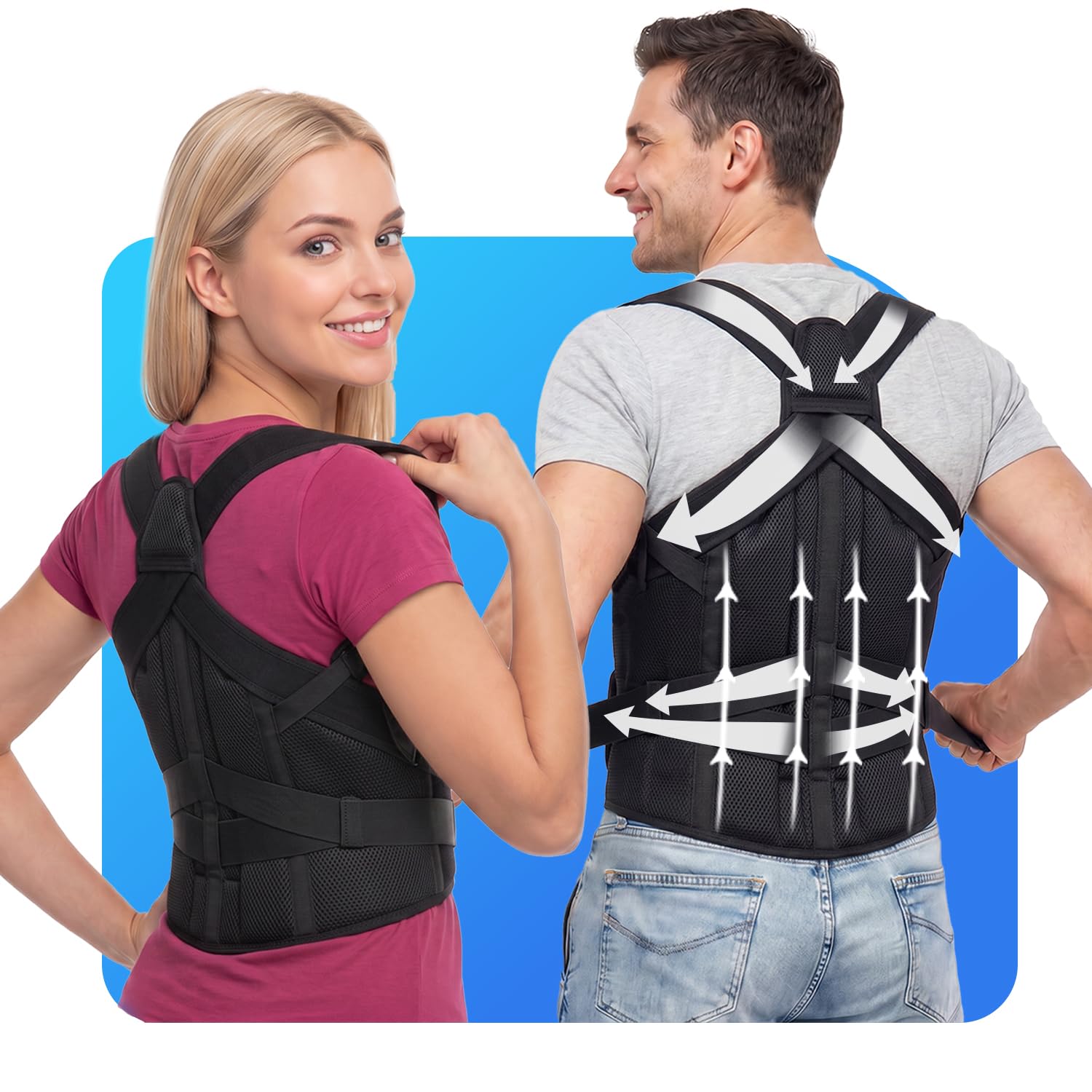
If you are going to start with one posture corrector, start here. This is a medical-grade brace built around the upper back, the kind that draws the shoulders back toward a neutral position and gives you a physical reminder of where your shoulder blades are supposed to sit.
That reminder is the entire value. Your posture drifts because the muscles between your shoulder blades fatigue before your chest does. A brace does not strengthen anything. What it does is interrupt the slump long enough for you to notice it, and noticing it is the part most people skip. The brace is a metronome, not a muscle.
So dose it like a metronome. Twenty to thirty minutes at a time, once or twice a day, during a task where you would otherwise collapse into your chair. Then take it off. The point of the off hours is that your own muscles have to hold the position without help. If you cannot get through a workday without it, that is not a sign you need a tighter brace. It is a sign you need to load the muscles that hold your shoulders back.
Best for Full-Torso Coverage: Full Back Brace with Lumbar Support
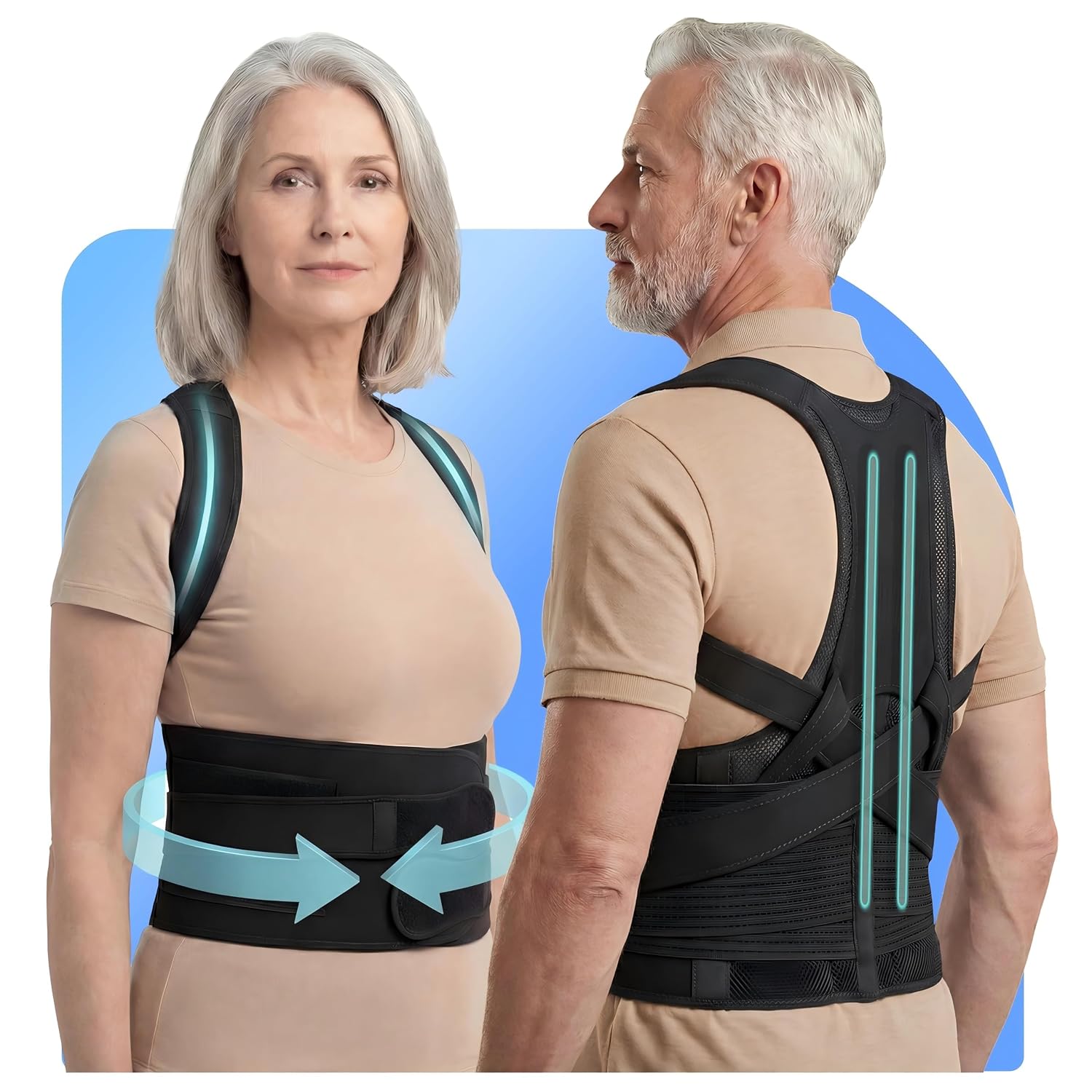
This one covers more ground. It is a full back brace with lumbar support, which means it runs from the upper back down through the low back instead of stopping at the shoulder blades. If your posture problem announces itself as low back fatigue rather than shoulder rounding, this is the shape of brace you want.
The trade-off is bulk. More coverage means more fabric, more heat, and more of a silhouette under a shirt. That matters more than people think, because the brace you actually wear is worth more than the brace that fits best in theory. If you work from home and nobody sees you, the coverage is free. If you are wearing it into an office, know what you are signing up for.
The rules do not change with the size. Short blocks, 20 to 30 minutes, and a hard stop before it becomes a crutch. A lumbar support brace can reduce the ache during a long drive or a lifting session, and that is a legitimate use. It is not a core workout. Your deep abdominal and back muscles still need to do their own job, and they cannot do it from inside a brace.
Best for the Neck: Cervical Traction Neck Alignment Device
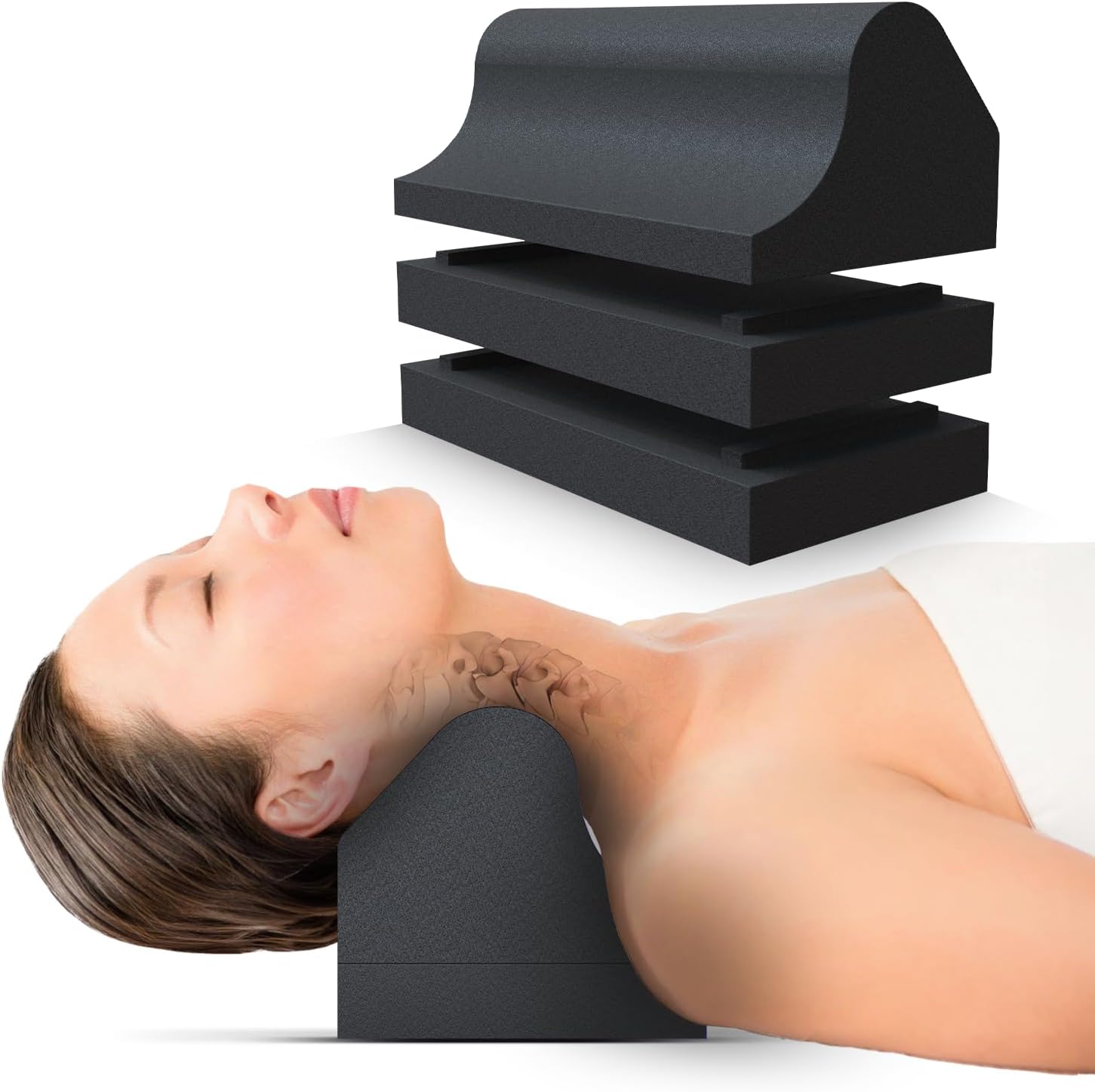
Of the four products here, this is the one I want you to be most careful with. A cervical traction device cradles the neck and applies a gentle stretch to the upper spine. For forward head posture, that stretch can feel like a genuine release, because the muscles at the base of your skull have been working overtime to hold up a head that drifted in front of your shoulders.
Gentle is the operative word. Start with the shortest session the instructions allow, and treat the first week as a trial rather than a treatment plan. Stop immediately if you feel numbness, tingling, dizziness, or anything shooting into an arm. Those are not "it is working" sensations. Those are your nervous system telling you to back off, and they are the reason I do not hand a traction device to someone with undiagnosed radiating symptoms.
This is also the one product in this guide I would want cleared by your clinician first, especially if you have any history of disc issues, instability, or a recent injury. Used properly and briefly, it can be a useful piece of a forward head posture program. Forced, rushed, or slept in, it is a bad idea. Never sleep in it.
Best for Muscles, Not Bones: ZanLLW Massage Roller Stick
A roller stick is the tool I recommend to people who travel, who have small apartments, or who cannot get their calves to release on the floor. This one is built for legs and arms: calves, quads, hamstrings, the front of the shin, the forearm. You roll slowly over a spot for 30 to 60 seconds, breathe, and move on.
Slow is the whole technique. Fast rolling over a trigger point does nothing except irritate it. If you are gritting your teeth, you are past the pressure that helps and into the pressure that just hurts. Back off to a five or six out of ten, and stay there long enough for the tissue to actually respond.
Two places this stick does not belong: your neck and your spine. I say the same thing about massage guns and I will say it here. Muscles tolerate rolling. Bones and joints do not, and the neck has both in a very small space. Keep the stick on limbs and on the meat of the upper back, and leave the cervical spine to the traction device and to a professional.
How I evaluate posture and recovery gear
Every tool gets the same four questions before it earns a spot in my recommendations.
First, does it match a real clinical need, or does it match a marketing category? "Deep tissue" printed on a soft roller is a lie, and a brace that claims to correct posture while you sleep is not solving the problem you have.
Second, can a normal person use it without hurting themselves? If the honest instructions require a clinician standing next to you, it does not belong in a home.
Third, does it survive six months of real use? I have watched too many cheap braces stretch out, too many rollers flatten, and too many inflatable anything pop mid-session.
Fourth, would I prescribe it to a patient? That is the test that removes the most products from the list, and it is why this guide is short.
Analysis: what these tools can and cannot do
Braces are cues. They change your awareness for the minutes you wear them, and that is it. They do not build endurance, they do not "retrain" a muscle by squeezing it, and they do not fix a spine. Used in short blocks alongside strengthening work, they help. Used all day, they take over a job your muscles were supposed to keep.
Traction is a window, not a cure. A cervical traction device can reduce tension in the neck and give you a stretch that feels genuinely good. It does not undo years of forward head posture on its own. What it does is make the neck comfortable enough that you can do the exercises and the positioning work that actually change something.
Rolling is about blood flow and the nervous system, not about breaking up scar tissue. I will say that plainly, because the internet will not. Rolling a tight calf does not tear adhesions apart. It changes how the tissue feels and how the nervous system reads it, and that is a real benefit. It is just a different benefit than the one printed on the package.
The order of operations is the same for everybody: move, then load, then use tools to make the first two more comfortable. If your routine is brace, traction, roller, and nothing else, you have bought three things and skipped the two that work.
The posture and recovery reference table
| Product | Target area | Best for | Watch out for |
|---|---|---|---|
 Visit on Amazon → Medical-grade back brace posture corrector |
Upper back and shoulders | Desk workers who slump by mid-afternoon | All-day wear, it is a cue and not a cure |
 Visit on Amazon → Full back brace with lumbar support |
Full back and lumbar spine | Low back fatigue, long drives, lifting days | Bulk and heat under clothing |
 Visit on Amazon → Cervical traction neck alignment device |
Neck and upper spine | Forward head posture, with clinician clearance | Forcing it, long sessions, radiating symptoms |
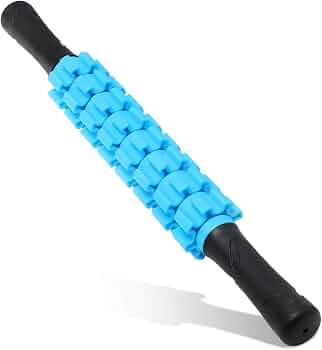 Visit on Amazon → ZanLLW massage roller stick |
Calves, quads, hamstrings, forearms | Trigger points and post-workout tightness | Not for the neck, spine, or joints |
The pattern in that table is the pattern I see in the clinic. The tools that help are the ones with a narrow job and a clear boundary. The tools that hurt people are the ones asked to do everything.
Should you buy the medical-grade back brace?
Yes, if you want a reminder and you are willing to do the strengthening work alongside it. Twenty to thirty minutes at a time, during the task where you slump hardest, then off. It is the simplest starting point of the four products here, and for a lot of desk workers, it is enough to break the slump-and-forget cycle.
If you are expecting it to fix your posture while you sit in it for eight hours, save your money. You will get a brace that smells like a gym bag and shoulders that are no stronger than they were in October.
Should you buy the full back brace with lumbar support?
Yes, if your complaints live lower, in the low back and the long muscles that run alongside the spine. The extra coverage is a real advantage during a drive, a long shift on your feet, or a lifting session where you want the reminder to brace.
Know the cost: it is warmer and bulkier, and it is harder to forget you are wearing it. If you want something discreet, the upper back brace is the better call. If you want coverage, this one earns its place.
Should you buy the cervical traction device?
Only with a plan. Cleared by your clinician, used for short sessions, and stopped the moment you feel anything shooting, tingling, or dizzy. Used that way, it can make a forward head posture program more comfortable and more consistent, which is the whole point.
Used as a fix on its own, it is a very expensive pillow. The neck does not unround because you stretched it for ten minutes. It unrounds because you changed where your head sits all day.
Should you buy the ZanLLW massage roller stick?
Yes, and this is the one I would buy first if you only buy one thing. It is the least risky tool here, it travels, and it gives you a way to work on calves and quads without getting on the floor. Slow passes, 30 to 60 seconds per spot, pressure that is uncomfortable but never painful.
Keep it off your neck and off your spine. Those are the two rules, and they cover almost every mistake people make with a roller stick.
Whatever you buy, remember the order: move, load, then reach for the tool. The gear is there to make the work easier, not to do the work for you.