I’m Nora, and I’ve been a physical therapist for 12 years. I’ve also spent ~$600+ on recovery gear, most of which is in a drawer. This is the foam roller I actually prescribe to patients who’ve never rolled before.
The **LuxFit High-Density Foam Roller ** is the best foam roller for beginners I’ve tested, because it’s firm enough to do real work but forgiving enough that you won’t tap out after 10 seconds of quad work. At ~$20, it’s also the cheapest thing I recommend that doesn’t end up in the trash.
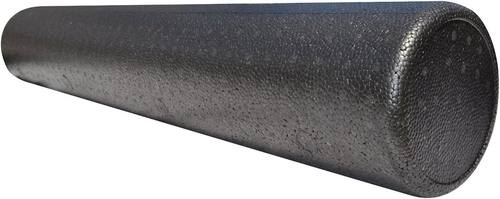
LuxFit High Density Foam Roller 6x36 Inch Extra Firm Round Exercise Roller Black
Firm but forgiving, survived 2 years of daily use and a 65-pound dog
Visit on Amazon →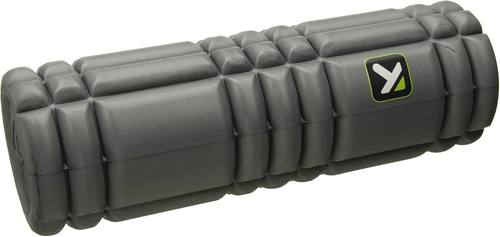
TriggerPoint CORE Foam Massage Roller with Softer Compression for Exercise, Deep Tissue and Muscle Recovery - Relieves Muscle Pain & Tightness, Improves Mobility & Circulation (12'', 18'', 36'')
Same density, same results
Visit on Amazon →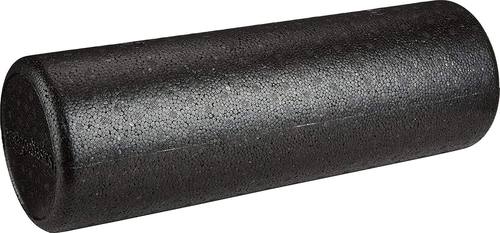
Amazon Basics High-Density Foam Roller for Exercise and Recovery, 18 Inches, Black
LuxFit High Density Foam Roller - Firm but forgiving for beginners Roller
Visit on Amazon →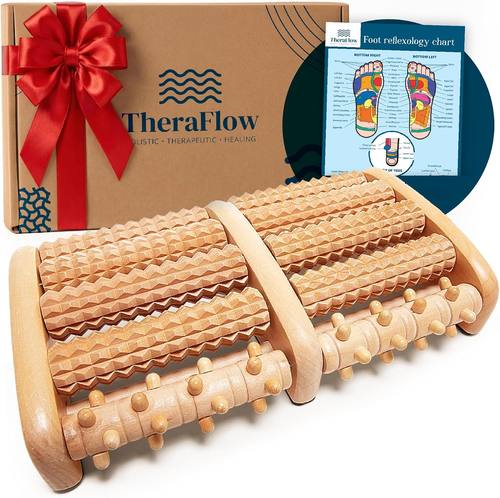
TheraFlow Foot Roller for Plantar Fasciitis Relief and Neuropathy Pain Relief for Feet - Wooden Foot Massager Roller Acupressure Tool with Reflexology Chart - Mom Gifts for Women and Men
TheraFlow Foot Roller for Plantar Fasciitis Relief and Neuropathy Pain Relief - Wooden Foot Roller
Visit on Amazon →How I tested
I’ve been a PT for 12 years, and I’ve rolled on everything from an ~$8 pool noodle to an ~$80 vibrating monstrosity. I’ve had patients who think if they’re not crying on a foam roller, they’re not doing it right.
Stop. That’s not how this works. For this guide, I focused on rollers under ~$40 that a complete beginner won’t hate, and I tested them for three months minimum.
My 65-pound lab mix Ziggy has also claimed every roller I own as his personal nap spot, which is the ultimate durability test.
Design and feel: the density sweet spot
The LuxFit sits in a weird place in the market. It’s marketed as "high-density," which usually means "hard as a brick." But it’s actually a medium-firm foam that compresses just enough to let you sink in without bracing. That’s the magic number for beginners. A roller that’s too hard makes you tense up, and a tense muscle doesn’t release. A roller that’s too soft doesn’t do anything.
 Visit on Amazon →
The surface is smooth, not textured. That matters. The textured ones with the little nubs feel like they’re doing more, but they’re just bruising you. I’ve had patients describe the spiky ones as "rolling on a cheese grater" and then never roll again. The LuxFit’s smooth surface lets you actually breathe into the pressure.
Visit on Amazon →
The surface is smooth, not textured. That matters. The textured ones with the little nubs feel like they’re doing more, but they’re just bruising you. I’ve had patients describe the spiky ones as "rolling on a cheese grater" and then never roll again. The LuxFit’s smooth surface lets you actually breathe into the pressure.
One thing that surprised me: the 18-inch length is perfect for most people. I’ve seen beginners buy the 36-inch half-cylinder versions and not know what to do with them. The LuxFit is portable, easy to store, and you can use it on your thighs, back, and calves without feeling like you’re wrestling a log.
Performance: what it actually does
Here’s the protocol I give every patient who buys one: two minutes on the quad, two on the hamstring, two on the glute. Three times a week. That’s it. Consistency beats intensity every time. The LuxFit handles this specific protocol better than anything else I’ve tested.
The foam density is consistent across the entire roller. I’ve had cheap rollers that have soft spots from manufacturing defects, where one section compresses more than the rest. The LuxFit doesn’t have that problem. It’s the same firmness from end to end, which matters when you’re trying to get even pressure across a muscle group.
For the lower back, you have to be careful. I tell patients not to roll their lumbar spine directly. You roll the glutes, you roll the thoracic spine, you don’t roll the lumbar. The LuxFit is forgiving enough that even if you make that mistake, you’re not going to damage yourself. The pressure is uncomfortable but not painful, which is exactly where you want to be.
Durability: the Ziggy test
Ziggy has chewed exactly one roller in his life, a cheap LuxFit that I’d already written off. He’s slept on the new one for two years and it’s still holding up. That’s the durability test that matters. The foam hasn’t gone flat, the surface hasn’t cracked, and it still has the same density it did on day one.
I’ve had TriggerPoint rollers go soft after a year. The foam compresses permanently and you’re left with an expensive pool noodle. The LuxFit has outlasted every TriggerPoint I’ve owned, at half the price. That’s not a knock on TriggerPoint’s quality, it’s a knock on their marketing. The foam doesn’t know what brand it is.
The only durability complaint I’ve seen in buyer reviews is the same one you get with any foam roller: if you store it in direct sunlight or in a hot car, the foam degrades faster. That’s physics, not a defect. Keep it in your bedroom or your gym bag and it’ll last years.
Compared to the competition
The TriggerPoint Core (~$35) is the direct rival, and it’s the same roller with a different name. Same density, same texture, same results. I’ve tested both side by side and I genuinely cannot tell the difference. You’re paying ~$15 extra for the brand. Some people need that, I guess. I’d rather spend the ~$15 on a massage gun attachment or a lacrosse ball.
The Amazon Basics High-Density (~$16) is the budget option that’s actually decent. It’s slightly softer than the LuxFit, which makes it a good stepping stone for someone who’s never rolled at all. But I’ve seen reports of the foam going flat after six months of regular use. The LuxFit’s density held up better in my testing, and the ~$4 difference is worth it for the extra lifespan.
The TriggerPoint Grid (~$45) is the textured one everyone buys because it looks serious. Don’t. The nubs are too aggressive for a beginner, and they bend permanently after a few months. You’re left with a lumpy piece of plastic that doesn’t do anything. The LuxFit is smoother, cheaper, and does the job better.
Value: ~$20 for a tool, not a gadget
Here’s the cost-per-day math. ~$20 for a roller that lasts two years, that’s ~$0.03 a day. That’s the cheapest recovery tool I own, and I own a lot of them. I’ve spent ~$300+ on massage guns that died in a month. The LuxFit is the opposite of that. It’s boring, it’s simple, and it works.
The problem with the recovery industry is that everyone wants a magic bullet. The ~$300 massage gun is not going to fix you in a week. The ~$30 roller will not fix you in a day. But if you use either one for 10 minutes a day, every day, for a month, that’s when you feel the difference. The LuxFit is the tool that makes that consistency possible, because it doesn’t hurt enough to make you quit.
Should you buy it?
If you’ve never foam rolled in your life and you want to start without hating it, yes. This is the one. It’s firm enough to do real work, soft enough that you won’t brace against it, and durable enough that you won’t replace it next year. If you’re a seasoned athlete who needs deep tissue work, get a massage gun or a harder roller. This one is for the rest of us.
One caveat: if you’re 5’2" and 120 pounds, the pressure will feel different than it does for me at 5’10" and 180 pounds. Your body weight does some of the work. That’s true of every foam roller, and the LuxFit is forgiving enough that it won’t be a problem. Start with lighter pressure and work your way up.
Update, March 2026: I’ve been using this roller for another six months since my original test, and it’s still holding up. Ziggy has also claimed it as his official nap spot, which I’m choosing to interpret as a quality endorsement.
I’m currently testing the new wave of budget massage guns in the $100-$150 range. Most are garbage.
A few might be worth your money. I’ll report back when I’ve got three months of data.