Related: Best Foam Rollers for Quads That Will Not Loosen Up
Related: How Long Should You Roll? A Two Minute Rule That Works
I have spent twelve years as a physical therapist, half of them in a clinic treating backs that "just hurt" and legs that "will not loosen up." Most of those people did not need another gadget. They needed a plan with a beginning, a middle, and a stopping point. But the right tool makes the plan easier to follow, and that is what this guide covers: foam roller and massage gun recovery gear I would actually hand to a patient, plus one posture brace that has a narrow and honest job.
I keep a pressure gauge in my treatment room for the "it hurts so it is working" crowd. Pain during rolling is a sign to back off, not a badge of honor. If you are crying, you are not recovering. Firmness is about the target, not the price. A soft roller for a ribcage is correct. A soft roller for hamstrings is a lie. And a roller you keep in the closet is a forty dollar paperweight, so buy the one that fits your actual routine, not the one that fits your ambitions.
Everything below is a tool I would prescribe, with the caveat attached. The caveat matters more than the tool.
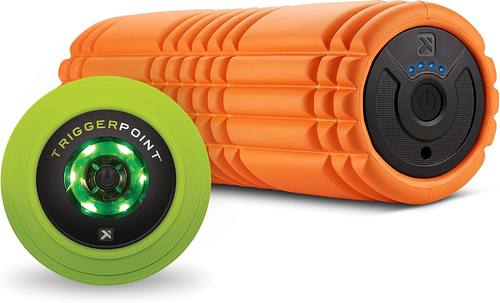
Best Overall: TriggerPoint GRID Vibe Plus Massaging Foam Roller and MB Vibe Massage Ball
The GRID has been my default recommendation for years, and the Vibe Plus version keeps the part that was already right. The density is the density most bodies can actually tolerate: firm enough to do something to a quad, forgiving enough that a first timer will not quit after one pass. That balance is rarer than it sounds. Plenty of rollers on the market are pool noodles with a fitness logo, and plenty of the others are torture devices with a handle.
What you get here is a roller plus a vibrating massage ball. The ball is the underrated half. Glutes, the spot just off your shoulder blade, the top of your calf: those are places a cylinder cannot reach and a ball can. I hand a ball to almost every patient with hip or upper back complaints, because it lets them work a trigger point without contorting themselves on the floor.
The vibration is a luxury, not a necessity. It helps you relax into the tissue, and for people who brace against pain, that relaxation is worth something real. But a good firm roller gets you most of the way there. If you already own a GRID and you use it, you do not need to upgrade. If you are starting from nothing, this is the first piece of recovery gear I would buy.
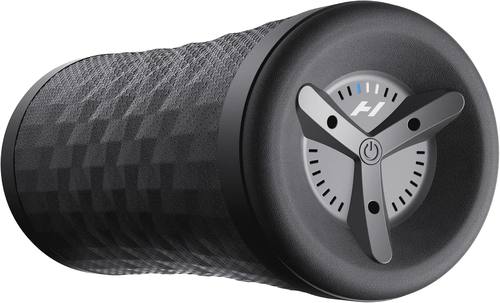
Best Vibrating Roller: Hyperice Vyper 3 Vibrating Foam Roller
The Vyper 3 is the vibrating roller for people who want vibration to be the feature rather than an add-on. The density is firm and the design is built around the motor, so the vibration is the point instead of a bonus. That matters if you are the kind of person who will actually use it because it feels good, and adherence is the whole game. The best protocol in the world is worthless if you skip it.
Here is my honest read. Vibrating rollers are a luxury. If you are choosing between a vibrating roller and a plain firm roller and money is tight, buy the plain firm roller and put the difference toward a massage gun. If you have already proven you will roll five days a week and you want the upgrade, the Vyper 3 is the vibrating roller I would point you to.
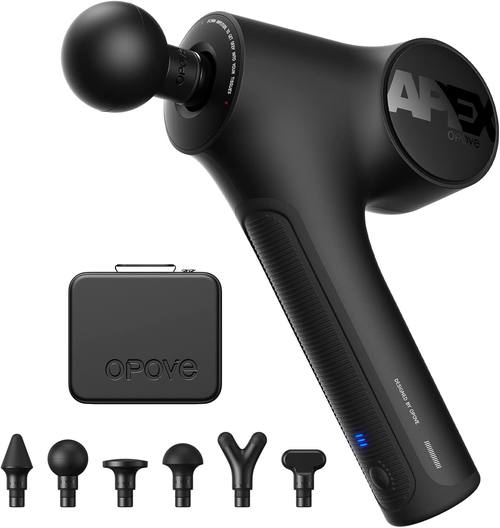
Best for Knots You Cannot Reach: Opove Apex Massage Gun
Percussion is for muscles. Not bones, not joints, and never your neck. I have seen the injuries, and they are avoidable. The Apex is a deep tissue gun with a 14.5mm amplitude, which lands in the range I am comfortable recommending for large muscle groups: quads, glutes, calves, and the meat along your upper back.
The spec that matters is not the top speed. It is whether you can hold the gun at a slow, low setting and glide it across a muscle for a minute without bruising yourself. Most people run a massage gun like they are trying to start a flooded engine, which is how you get soreness on top of soreness. Single speed machines are useless for this reason. The Apex gives you room to go slow.
A gun is not a substitute for a roller. It is what you reach for when one specific spot will not let go, or when you are too tired to get on the floor. If your quads are the problem, a roller does more for less money. If your calves lock up after every run and rolling them makes you want to quit, the gun is the tool that keeps you consistent.
Best Posture Brace for Desk Days: Posture Corrector for Women and Men
I am going to be careful here, because posture correctors are the most oversold category in this whole space. "5x Enhanced Support" is marketing copy, not a clinical measurement. A brace does not fix your posture. It reminds you what posture feels like, and then it is your job to build the muscles that hold it.
Used that way, a support brace has a real and narrow job. Twenty to thirty minutes during the part of your day when you collapse, as a cue, is reasonable. Wearing it for eight hours is not. Lean on a brace all day and the muscles that should be doing the work get to sit out, which leaves you more dependent on the brace, not less. That is the opposite of the goal.
This one comes in a medium, which means fit is the first thing to check before you commit. A brace that is too large slides and does nothing. A brace that is too small digs into your ribs. If you are between sizes, that is a genuine problem for a garment like this, and it is the main reason I do not treat braces as a first purchase.
How I evaluate recovery gear
I do not care how a tool looks on a shelf. I care about four things, and they are the same four questions I ask about any intervention.
Does the density or intensity match a real clinical need? A roller soft enough for a ribcage is correct for a ribcage and wrong for a hamstring. A gun with one violent speed is wrong for almost everything. Can a normal person with no training use this without hurting themselves? If a tool requires a tutorial and a spotter, it will not get used. Does it survive six months of real use? Rollers that flatten, inflatable rollers that pop mid-session, guns whose batteries quit after a season: those are the failures that matter. And would I prescribe it to a patient? If the answer is no, it does not belong in this guide, no matter how good the marketing is.
Analysis: density, vibration, and percussion
Density is the most misunderstood word in this category. It is just how firm the roller is, and each level has a job. Soft for sensitive areas and beginners. Medium for most bodies and most muscle groups. Firm for people who have been rolling for years and know the difference between productive pressure and damage.
Myofascial release is the fancy name for rolling. It works, but the science is more about blood flow and the nervous system than about breaking up knots. I will not tell you that rolling breaks up scar tissue, because it does not. What it does is give a tight muscle a reason to let go, and it gives you two minutes of attention on a body part you have been ignoring all day.
A trigger point is a tight knot in muscle tissue that refers pain elsewhere. Rolling one is a skill, not a sprint. You find it, you breathe, you hold pressure that is uncomfortable but not painful, and you move on. Two minutes per muscle group is a protocol. Twenty minutes on one quad is a punishment.
And rolling before a workout is different from rolling after. One preps, one recovers. They are not interchangeable. Before training, a short pass wakes tissue up and moves you through range. After training, slower work helps you come down. If you only have time for one, choose after, because that is where most people actually need it.
The recovery gear reference table
This is the table I keep in my head when a patient asks what to buy. Intensity is about matching the tool to the target, and price is something you check on the day, not something I quote from memory.
| Product | Best for | Where it belongs | Intensity | Price |
|---|---|---|---|---|
 Visit on Amazon → Visit on Amazon →TriggerPoint GRID Vibe Plus Massaging Foam Roller + MB Vibe Massage Ball |
Best overall | Quads, hamstrings, calves, glutes, plus the ball for glutes and upper back | Medium-firm, vibration optional | $227.98 |
 Visit on Amazon → Visit on Amazon →Hyperice Vyper 3 Vibrating Foam Roller |
Best vibrating roller | Large muscle groups, when vibration helps you relax into the tissue | Firm, built-in vibration | $209.00 |
 Visit on Amazon → Visit on Amazon →Opove Apex Massage Gun 14.5mm Deep Tissue |
Best percussion tool | Quads, glutes, calves, upper back musculature. Never the neck or spine | Deep tissue percussion, keep the speed low | $159.99 |
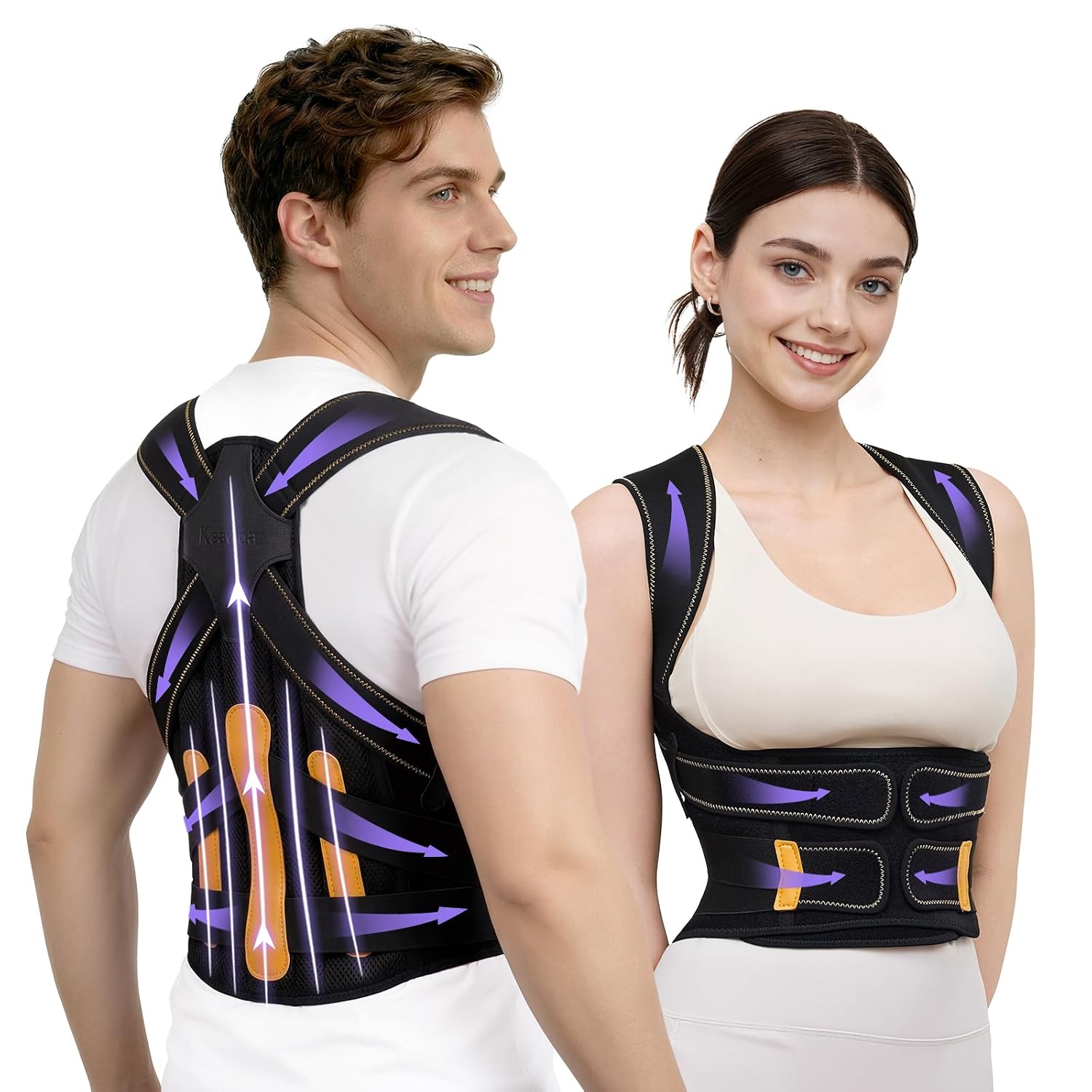 Visit on Amazon → Visit on Amazon →Posture Corrector for Women and Men, 5x Enhanced Support Back Brace, Medium |
Best posture reminder | Short sessions at a desk, as a cue, not all-day wear | Gentle support, not a treatment | $29.98 |
Vibrating rollers versus plain firm rollers
Vibration helps. It does not help five times as much as it costs. If you are deciding, ask yourself whether you already roll consistently. Consistent rolling with a plain roller beats occasional rolling with a vibrating one every single time. Buy the upgrade after you have earned it.
Where a percussion gun does not belong
Not on your neck. Not on your spine. Not on a joint, a rib, a bruise, or a bone. Not on a numb or tingling area, because that is a nerve issue and a gun will make it worse. Muscles only, and slow. If you are unsure whether something is a muscle, it is probably not.
Should you buy the TriggerPoint GRID Vibe Plus?
Yes, if you are buying one thing. It is the best all-rounder in this guide, the density fits most bodies, and the included vibrating ball handles the spots a cylinder cannot reach. The vibration is a bonus rather than the reason to buy it, and I would still recommend the GRID family to a patient who turned the vibration off entirely.
Should you buy the Hyperice Vyper 3?
Yes, if vibration is what keeps you on the floor. It is the vibrating roller I would point you to, and the firmness is honest. But be honest with yourself first: if you already own a firm roller and it is gathering dust, the problem is not the roller, and a more expensive one will not fix it.
Should you buy the Opove Apex Massage Gun?
Yes, if you have a specific spot that will not release, or you want something for calves and quads that does not require getting on the floor. Keep the speed low, keep it on muscle, and keep it off your neck and spine. If your budget only stretches to one tool, buy the roller first.
Should you buy the posture corrector?
Only as a reminder, and only for short stretches. It is not a treatment, it will not fix your posture on its own, and all-day wear lets your own muscles sit out. Check the sizing chart carefully, because fit is the whole ballgame with a garment like this. If you want to spend money on posture, spend it on a roller and a gun, then actually use them.
Recovery is training, not a break. The marathoner who taught me that was right. Pick one tool, use it consistently, and stop when it hurts. That is the whole protocol.