Related: Foam Rolling Your Quads: How Long, How Hard, and When to Stop
I keep a pressure gauge in my treatment room for the crowd that believes rolling only counts if it hurts. It does not. Pain during rolling is a signal to back off, not a badge of honor, and if you are crying on a roller you are not recovering, you are irritating tissue. That single misunderstanding is why so many recovery and posture tools end up as paperweights behind a closet door.
I have been a physical therapist for twelve years, half of them in a clinic treating backs that just hurt and legs that will not loosen up. I prescribe rolling the way a doctor prescribes medicine: specific, dosed, and with a reason. I have handled rollers that cost as little as a pool noodle and as much as a tank of gas, and my massage gun collection takes up half a closet at home.
What follows is the short list I actually reach for. Four tools, four jobs: a firm roller for the big muscle groups, a percussion gun for spot work, a premium gun for daily clinical use, and a cervical traction device for the forward head posture that shows up in almost everyone who sits at a desk. None of them are magic. All of them work if you use them the way they are meant to be used.
Best Overall: Amazon Basics High Density Foam
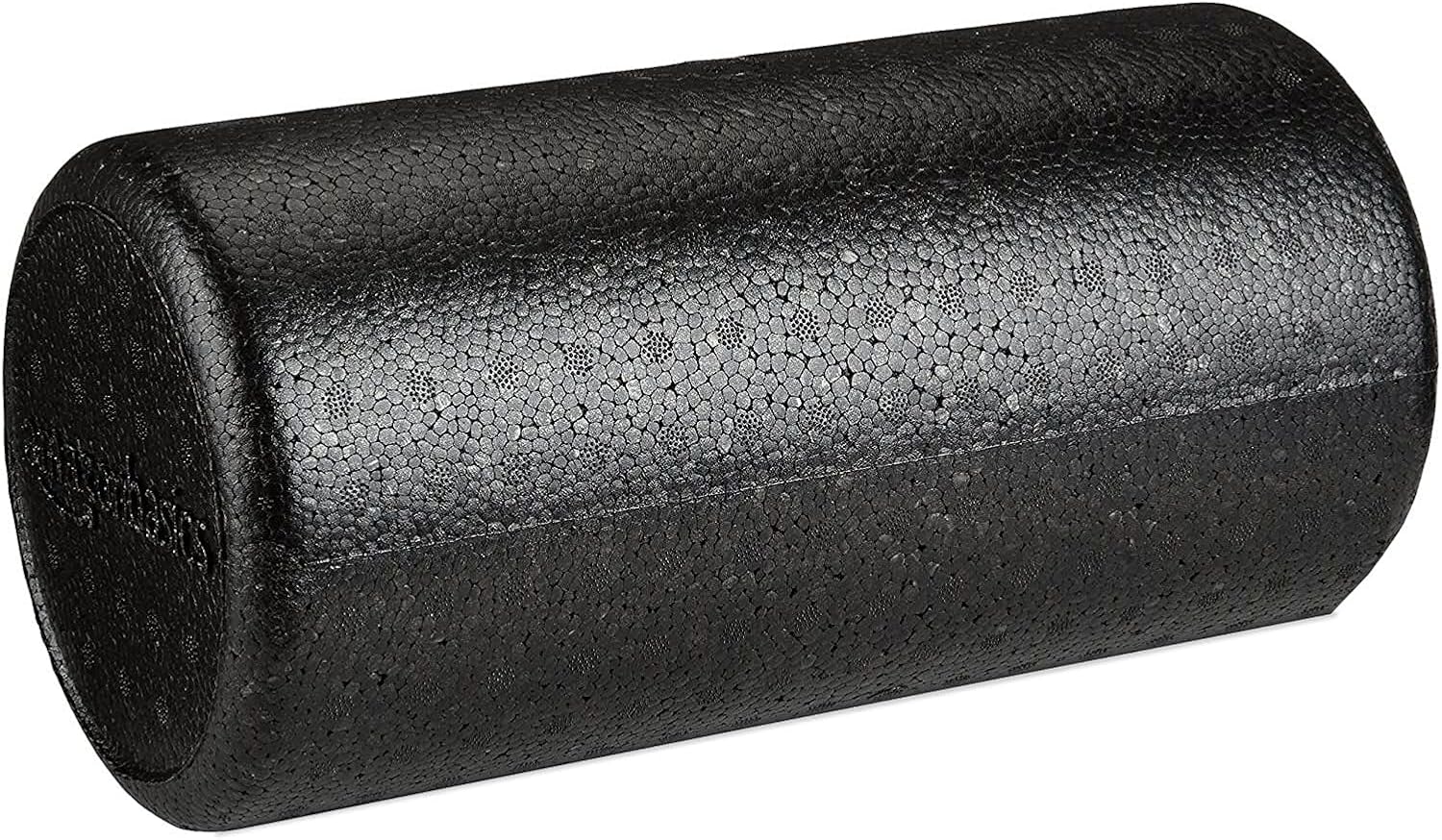
This is the roller I recommend first to almost everyone, and it is the least exciting product on this page. It is a straight cylinder of high density foam with no texture, no vibration, and no claims about breaking up scar tissue. That is exactly why it works. Density is the entire conversation with a roller, and high density foam holds its shape instead of collapsing into a marshmallow after three months.
A soft roller for a ribcage is correct. A soft roller for hamstrings is a lie. If you are rolling quads, hamstrings, calves, glutes, or lats, you want something firm enough to transmit pressure into the tissue rather than squishing away from it. This roller is honest firmness at a price that makes it easy to keep one in the living room and one in the gym bag.
The protocol matters more than the product. Two minutes per muscle group, slow passes, pressure that is uncomfortable but not painful. Breathe. If you are holding your breath and gritting your teeth, you have gone too far and your nervous system is guarding instead of releasing. Roll after a workout for recovery. If you roll before, keep it short and light, because pre-workout rolling is a warm-up, not a treatment.
Beginners sometimes find high density foam to be a lot on the IT band, which is a genuinely sensitive area. Take weight off the roller, start with the bigger muscle groups, and come back to the IT band once you have a feel for it. A roller you actually use beats a fancy one that scares you.
Best for Posture: Cervical Traction and Neck Alignment
I do not let patients use percussion guns on their necks, ever. I have seen the injuries. The neck is not a muscle group you hammer. A cervical traction orthotic is a different category of tool, and it is the only neck product I will discuss here.
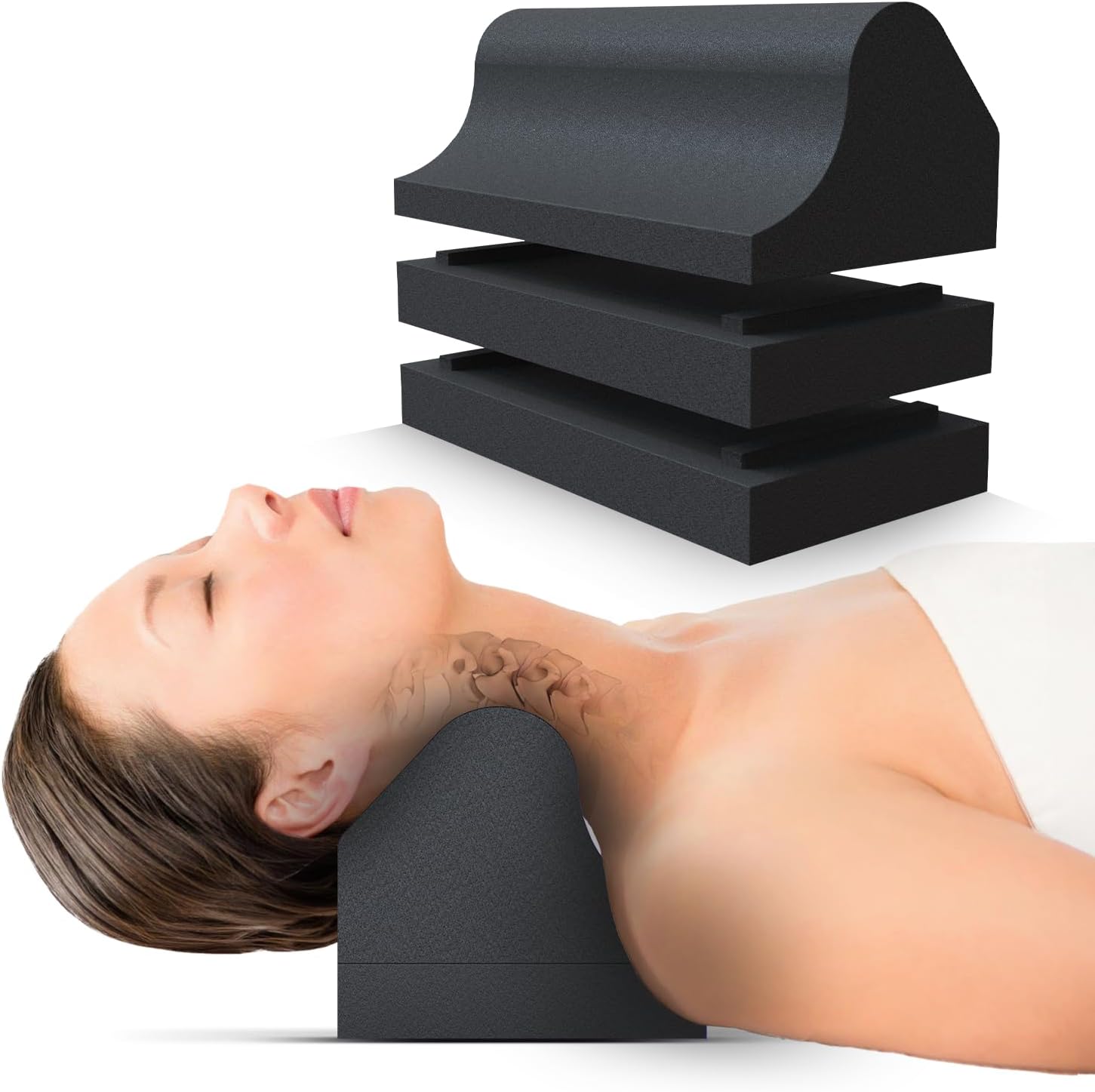
This device is built for the specific problem of forward head posture, the position your head drifts into after a long day at a screen. You lie down, the curve of the orthotic cradles the neck, and gravity does the work of gently stretching the cervical spine. The goal is not to crack anything. It is to give the neck a few minutes in a position that counteracts the one it spends eight hours in.
Dosing is everything with neck work. Start with a couple of minutes, not twenty. If you feel numbness, tingling, dizziness, or any increase in pain, stop and get evaluated. This is a tool for a mechanical posture problem, not for a disc issue, an injury, or pain that radiates down an arm. If you are not sure which one you have, that is a question for a clinician, not a product page.
Used conservatively, it is one of the few gadgets I have watched make a real difference for the desk-bound patient who cannot remember to fix their head position. It gives the neck a reset without asking you to think about it, which is the entire point.
Best Budget Massage Gun: TOLOCO Deep Tissue Massage Gun
A massage gun is a tool for muscle bellies, not for bones, joints, or your neck. That is the rule, and everything else is technique. This gun comes with ten replacement heads, which matters more than most people realize, because different heads let you match the tool to the tissue: a broad head for large muscle groups, a narrower one for spot work around the shoulder blade or the calf.
At this price you are buying percussion, not prestige. That is fine. For an athlete cooling down after a run, or someone loosening a stubborn quad while watching television, a budget gun does the job. What you should not expect is the control a clinician needs, and you should not go hunting for the deepest setting on day one just because it exists.
My rules for any percussion gun: keep it moving, never park it on one spot, stay on muscle bellies, and give a group a minute or two rather than ten. If a gun feels like a jackhammer with one speed, that is a design problem, not a challenge. You want to work slowly and precisely, and this one is a reasonable place to start.
It is also the gun I would hand someone who is curious but not ready to spend premium money. It travels well, it comes with enough heads to experiment, and if percussion turns out not to be your thing, you have not made a large commitment.
Best Massage Gun for Daily Use: TheraGun Therabody Prime
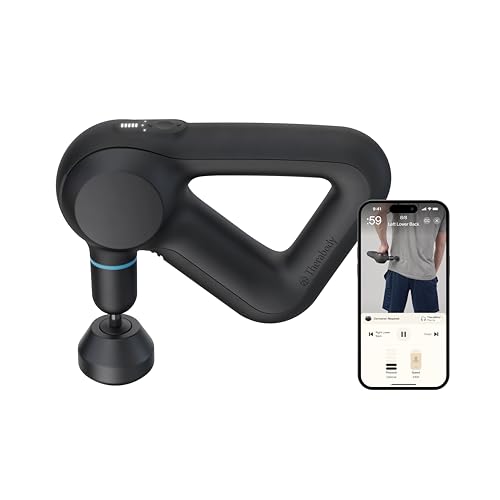
The TheraGun Therabody Prime is the gun I reach for when I want control rather than force. It is the fifth generation of the Prime line, and the refinement shows in how it handles slow, deliberate passes over a muscle belly, which is how you are supposed to use a percussion tool. Fast and hard is not deep tissue. Slow and controlled is.
I make fun of expensive recovery gadgets. I also bought one of these with my clinic discount, and it lives in my treatment room because it holds up to daily use by multiple people. If you treat yourself a few times a week and you want one tool that will still feel the same in a year, this is the one. If you are merely curious about percussion, the budget option above will tell you whether you like it.
Price is the honest difference. Check current Amazon price and decide whether daily, controlled percussion is worth the premium. For a clinician, a serious athlete, or someone who has already worn out a cheap gun, it usually is. For everyone else, it is a luxury, and there is nothing wrong with saying so.
One warning applies to this gun exactly as much as to the cheap one: no necks, no spines, no joints, no bones. The tool is better. The anatomy has not changed.
How I Test and Prescribe
I do not buy a recovery tool because a box claims it is deep tissue. I ask four questions.
Does the density match a real clinical need? A roller is either firm enough for the target tissue or it is not, and no amount of texture or vibration changes that math. Can a normal person use it without hurting themselves? If a tool requires instruction, it needs a warning label, not a marketing photo of someone smiling through obvious pain. Does it survive six months of real use? Rollers that flatten and guns that rattle are money set on fire. And would I prescribe it to a patient? That is the test that matters most.
I keep that pressure gauge in my treatment room because patients argue with me about pain and the gauge settles the argument. Pressure that makes you guard is counterproductive. Pressure that feels like a firm, tolerable stretch is where adaptation happens. Every tool here can be used badly, and the fastest way to use one badly is to assume that more is better.
What the Marketing Gets Wrong
Rolling does not break up scar tissue, and any product page that says so is selling you something. What rolling actually does is influence blood flow and the nervous system, and that is plenty. It changes how a muscle feels and how well it tolerates movement, which is why it helps you move better and hurt less.
Density is the other place the marketing lies. The words deep tissue printed on a soft roller are a contradiction, and a vibrating roller is a luxury rather than a necessity. Vibration helps, but a good firm roller gets you most of the way there for a fraction of the cost. Buy the firm one first.
Inflatable rollers are the third trap. They pop mid-session, and they are too soft to do the job past your first week.
The same logic applies to guns. Ten heads and a high speed setting do not make a better tool. Control does. If a gun cannot run slowly and precisely over a muscle belly, the extra power is decoration.
The Recovery and Posture Tools Reference Table
This is the short list in one place, sorted by the job each tool does. Pick by target and experience level, not by whichever page shouts the loudest.
| Product | Primary job | Best for | Price |
|---|---|---|---|
 Visit on Amazon → Visit on Amazon →Amazon Basics High Density Foam |
Firm rolling for large muscle groups | Quads, hamstrings, calves, glutes, lats | $11.69 |
 Visit on Amazon → Visit on Amazon →Cervical Traction Orthotic Neck Alignment Device |
Gentle cervical traction and alignment | Forward head posture, desk-bound necks | $39.95 |
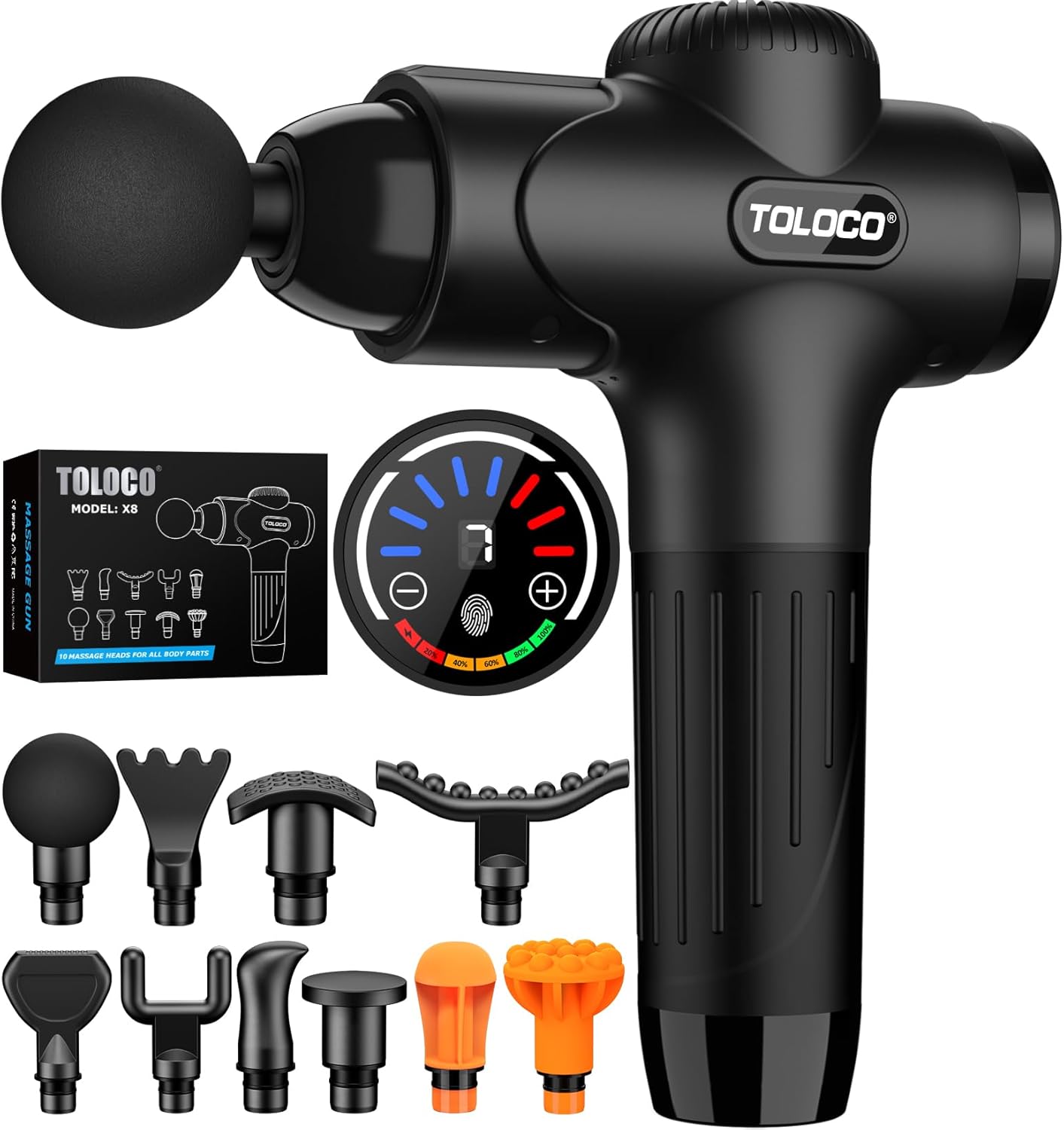 Visit on Amazon → Visit on Amazon →TOLOCO Massage Gun with 10 Replacement Heads |
Budget percussion with head options | Post-run legs, general spot work | $35.98 |
| <img src="/images/products/B0C42NZ9FR.jpg" alt="TheraGun Therabody Prime 5th Gen Deep Tissue Massage Gun | Black" width="340" style="border-radius:8px;max-width:340px;width:340px;height:auto;max-height:420px;object-fit:contain"> TheraGun Therabody Prime 5th Gen |
Controlled daily percussion | Clinicians, serious athletes |
Should you buy the Amazon Basics high density foam roller?
Yes, if you want one honest tool for the big muscle groups. It is firm, it is simple, and it does not pretend to be anything else. A soft roller for hamstrings is a lie, and this one is firm enough to actually transmit pressure instead of squishing away from it.
The only reason to skip it is if you already own a firm roller that has held its shape. If yours flattened by month three, that is exactly the failure this one avoids.
Should you buy the cervical traction device?
Only if your problem is mechanical forward head posture and you have been cleared for neck traction. Start with a couple of minutes, not twenty, and stop if anything tingles, goes numb, or hurts.
Treat it as a posture reset rather than a cure, and never reach for a percussion gun on your neck instead. That trade is the one that sends people to my clinic.
Should you buy the TOLOCO massage gun?
Yes, if you want to find out whether percussion suits you without spending much. It comes with ten heads, so you can match the tool to the tissue, and it handles the post-run leg routine fine.
Keep it on muscle bellies, keep it moving, and never use it on your neck or spine. If you outgrow it, you will know, because you will start wanting more control rather than more power.
Should you buy the TheraGun Therabody Prime?
If you will use it several times a week and you want control instead of raw power, yes. Slow and controlled is deep tissue. Fast and hard is not.
Check current Amazon price and compare it to how often you actually recover, because a gun that lives in a drawer is an expensive drawer weight. For daily clinical or athletic use, it earns the spot. For occasional curiosity, the budget pick above is the smarter first purchase.