Related: How to Foam Roll Your Quads Without Bruising Yourself
I answer the foam roller vs massage gun question in my treatment room at least twice a week, usually from someone who owns both and uses neither. Twelve years as a physical therapist, half of them spent working with backs that "just hurt" and legs that would not loosen up, and I can tell you the tool matters far less than the dose. The wrong dose with a good tool is still the wrong dose.
So this is not a list of the four most expensive recovery gadgets I could find. It is the four tools I would hand to four different people, plus the reasoning behind each one: a firm roller, a budget roller, a neck traction device, and a percussion gun. Buy the one that matches your target tissue and your existing routine, and you will use it. Buy the one that matches your ambitions, and it will live in a closet next to the ab roller.
I keep a pressure gauge in my treatment room for the "it hurts so it's working" crowd, and I will say here what I say there: pain during rolling is a sign to back off, not a badge of honor. If you are crying, you are not recovering.
Also read: What Myofascial Release Actually Does
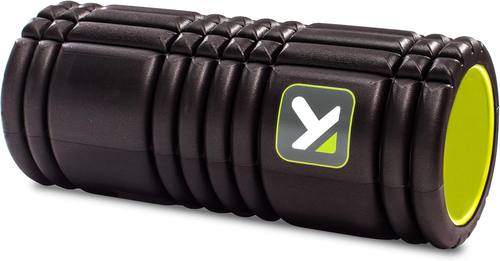
Best Overall: TriggerPoint GRID Foam Roller (13-Inch)
This is the best all-rounder I know of, and it is the roller I recommend first to most people. The firmness is right for most bodies: enough to get through a quad or a calf, not so much that a beginner quits after two sessions and decides rolling is a punishment.
The reason I keep coming back to it is the construction. A lot of budget foam goes soft in the middle within a few months, and once a roller is soft it stops being a tool and becomes a prop you step over. This one has a hollow core that holds its shape, and that matters more than any surface pattern or marketing name. I have watched too many people buy a cheap roller twice and spend more than they would have on one good one.
The 13-inch length is the part people underrate. Short enough to travel with, long enough to lie on lengthwise for the thoracic spine, which is where I use it most: mid-back, around the shoulder blades, the spot between them that nobody can reach on their own. It is not for your low back bones, your ribcage, or a fresh injury. Roll the muscle, not the skeleton.
Two minutes per muscle group, slow passes, pressure that is uncomfortable but not painful. That is a protocol, not a suggestion.
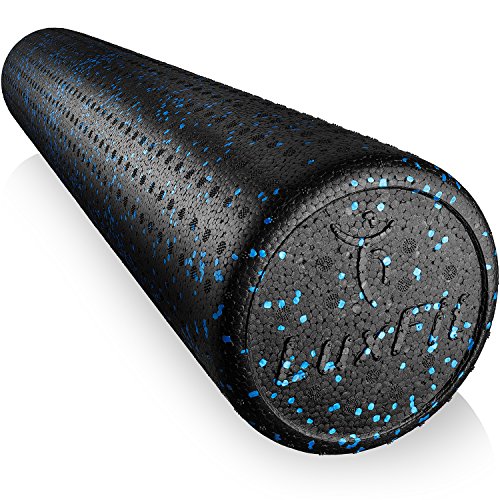
Best Budget: LuxFit High-Density Foam Roller (Blue, 24 Inch)
If the GRID is more than you want to spend, this is the one I would buy. It is a straight cylinder with no gimmicks: no vibration, no texture pretending to be a pair of hands, no language about releasing anything. It is high-density foam, it is 24 inches long, and it carries a three year warranty, which is more than most rollers in this range offer.
The 24-inch length is a genuine advantage for back rolling and for working both legs without repositioning every thirty seconds. It is also the reason it is a poor travel companion. This is a stay-home roller, and that is fine if you roll at home.
The tradeoff is honesty about firmness. A budget high-density cylinder is firm, and firm is not always correct. A soft roller for a ribcage is the right call, and using this one there is a mistake. But a soft roller for hamstrings is a lie, and this roller is not lying to you. That is the whole value proposition: a straight cylinder that does the job without decoration.
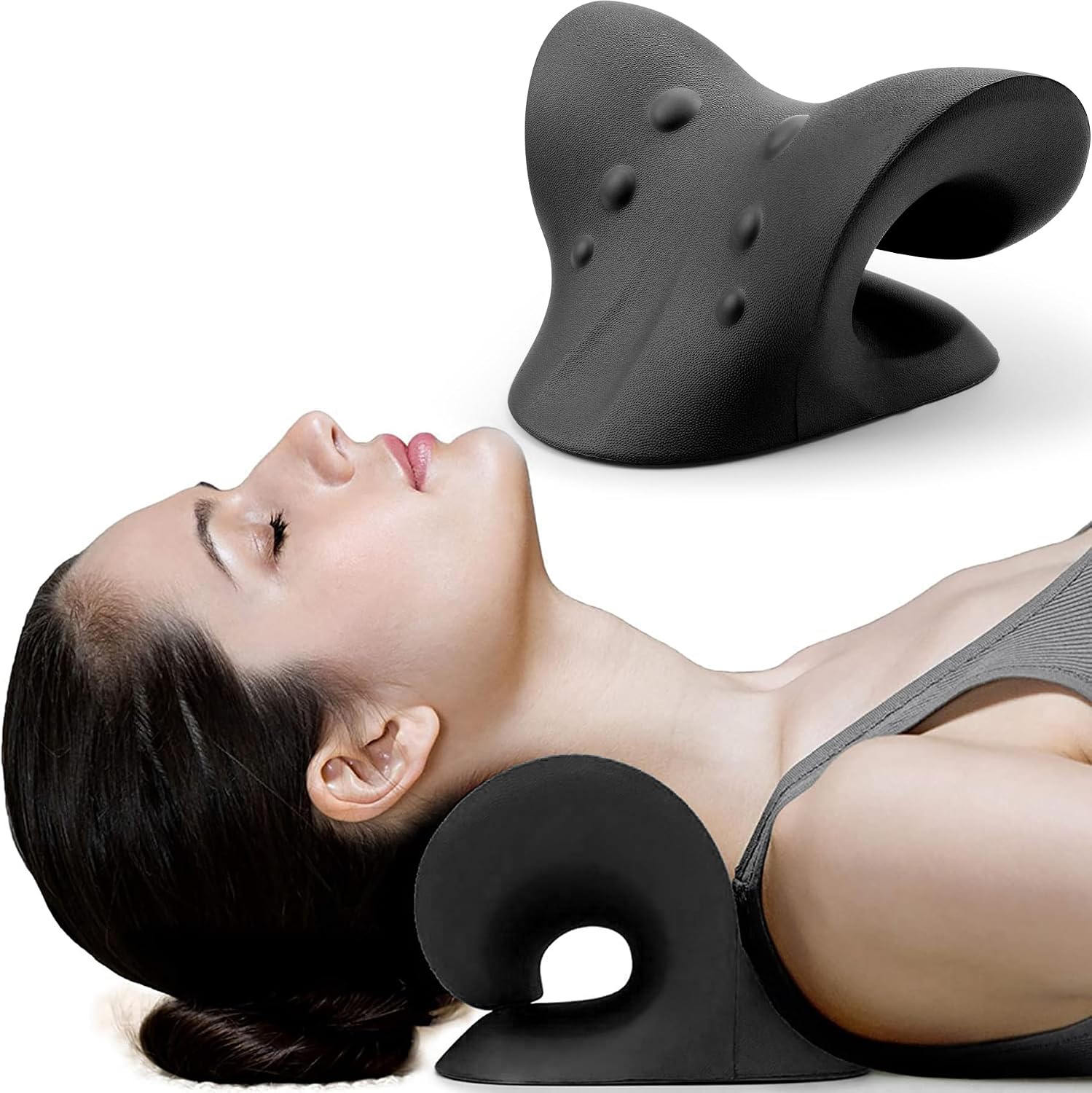
Best for the Neck: RESTCLOUD Neck and Shoulder Relaxer
A roller cannot touch your neck, and a percussion gun should never go near it. That is why this tool exists in this lineup at all. This is a cervical traction device: you lie back over the curve, it supports the base of your skull, and the weight of your own head does the work. Ten minutes, on the floor, with a timer running.
It is the tool I hand to people who come in with a stiff neck, tension headaches, or jaw tension that their dentist has already looked at. Where it helps: necks that are tight from hours at a desk, and upper traps that will not let go. Where it does not help: anything with arm tingling, numbness, weakness, or pain that shoots down the arm. That is a different conversation and it does not happen on a floor mat with a molded pillow. See a professional.
I prescribe it short and boring. Ten minutes, once a day, for a couple of weeks, then reassess. It is not a pillow to sleep on, it is not something to use while scrolling, and if it makes you feel worse, you stop. Traction is a dose, and more is not better.
Best for Deep Tissue Recovery: TheraGun Pro
Percussion is the tool for a big muscle group that will not let go: the upper back, the glutes, the quads after a long run. This is the percussion gun in this lineup, and the thing that separates a real one from a cheap knockoff is that it is a tool and not an earthquake. A gun with one speed and no control is not a recovery device, it is a paint shaker.
The product name lists neck, back, leg, shoulder, and body, and that list is where my one hard rule lives. Muscles only. Never your neck, never your spine, never a joint, never a bone. I have seen the injuries from people who used percussion on the cervical spine because it felt good for ninety seconds. It is the one instruction I will not soften, ever.
Where it earns its spot: the muscles around the shoulder blades, the glutes, the quads, the traps while your head is supported and the head of the gun is sitting on muscle belly. Two minutes per muscle, keep the gun moving, then put it down. Percussion is a stop, not a session. If you want one for the parts a roller cannot reach, this is the one I would point you to. If you want a gadget to fix a problem that comes from your desk setup, buy a better chair instead.
How I choose a recovery tool
Four questions, every time. Does the density or intensity match a real clinical need, or is it a solution looking for a problem? Can a normal person use it without hurting themselves on day one? Does it survive six months of real use, or does it go soft, crack, or rattle? And the honest one: would I prescribe it to a patient I like?
That last question kills a lot of products. Anything "infused," "textured like a massage," or sold by a brand that also sells pool floats is out. A roller is foam with a density. A percussion gun is a motor with a head. When the marketing is more complicated than the mechanism, the product usually is not worth your money.
Firmness is about the target, not the price. A soft roller for a ribcage is correct. A soft roller for hamstrings is a lie. Match the tool to the tissue first, then match the dose to the person. I have said firm rollers are overrated and I own three, so take that for what it is worth.
What "deep tissue" actually means
Here is what rolling does: it changes blood flow, it nudges the nervous system, and it gives you a window where a tight muscle tolerates movement. Here is what it does not do: break up scar tissue, permanently lengthen a muscle, or fix a problem that comes from how you sit for nine hours a day. I will not pretend otherwise, because the pretending is exactly how people end up grinding a sore spot for twenty minutes and wondering why it is worse the next morning.
Dose it. Two minutes per muscle group. Pressure that is uncomfortable but not painful. Then move: walk, squat, stretch, do whatever your sport asks of you. Rolling before a workout and rolling after a workout are not interchangeable. Before, it is a short pass with lighter pressure to wake things up and check what is tight. After, it is slower and longer on whatever you actually used. One preps, one recovers.
Consistency beats intensity. Five minutes most days will outperform one heroic forty-minute session a week, every time. A roller you keep in the closet is an expensive paperweight. Buy the one that fits the routine you already have, not the one you wish you had.
The recovery tool reference table
Match the tool to the target area, then dose it. The pressure and time below are starting points, not gospel. If it hurts, back off. Flip, reposition, and breathe.
| Tool | Primary target | Intensity | How I dose it | Price |
|---|---|---|---|---|
 Visit on Amazon → Visit on Amazon →TriggerPoint GRID Foam Roller |
Quads, calves, mid-back, lats | Firm | 2 minutes per muscle group, slow passes | Check current Amazon price |
 Visit on Amazon → Visit on Amazon →LuxFit High-Density Foam Roller (24 Inch) |
Back, both legs at once | Firm | 2 minutes per area, stay off bones | Check current Amazon price |
 Visit on Amazon → Visit on Amazon →RESTCLOUD Neck and Shoulder Relaxer |
Base of skull, upper neck, jaw tension | Gentle traction, body weight only | 10 minutes, once a day, on the floor | $19.99 |
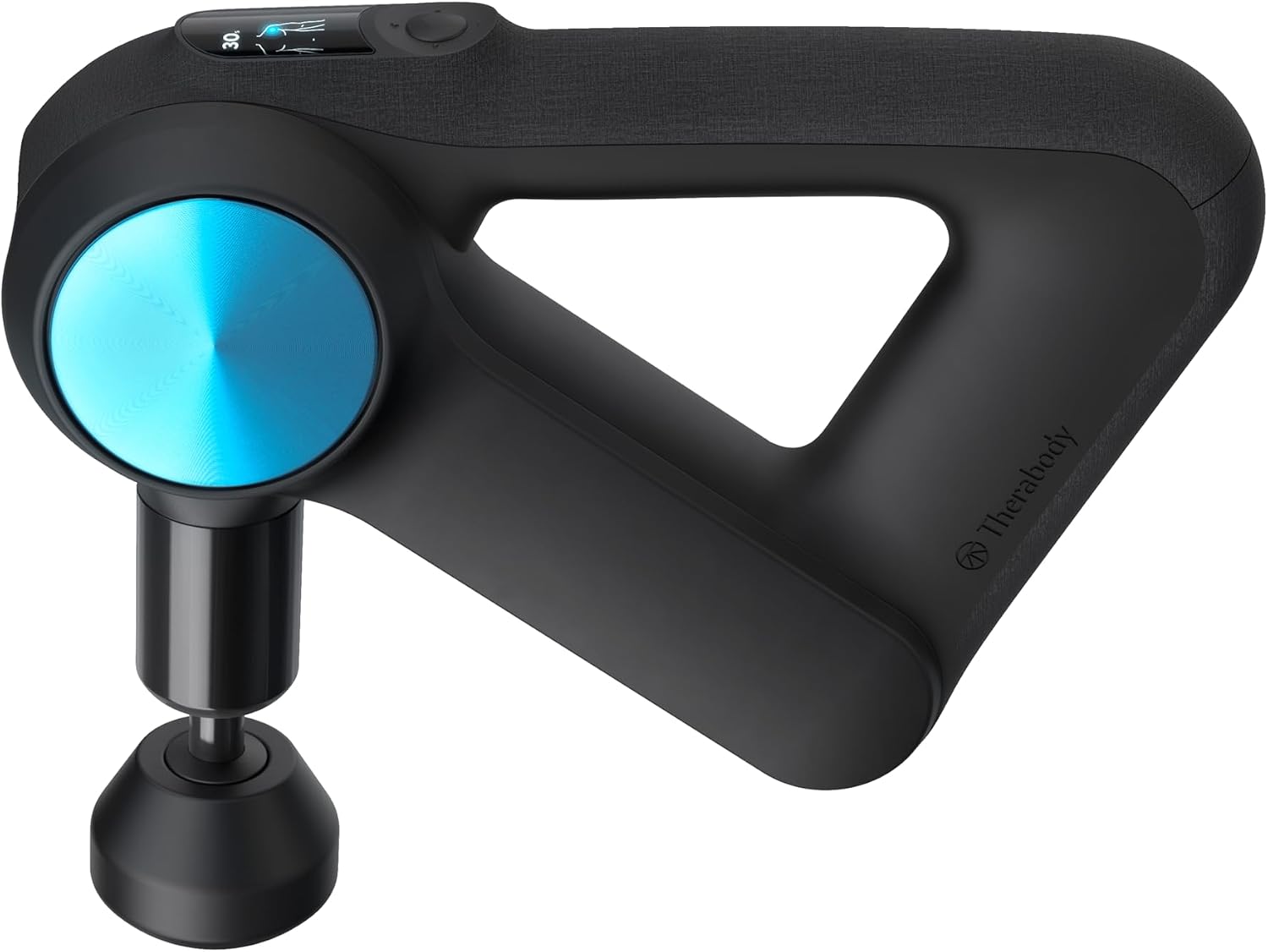 Visit on Amazon → Visit on Amazon →TheraGun Pro |
Upper back, glutes, quads, traps | Percussion, never on bone | 2 minutes per muscle, keep it moving | $529.99 |
The pattern in that table is simple: rollers for the big muscle groups you can get your body weight onto, traction for the neck, percussion for the spots your hands and a roller cannot reach. Nothing in the table is a substitute for movement, and nothing in it should ever be used on a bone.
Which one if you only buy one
If you are buying exactly one thing, buy the firm roller. It covers the most body parts for the most people, and it is the tool I would replace first if mine disappeared. If your problem is specifically your neck and the top of your shoulders, buy the traction device instead, because no roller is going to help there and a percussion gun should not be pointed at it. If budget is the deciding factor, the budget cylinder does the same job as any firm roller, without the fancy surface.
What I would not do is buy a percussion gun as your first recovery tool. It is the specialist, not the starter.
Should you buy the TriggerPoint GRID Foam Roller?
For most people, yes. The firmness is right for most bodies: firm enough to do something useful on a quad or a calf, not so aggressive that a beginner quits in week one. The hollow core holds up instead of going soft in the middle, which is the failure I see most often in cheap rollers. It travels, it fits a thoracic spine, and it is the one I reach for first.
It will not break up scar tissue. It will not lengthen anything permanently. It will give you two minutes of blood flow and a window to move, and if you use it consistently, that is plenty.
Should you buy the TheraGun Pro?
Buy it if you have a big muscle group that will not let go and you have already tried the cheaper option. The upper back, the glutes, the quads after a long run: this is a real tool for real muscles, and it is built like one instead of like a novelty.
Buy it with the rules attached. Muscles only. Never the neck, never the spine, never a joint, never a bone. Two minutes per muscle, keep it moving, then put it down. If you cannot follow those rules, do not buy it, because the injuries from ignoring them take longer to heal than the tight muscle you were trying to fix.