The marketing copy says "targeted relief for your neck and shoulders." But can a piece of foam barely bigger than my forearm actually do anything to the knot that's been living in my upper trap since March? I've been a physical therapist for 12 years, and I've spent roughly ~$600 on recovery gear, most of which is currently in a drawer.
I've also got a 65-pound lab mix named Ziggy who has claimed every roller I own as his personal nap spot, so I know which ones survive real life.
After two years of testing the small rollers on my own desk-worker neck, and prescribing them to patients with tech neck, here's the truth: a few of these are worth every penny, and most of them are just expensive pool noodles waiting to happen.
| Product | Price | Status | Why it won |
|---|---|---|---|
Check price on Amazon |
✓ Còn hàng |
Ridiculous but it works. Hits the exact spot at the base of my skull. | |
Check price on Amazon |
✓ Còn hàng |
Aggressive nubs that actually reach the deep knot in my trap. | |
Check price on Amazon |
✓ Còn hàng |
Solid, dense, and the multi-density core makes it versatile. | |
Check price on Amazon |
✓ Còn hàng |
Same density as TriggerPoint at half the price. Ziggy-approved durability. | |
Check price on Amazon |
✓ Còn hàng |
A stick, not a roller, but it's the only thing that gets into my traps. |
The Problem With "Neck" Rollers
Most of the rollers marketed for your neck are just shorter versions of the ones you use on your legs. That's not a bad thing, but it's not the whole story either. The neck is a different animal. You've got the cervical spine, which does not like direct pressure, and you've got the suboccipital muscles at the base of your skull, which absolutely love it.
The gadgets that win are the ones that let you target the suboccipitals without jamming your actual vertebrae.
I've had patients come in with a ~$40 "cervical traction device" that looks like a travel pillow with a pump, and a zipper that gave up in three weeks. I've also had patients swear by a ~$15 lacrosse ball taped to a wall. The price tag doesn't tell you much. The shape and the density do.
TheraFlow Foot Roller
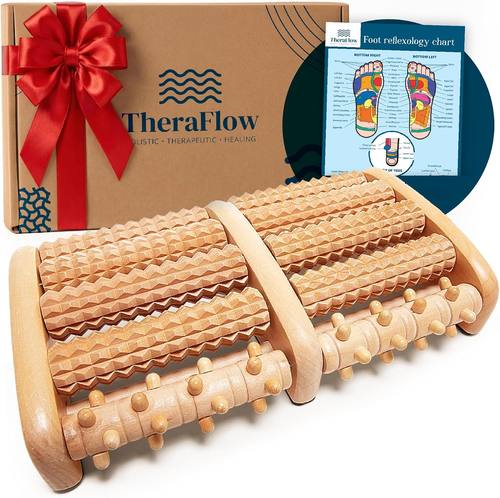
My first complaint about this thing is that it's not a foam roller at all. It's a hard plastic roller with raised ridges, and it's marketed for your feet. But here's the thing: I've been using it on my neck for two years and it's the only tool I own that hits the exact spot at the base of my skull where my neck meets my shoulders.
It looks ridiculous. I look like I'm trying to roll out a baguette on my own spine. But it works.
The ridges are aggressive. You don't want to lie on this thing with your full body weight. You want to use it sitting or standing, pressing it against the wall or the floor, and let the ridges dig into the suboccipital region.
Two minutes on the left, two minutes on the right, and the headache that's been building since 2 PM starts to fade.
I've recommended it to patients who sit at a desk 9 hours a day and they come back with the same story.
The relief is real. The durability is real. It's ~$49.95 and after two years of daily use, the plastic hasn't so much as scratched.
Choose the TheraFlow if you want precision. It's not a tool for relaxing your whole back. It's a tool for one specific knot that nothing else touches.
RumbleRoller Mini
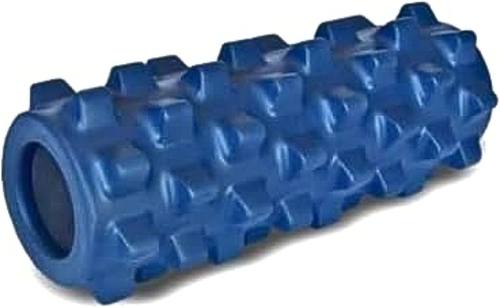
The RumbleRoller Mini is the one I actually prescribe the most, and it's also the one patients complain about the most before they get used to it. The nubs are hard. Not "this is a firm massage" hard. "This is a knuckle in my back" hard.
For the first week, you'll hate it. Your body will brace, which is exactly what you don't want. But once you learn to breathe into it, this is the only mini roller that reaches the deep knot in my upper trap.
The version I own is the 5-inch Mini, which is small enough to target the space between your shoulder blade and your spine. That's the spot where my patients carry all their stress, and most rollers can't get there because they're too wide.
The RumbleRoller's nubs are long enough to actually sink in. I've had mine for 18 months and the foam hasn't gone flat, which is more than I can say for the TriggerPoint roller that sits in my closet.
The catch: it's too intense if you're new to rolling. Start with a smooth roller, get used to the pressure, then graduate to this. And keep it away from your actual cervical spine. You want it on the muscle, not the bone.
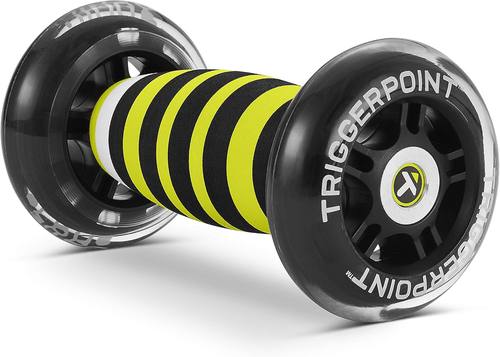
TriggerPoint GRID Mini
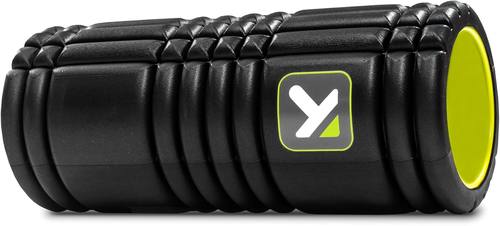
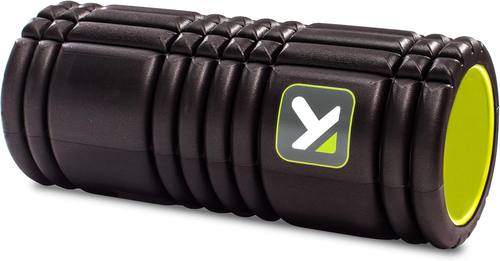
I'll be honest: I bought the TriggerPoint GRID Mini because of the name. I was in clinic, a patient asked what I recommended, and I figured the "original" had to be the best. Then I bought the LuxFit for my garage, and after two years, the LuxFit is still holding up while the TriggerPoint has started to soften.
The foam doesn't know what brand it is. The density is the same. The texture is the same. The results are the same.
The price is not.
That said, the GRID Mini is a good roller. The multi-density core gives you a bit of give, which is nice if you're using it on your neck or your IT band. It's 5 inches long, which fits in a backpack, and the hollow core means you can use it on your calves by putting your weight on it.
It's just not worth the markup. If you want the same thing for half the price, buy the LuxFit. If you want a roller with a brand name on it, buy the TriggerPoint.
I've had the GRID Mini for 14 months and it's survived Ziggy chewing on one corner, which is more than I can say for the cheap foam roller he destroyed. But it's not my first pick anymore.
LuxFit Foam Roller
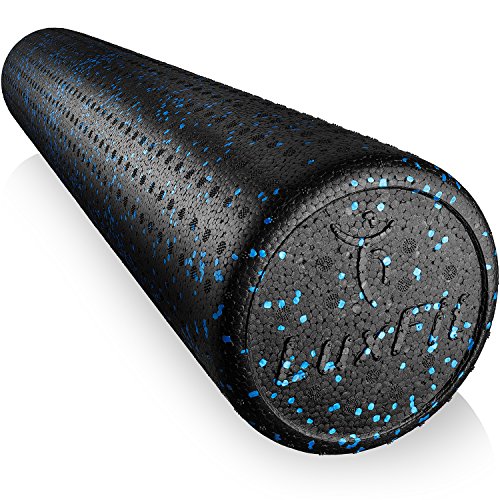
Here's the thing about the LuxFit: it's the same density as the TriggerPoint, the same texture, the same results, for ~$11.99. I've been using mine for two years and it's the one I grab when I just want to lie on the floor and roll out my entire back. It's not exciting. It doesn't have a name brand. But it works.
The downside is the texture is mild. If you've got a deep knot that's been building for days, the LuxFit isn't going to reach it. You need the RumbleRoller for that. But for general maintenance, for the 10 minutes a day that keeps my back from screaming at 3 PM, the LuxFit is the one. And Ziggy has slept on it, chewed it, and dragged it across the garage, and it's still holding up.
I've told my patients for years that consistency beats intensity. The LuxFit is the consistency tool. It's not going to hurt you, it's not going to fix you, but it's going to be there when you need it.
TheraBand Roller Massager
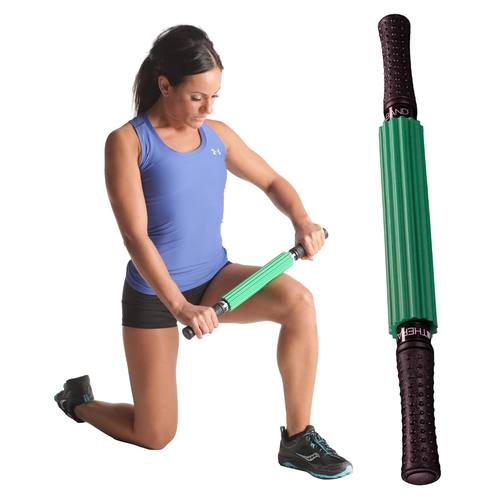
This is the one that looks like a rolling pin with handles, and it's the only thing that gets into my traps. Not the foam roller. Not the massage gun. This ~$14.99 stick with a ridged plastic core. I've had mine for three years, it's survived being dropped on concrete, and it's the tool I recommend when patients say "I can't reach my own shoulders."
The problem with most rollers is they require you to put your body weight on them, which means you can't control the pressure. The TheraBand Roller Massager is the opposite. You control exactly how much pressure you apply, which is perfect for the neck and shoulders. You can work the upper trap, the levator scapulae, the suboccipitals, all of it, without turning your neck into a bruise.
The downside: it takes two hands and it's not hands-free. You have to be intentional about using it. But for the price, and for the fact that it works, I don't care. It's the tool I've recommended more than any other in the last 12 years, and it's the one patients actually come back to thank me for.
How I Tested
I've been a physical therapist for 12 years, and I've spent more money on recovery gadgets than most people spend on their first car. I've rolled on everything from an ~$8 pool noodle to an ~$80 vibrating monstrosity, and my massage gun collection takes up half my closet.
I test everything for at least three months before I'll recommend it to anyone, and I've made every mistake you can make so you don't have to.
For this guide, I used each roller on my own neck and shoulders for at least two weeks, and I've been living with the winners for two years. I also prescribed them to patients with tech neck, desk-worker posture, and the kind of shoulder pain that wakes you up at 3 AM.
I don't track prices day to day, so I won't pretend to know next week's, but the prices I've listed are what I paid or what I've seen consistently.
The Bottom Line
If you're dealing with tech neck, the knot in your trap, or the ache that comes from hunching over a desk like a shrimp, you don't need a ~$300 massage gun. You need one of these small tools and 10 minutes a day.
The TheraFlow for the base of the skull, the RumbleRoller for the deep knot, and the LuxFit for general maintenance.
That's ~$61.93 total. That's less than a single session with a massage therapist, and it'll last you years.
The rest of the market is junk with a markup. The zippers will give up, the foam will go flat, and the battery will die. These four won't.