Most people do not have a foam rolling problem. They have a posture problem that keeps undoing the rolling. You fold yourself into a chair for eight hours, spend ten minutes on the floor with a roller, then fold yourself back into the same chair, and you wonder why your upper back feels identical on Friday to how it felt on Monday.
I am a physical therapist, and I have watched that loop for twelve years. A roller works on tissue for a few minutes at a time. It does nothing about the position your body holds for the other 99% of the day. That gap is what a lumbar support pillow in your chair and, for some people, a posture corrector back brace are for.
Neither one is a cure. Both are tools that hold the gains between rolling sessions so the rolling has something to build on. This is how I set them up, in what order, and the mistakes I see people make with each one.
Why you should trust me
I have been a physical therapist for twelve years, and about half of that has been spent in a clinic treating backs that "just hurt" and legs that "will not loosen up." I prescribe foam rolling the way I would prescribe anything else: specific, dosed, and with a reason. I keep a pressure gauge in my treatment room for the "it hurts so it is working" crowd, because that crowd is usually the one that walks out worse on Thursday than they walked in on Monday.
I also fit supports. Lumbar cushions and posture braces are the two things I hand out most often to people whose rolling routine keeps collapsing. Not because the supports are magic, but because they change what your body does during the six to nine hours you are not rolling.
How I picked these and how I judge them
Two products made this guide, and the bar was simple.
First, does the support match a real problem? A lumbar cushion answers one question: is there a gap between your lower back and the chair? If there is, something belongs in that gap. A posture brace answers a different question: can you get your shoulders back at all without thinking about it for twenty minutes?
Second, can a normal person use it without hurting themselves? A brace you wear for eight hours is a problem. A cushion that pushes you forward out of the seat is a problem. Both of those are common, and both are avoidable.
Third, does it survive six months of real use? Straps stretch, foam flattens, mesh tears at the seam. The two items below are the ones I would still hand to a patient after that test.
What I did not do is run them through a lab or assign them a made up score. I judged them the way I judge everything: by the target body part, the person using it, and whether that person is still using it a season later.
The two supports I would start with
The order matters. The chair does the daily work, because that is where you spend the most hours. The brace is the shorter, sharper tool for the blocks where your posture collapses anyway. Rolling comes after both, not instead of them.
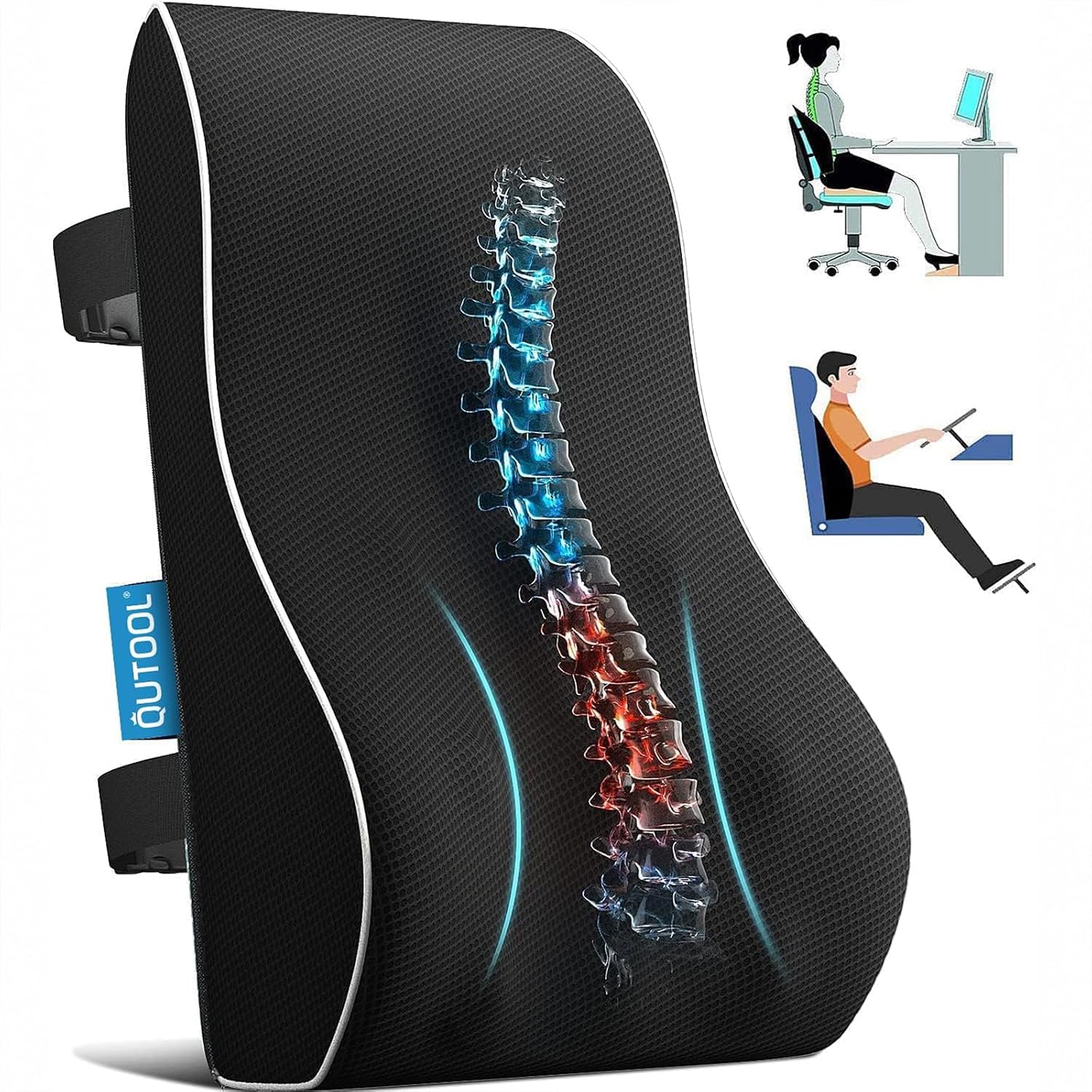
For your chair: Lumbar Support Pillow for Office Chair, Office Home Essentials,Gifts for Mom,Dad, Back Support Pillow for Car, Chair Cushions,Back Pain Relief Improve Posture,Mesh Cover Double Adjustable Straps
 Visit on Amazon →
This is the one that does the daily work. It is a mesh covered cushion with two adjustable straps, which means it can be cinched to an office chair, a dining chair, or a car seat instead of sliding down to your tailbone by ten in the morning. The mesh cover matters more than it sounds. A solid foam block pressed against your back for eight hours gets swampy, and a cushion you avoid wearing is a cushion that does nothing.
The straps are the feature that keeps it on the chair, and that is the whole point. Most lumbar cushions fail because they migrate. A cushion that has slid down to your tailbone is not supporting your lumbar curve, it is just making your seat shorter.
Where it fits: any chair where you can slide a flat hand between your lower back and the backrest. That includes the car, which is where a lot of people quietly need it most, since commute posture is the same folded position with less adjustment available. Check current Amazon price on the listing, and check the strap reach against your chair before you commit.
Flaws but not dealbreakers: If your chair has a very deep seat or a tall executive back, the straps may not reach around it. A cushion that is too thick for your seat depth will push your hips forward and effectively shorten the seat, which trades one problem for another. Try it in the car first. If it makes your thighs feel unsupported, it is too thick for that chair.
Anyone who drives more than thirty minutes each way, or who sits in a standard office chair for a full workday, should start here. This is the highest return item in the guide.
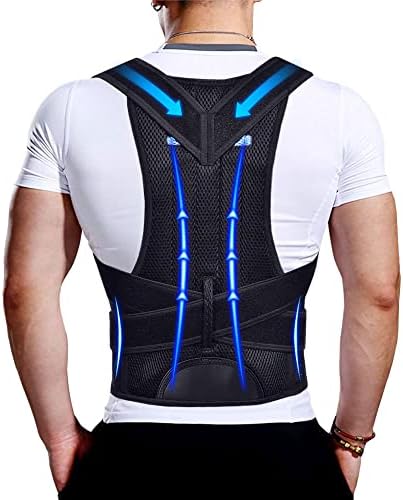
For posture breaks: Upgraded Posture Corrector Back Brace for Men and Women, New Version Lumbar Support for Posture Improving and Pain Relief, Full Back Support for Neck, Shoulder, Waist Pain, L
 Visit on Amazon →
This is not something you wear for eight hours. It is a twenty to thirty minute tool you use during long desk blocks, and I want to be clear about that before anything else, because the most common mistake with any posture brace is treating it like clothing.
The design here is the familiar one: a lumbar band with straps that come over the shoulders and draw them back into position. For someone whose upper back rounds by two in the afternoon every single day, that pull is a reminder, and reminders are useful. What it is not is strength. The brace does the work, your muscles do less, and that is exactly why the dose stays short.
Where it fits: long writing blocks, long drives, and the hour after lunch when your posture is at its worst. Put it on, do the work, take it off, then do the two minute rolling session that actually changes tissue.
Sizing is the whole game with these. Measure around your ribs, not your waistband, and go by the sizing guidance on the listing rather than guessing. If the brace is tight enough that your breathing changes, it is too tight. If the shoulder straps dig into your armpits, the fit is wrong. Check current Amazon price before you order.
Flaws but not dealbreakers: Some people need a week of fiddling before the shoulder straps sit where they should. If you have a shoulder injury or a history of neck pain, talk to a clinician before you wear anything that pulls your shoulders back. And no brace, at any price, is a substitute for the strength work that keeps your shoulders there on their own.
Anyone whose posture collapses during long desk sessions, who has already tried timers, reminders, and a standing desk, should try a brace in short doses.
The actual setup workflow
This works with any chair and any support. Do it in order, because each step changes the one after it.
Step one: find the gap. Sit all the way back in your chair with your feet flat, then slide a hand behind your lower back. If your palm slides in easily, you have a gap and a support belongs there. If your back is already flush against the backrest, a cushion will push you forward and you should skip it entirely.
Step two: place the cushion at the curve, not the tailbone. The top of the cushion should land around your belt line, in the small of your back. If it is under your seat bones, it is not supporting your lumbar curve, it is just padding.
Step three: cinch the straps. Snug, not crushed. The cushion should not move when you lean forward and sit back. If it slides, tighten it or reposition it before you blame the cushion.
Step four: set seat depth and chair height. Feet flat on the floor, hips at or slightly above knee level, and roughly two fingers of space between the back of your knee and the edge of the seat. If adding the cushion made the seat feel too shallow, you have the wrong thickness for that chair.
Step five: set the monitor. Top of the screen at or slightly below eye level, about an arm's length away, so your head is not craned forward all day. A brace cannot fix a monitor that sits too low. This step gets skipped constantly and it undoes everything above it.
Step six: dose the brace. Twenty to thirty minutes at a time during long blocks, then off. Not while sleeping, not for the full workday, and never around the neck. If it is doing all the work, your muscles are doing none.
Step seven: break the position every thirty to forty five minutes. Stand, walk to the kitchen, reach both arms overhead. The best posture is the next posture. This single habit does more than any product in this guide.
Step eight: roll after work, not only before. Rolling before a workout preps tissue. Rolling after a workout recovers it. They are not interchangeable. Two minutes per muscle group, with pressure that is uncomfortable but not painful. If you are crying, you are not recovering.
Step nine: recheck in a week. Your chair shifts, your body adapts, and the cushion settles. Spend two minutes on a Monday and confirm the support is still in the small of your back and not under it.
Where the roller fits, and where it does not
Rolling works on blood flow and the nervous system. It does not break up scar tissue, no matter what the packaging claims, and I will say that in every article I write. What it does well is give you a few minutes of input that changes how a muscle feels and moves, and that input is worth having.
Firmness should match the target. A soft roller for a ribcage is correct. A soft roller for hamstrings is a lie. A firm roller is for stubborn quads, calves, and glutes, and it is not for beginners who have never rolled before.
Keep the roller where you will actually use it. A roller in the closet is a forty dollar paperweight. If your routine happens in front of the television, the roller lives next to the couch, not in the gym bag you take out twice a month.
Mistakes I see most often
- Wearing a posture brace all day and wondering why the upper back feels weaker six weeks later.
- Parking the lumbar cushion under the tailbone, which pads the wrong spot and shortens the seat.
- Rolling hard enough to bruise, then skipping two days to recover from the recovery tool.
- Buying gear for the person you plan to be instead of the person who shows up on a Tuesday.
- Assuming pain during rolling means progress. It usually means you went too hard, too fast, on tissue that was not ready.
What this all costs
I am not going to quote prices, because they move and a number in an article goes stale fast. Check current Amazon price on each listing and decide from there.
The math that matters is simpler than the price tag. The cushion gets used every workday, roughly two hundred and fifty days a year, in a chair you already own. The brace gets used in short blocks during your worst posture hours. Both are one time costs, and both are cheap against a single professional visit for the same complaint, provided you actually use them.
What you are really buying is not a pillow or a strap. You are buying a way to keep your body out of the folded position long enough that the ten minutes you spend on the roller each evening has something to hold onto.
Set the chair up once. Dose the brace in short blocks. Roll after, not only before. Then leave it alone and go live your day.