Most neck tension is not damage. It is a neck that has been holding one position for nine hours and has forgotten how to let go. Cervical traction at home is the cheapest way I know to interrupt that pattern, but only when the tool, the position, and the dose are all right. Get any one of those three wrong and you are just a person lying on the floor with a stiff neck and a new gadget in a drawer.
I have been a physical therapist for twelve years, and for half of that time I worked in a clinic where the schedule ran back to back and a large share of the charts said some version of "neck hurts, nothing shows on imaging." The patients who improved fastest were rarely the ones who bought the most equipment. They were the ones who understood what traction actually does and what it does not do.
So this is not a shopping list with a protocol bolted on. It is a protocol with two tools attached to it, and an honest explanation of which neck belongs on which one.
Why you should trust me
Twelve years of practice teaches you that the tool matters far less than the target. I prescribe rolling and traction the way I would prescribe medication: with a specific target, a specific dose, and a clear stop rule. I keep a pressure gauge in my treatment room for the "it hurts so it is working" crowd, because that belief is how a sore neck becomes an injured one.
Two boundaries I hold, and they shape everything below. First, I do not tell people that any tool breaks up scar tissue, because that is not what these tools do. What they do is unload tissue, change blood flow, and calm a nervous system that has been stuck in guard mode. Second, I do not put percussion anywhere near the cervical spine. A massage gun is for muscles, not for bones, joints, or your neck. That rule is not negotiable, and it is exactly why the two tools in this article pull and hold instead of hammer.
I have no stake in which of these you buy. What I care about is that you know the difference between a tool that unloads a joint and a toy that pokes at one.
How I picked and how I tested
I did not run these through a lab, and I am not going to quote you a measurement I did not take. What I did was put both tools through the same four questions I use on every recovery device that lands on my desk.
Does the mechanism match a real clinical need, or is it a shape someone invented and then wrote copy for? Can a normal person use it without hurting themselves on the first attempt? Does it survive six months of real use, or does it flatten, crack, or deflate? And the last one: would I prescribe it to a patient, knowing what I know about their neck?
The two categories here matter more than any brand. One tool applies passive pressure at the base of the skull. The other creates active decompression through the whole cervical spine. Those are different jobs, and they are not interchangeable.
The two tools I would hand a patient first
If your neck is stiff and your range of motion is down, start with the tool that matches the job, not the one with the loudest box. Here is how each is meant to work, who it fits, and where it falls short.
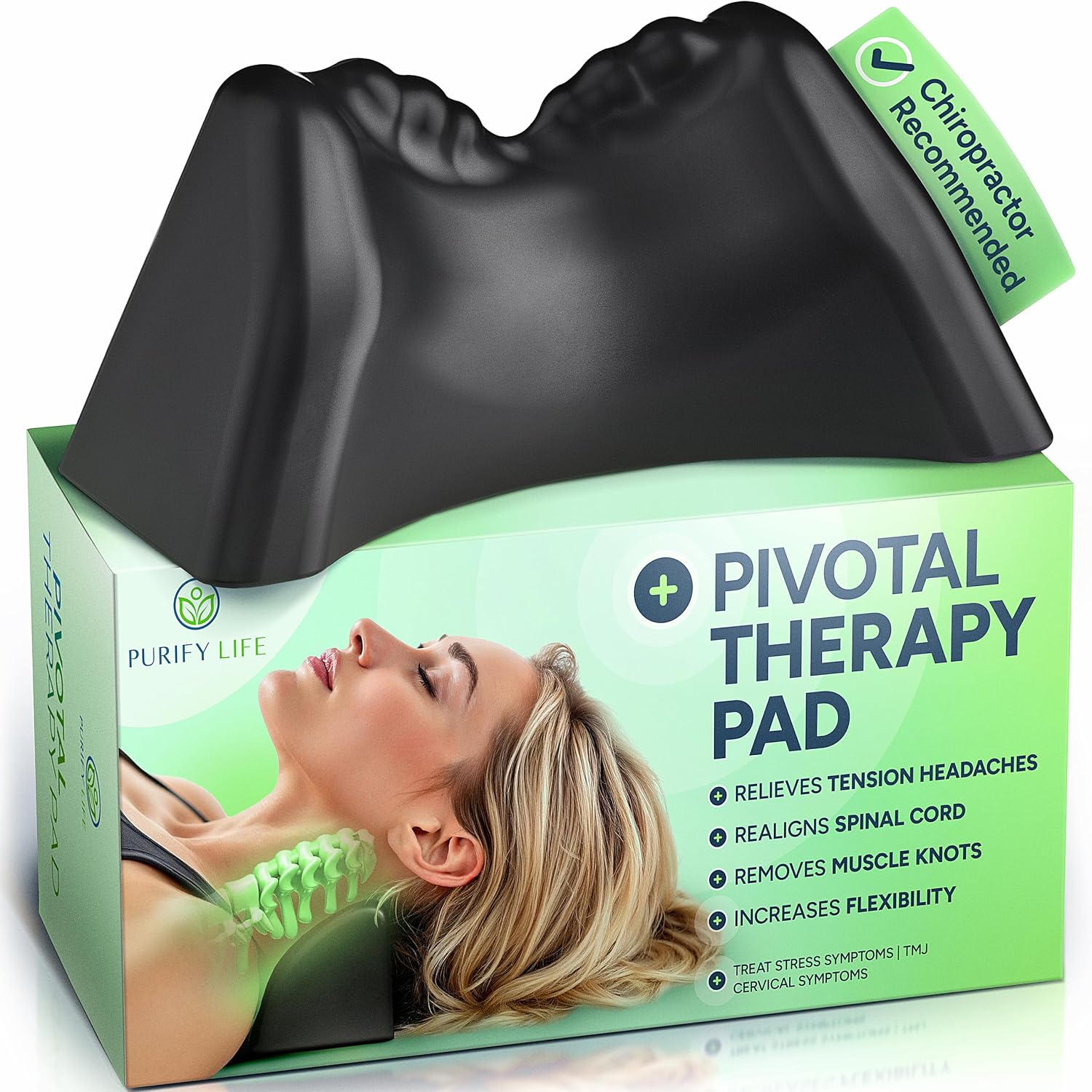
Starter pick: Occipital Release Tool for Pivotal Therapy & TMJ, Cervical Traction Device
 Visit on Amazon →
The name tells you the target. The base of your skull is where the small suboccipital muscles live, and those muscles get short and tight when you stare at a screen for hours. They refer pain up over the ear and behind the eye, they are one of the usual suspects in tension headaches, and they show up in a lot of jaw clenching patterns too. A tool like this is designed so you can lie back and let the weight of your own head do the work at that specific spot, instead of cranking your neck around with your hands and guessing at the angle.
This is the gentler entry point. It fits someone with a stiff upper neck, headaches that start at the base of the skull, jaw tension, and a low tolerance for pressure. Because it targets the very top of the neck, it also tends to be far less intimidating than full decompression, which matters more than people admit. A tool you are not afraid of is a tool you will actually use.
Flaws but not dealbreakers: It is a spot treatment. It will not decompress the mid or lower cervical spine, so if your whole neck feels compressed, this is not that job. And no tool can stop you from pressing into the base of your skull hard enough to see stars. If you are doing that, the problem is the dose, not the device.
Anyone whose tension lives at the very top of the neck, or who clenches their jaw under stress, should start here.
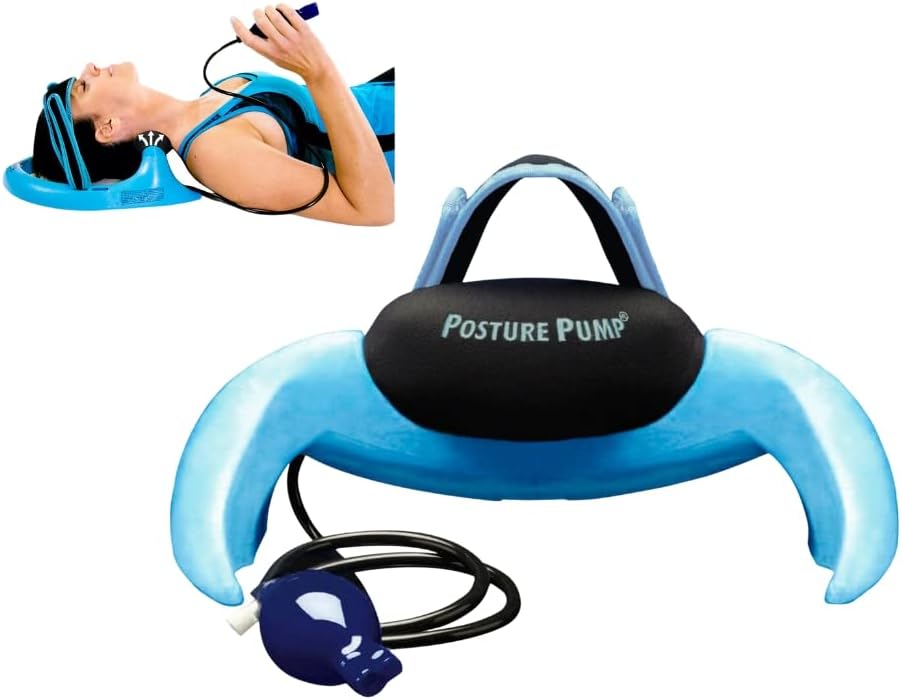
Upgrade pick: Posture Pump® Model 1100-S Single Air Cell Cervical Decompression Device
 Visit on Amazon →
This is the other job entirely. Where the occipital tool applies static pressure at one spot, this device uses an air cell to create a gentle longitudinal pull through the cervical spine while you lie on your back. The single air cell is the detail that matters: it inflates and deflates in a rhythm, which is the pump in the name, and that rhythm is what makes it feel different from simply lying on a rolled towel. You get a slow, repeatable traction rather than a static stretch you have to hold with your own muscles.
It fits someone whose whole neck feels compressed, whose curve has flattened out after years at a desk, and who wants a structured session instead of a spot treatment. It also gives you something a towel cannot: a dose you can control and repeat. That repeatability is the entire reason a clinician would prescribe a device over "just stretch more." When a patient can reproduce the same input every day, we can actually tell whether it is working.
Flaws but not dealbreakers: It is a commitment. You have to lie down, set it up, and stay there for the session. If your version of recovery is doing something else while watching television at an angle on the couch, this is not that tool. And an air cell is still an air cell. Treat it like equipment, not like a pillow, and store it somewhere it will not get punctured.
Anyone with a flattened cervical curve, whole-neck compression, or a clinician who has already told them to try traction should look here first.
The actual protocol: how to use cervical traction at home
The steps below matter more than either purchase. Do these in order, and do not skip the first one.
Step one: Screen yourself first. Traction is not for every neck. If you have radiating pain, numbness or tingling in the arm or hand, a known disc injury, osteoporosis, a history of neck surgery or fracture, or you get dizzy with head movement, talk to a clinician before you lie on anything. The same goes for rheumatoid arthritis or any condition that affects ligament stability. This is the step people skip, and it is the only one that can genuinely hurt you.
Step two: Pick the position that lets your neck relax. For the occipital tool, that usually means lying on your back with the tool under the base of the skull and your head weight doing the work. For the air cell device, it means lying flat with the device under the neck and following the instructions that come with it. In both cases the goal is identical: your neck muscles should be doing nothing. If you are holding your head up, you are training your neck, not decompressing it.
Step three: Dose it. Start with a short session, two to five minutes, then check how your neck responds over the next few hours. The effect you are looking for is a little more range of motion and a little less ache, not a dramatic crack. Two minutes per target is a real protocol. More is not better, and longer sessions do not buy you faster results.
Step four: Check the sensation. You want a stretch, a gentle pull, maybe mild pressure at the base of the skull. You do not want sharp pain, shooting pain, numbness, tingling, dizziness, or a headache that builds while you are on the tool. If any of those show up, stop. Pain during this work is a sign to back off, not a badge of honor. If you are crying, you are not recovering.
Step five: Breathe out of your neck. The suboccipitals relax on the exhale. Long exhale, jaw loose, tongue off the roof of your mouth. If you are gritting your teeth through a session, the tool is not the problem and no upgrade will fix it.
Step six: Come off slowly. Roll to your side and push up with your arms instead of sitting straight up. Then move your neck gently through its range: look left, look right, chin toward each shoulder, small nods. You are reminding the nervous system what the new range feels like. That part takes thirty seconds, and it is where a lot of people leave their gains on the floor.
Step seven: Repeat, then reassess. Daily is fine for a stiff neck with no red flags. If nothing changes after two weeks of consistent, correctly dosed sessions, the tool is not the answer and you need a clinician to look at the neck, not a different gadget. Consistency beats intensity here, the same way it does with rolling.
The competition and why it lost
Foam rollers. I love them and I prescribe them constantly, but a roller is the wrong tool for the neck. You cannot put body weight onto a cervical spine the way you can onto a quad. The neck needs a shaped contact and a controlled pull, not a cylinder. A soft roller under the neck is a pillow with a marketing budget.
Massage guns. They belong on muscles. Not on bones, not on joints, and not on your neck. The cervical spine has nerves and blood vessels that do not respond well to percussion, and the people who get hurt with guns are usually the ones who were told it was "deep tissue." It is not deep tissue. It is a hammer.
Inflatable neck hammocks and over-the-door rigs. The category exists and the concept is the same as the air cell device, but the units I see in clinic are usually the ones people stopped using because setup was awkward or the inflation felt uncomfortable. A tool you keep in a closet is a paperweight, and it does not matter how clever the mechanism is.
Stretching alone. Useful, but for a lot of necks the muscles are guarding because the joint is compressed. Stretch a guarded neck and it guards harder. Unload the joint first, then stretch. Order matters.
What this all costs
I am not going to print prices that will be stale by the time you read this. Check current Amazon price on both tools and decide from there.
What I can tell you is the math that actually matters. The starter tool is a one-time purchase you will use for years, and the decompression device is a one-time purchase that replaces a run of clinic visits for the right candidate. Divide either by the number of sessions you will honestly do, and use three times a week in your math, not seven. Everyone plans for seven.
The expensive version of this article is the one where you buy both, use neither, and pay for a monthly massage instead. The cheap version is one tool, a timer, and two weeks of consistency.
That is the job. Your neck was built to move. Let it.