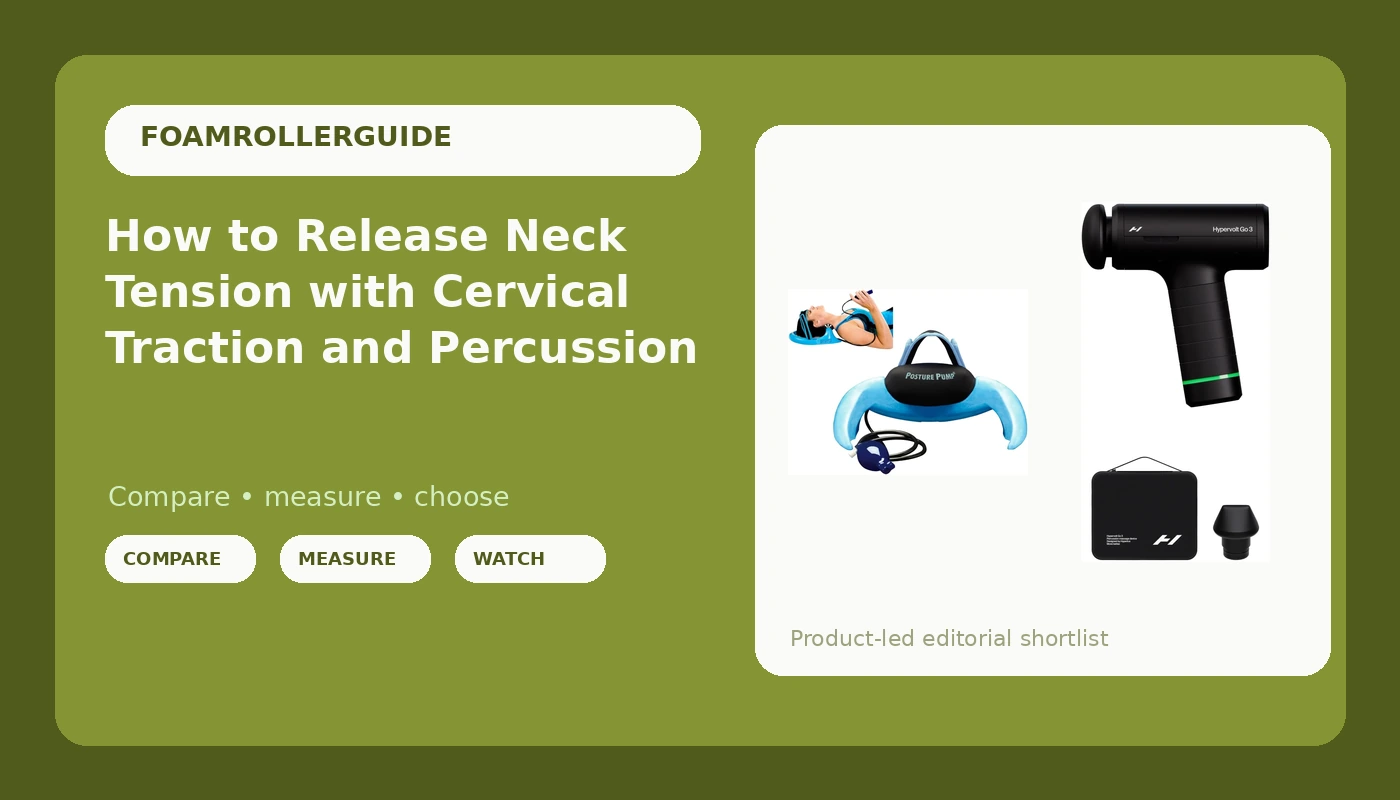
Neck tension is two problems wearing one shirt. There is the segment problem, the joints and discs between the vertebrae that get stiff and compressed after eight hours at a desk. And there is the muscle problem, the upper traps and levator scapulae that clamp down to guard a neck they think is under threat. Cervical traction and percussion each address one of those halves, and neither one replaces the other.
I am a physical therapist in Minneapolis, and this is the home protocol I hand to patients who walk in with a neck that will not turn all the way, a headache that starts at the base of the skull, or a shoulder that has been creeping toward their ear since last winter.
It takes about 20 minutes a day, it uses two tools, and it works best in a specific order. The order is the part most people get wrong.
Why you should trust me
I have been a physical therapist for 12 years, and about half of that has been in a clinic where the referral says "neck pain, evaluate" and the patient says "I just slept wrong" about something that happened four months ago. I have watched what happens to people who treat recovery like a punishment, and I have watched what happens to people who treat it like a habit. The second group gets better.
I keep a pressure gauge in my treatment room for the patients who tell me that rolling or massage has to hurt to work. It does not. Pain during recovery is a signal to back off, not a badge. I prescribe recovery tools the way a doctor prescribes medicine: a specific tool, a specific dose, a specific target.
I also have opinions you can hold me to. Massage guns are for muscles. Not bones, not joints, and never the front or the back of your neck. I have seen the injuries, and they are avoidable. If a percussion gun is your entire answer to a stiff neck, this article is going to explain why that is the wrong answer and what to do instead.
How I picked these two tools
Every tool I recommend has to pass four questions. Does it address a real clinical need or just a marketing category? Can a normal person use it at home without hurting themselves? Does it survive six months of real use? Would I prescribe it to a patient?
That filter kills most recovery gear. It kills vibrating rollers marketed as a cure for everything, it kills inflatable rollers that pop mid-session, and it kills "deep tissue" labels printed on soft foam. What survives is usually boring and specific.
Two tools survived for this protocol, because a guarded neck needs two different jobs done. The first job is giving the cervical segments a few minutes of decompression and a reminder of where they are supposed to sit. The second job is convincing the muscles around the neck to stop holding on. A passive tool does the first job. A percussion tool does the second. One tool that claims to do both is a tool that does neither well.
The two tools in this protocol
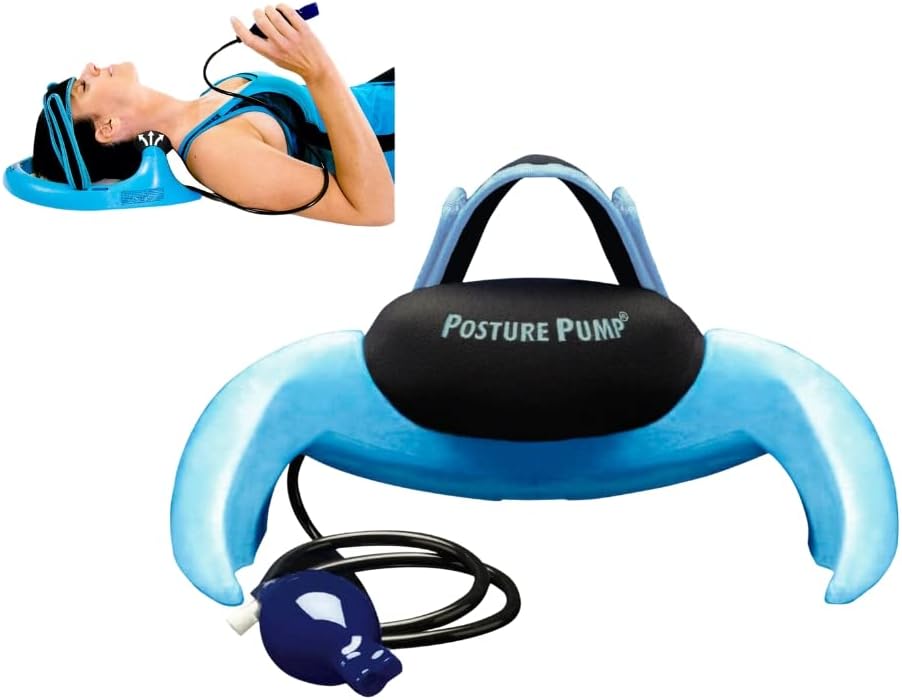
For the cervical spine: Posture Pump® Model 1100-S Single Air Cell Cervical Decompression Device
 Visit on Amazon →
You lie on your back with your neck cradled in the device, and an air cell inflates to apply a gentle longitudinal pull through the cervical spine. That is the whole idea: a few minutes of decompression while you are not bracing against anything. It is passive on purpose. You cannot brace your way through traction, and you should not try.
The dose matters more than the device. Five minutes is a starting session. Ten minutes is a full one. If you are inflating it until it feels like a competition, you have turned a recovery tool into a stretch contest and you will be sore tomorrow for no reason. Comfortable stretch, slow breathing, then get up.
This is the tool I reach for when someone's neck has lost its curve and their upper back rounds forward by 4 p.m. It is not a pillow, and you cannot sleep on it. It also asks for floor space and ten quiet minutes, which for a lot of people is the actual obstacle, not the money.
Flaws but not dealbreakers: It is a single-purpose device. It does not stretch your hips, it does not roll your quads, and it will sit in the closet if you do not build ten minutes into your day. If you have had a disc injury, a fusion, or recent trauma to the neck, talk to your clinician before you start traction at home.
Anyone with a desk job, a flattened neck curve, or a morning routine full of stiffness should look here first.
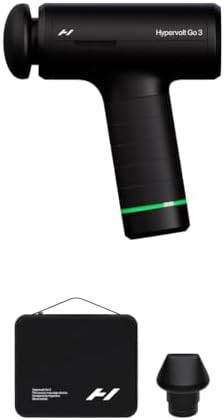
For the muscles around it: Hyperice Hypervolt Go 3 Percussion Massage Gun Lightweight with Carry Case
 Visit on Amazon →
Traction handles the segments. This handles the muscles that keep re-guarding them. Percussion reaches the upper traps, the levator scapulae in the corner between your neck and shoulder blade, the rhomboids between the shoulder blades, and the pecs that pull your shoulders forward. Those are the muscles that decide whether your neck gets to relax.
What makes this one work for the job is the size. It is light enough to hold overhead or behind your back without your arm quitting halfway through, and it comes with a carry case, which sounds like a minor detail until you notice that the tool you leave at home is the tool you never use.
The rules are not negotiable. Muscles only. Stay off the cervical spine, off the base of the skull, off the front of the neck, and off anything you can feel as bone. Thirty to sixty seconds per spot on a low setting for anything close to the neck. If you are pressing hard enough to wince, you are not loosening anything, you are just irritating it.
Flaws but not dealbreakers: It is a compact gun, so it is not the tool for deep work on quads and glutes. That is a bigger device's job. Some people also overuse it because it feels good, then wonder why their traps are sore the next day. Treat it like a dose, not a toy.
Anyone whose traps feel like rope by the end of the workday will get real use out of this.
The protocol, step by step
Step one: Screen yourself. This protocol is for mechanical neck tension, not for anything with a red flag. Numbness, tingling, or weakness in an arm or hand, dizziness, blurred vision, a recent car accident, night pain that wakes you up, or a history of cancer means you call a clinician, not a website. I mean that.
Step two: Warm the tissue first. Five minutes of easy movement before either tool. A warm shower, a walk, slow arm circles, a few gentle chin tucks. Cold tissue does not respond well to traction or percussion.
Step three: Traction, five to ten minutes. Lie supine, get your neck settled in the device, and inflate the air cell to a comfortable stretch. Breathe normally. Start at five minutes. If that feels fine, go to seven the next day, then ten. Stop at ten. More is not better, it is just longer.
Step four: Get up slowly. Roll to your side and push yourself up. Standing up fast after cervical traction is how people end up dizzy in the kitchen.
Step five: Check your range of motion. Turn your head left, then right, then look up. Note where each direction stops. That is your baseline, and you will use it in a minute.
Step six: Percussion, two to three minutes total. Upper traps, levator scapulae, rhomboids, pecs. Low to medium setting, thirty to sixty seconds per area. Never the cervical spine, never the front of the neck, never the bones at the base of the skull.
Step seven: Recheck the same range of motion. If rotation improved, you found the right dose. If it got worse, you did too much, and tomorrow you cut it back.
Step eight: Repeat daily for two weeks, then reassess. Consistency beats intensity every time. Two weeks of ten honest minutes will do more than one heroic forty-minute session on a Sunday.
Where people get this wrong
The biggest mistake is chasing pain. If traction or percussion hurts, back off. There is no version of this where suffering faster gets you there quicker.
The second mistake is putting a percussion gun on the neck. The front of your neck has arteries, nerves, and airway. The back of your neck has a spine. Neither is muscle. Work the muscles that attach to the neck instead, and let them do the releasing.
The third mistake is doing only half the protocol. Traction without muscle work leaves the guarding in place, and muscle work without traction leaves the stiff segment that caused the guarding. They are a pair.
The fourth mistake is treating the gun as a substitute for movement. A percussion session is not exercise, and it does not replace the walking, the rowing, or the shoulder work that keeps your neck out of trouble in the first place.
What this protocol is not
A foam roller cannot do this job. You cannot roll your own cervical spine, and rolling your upper back with a roller is a thoracic extension drill, not neck treatment. Keep rolling if it is already part of your week, but know what it is for. A soft roller on a ribcage is correct. A soft roller on hamstrings is a lie. Neither one is cervical traction.
A tennis ball pinned against a wall is a decent trigger point tool for the upper back, but it gives you no control over pressure and no way to dose it, which is why I would rather you use a tool with a setting you can turn down.
Stretching alone is not the answer either. A neck that is being guarded by tight muscles will fight a stretch, and you will spend twenty minutes losing an argument with your own trapezius.
What this all costs
Both tools are one-time purchases, and both sit in a similar price band. Check current Amazon price for the traction device and check current Amazon price for the percussion gun before you decide, because prices move and I do not quote numbers I cannot verify on the day you read this.
The math that matters is not the sticker price. It is cost divided by uses. A tool you use five days a week for two years costs very little per session. A tool you use twice and then store behind the winter coats costs a lot per session, no matter what you paid for it.
The other cost is the ten minutes. That is the one people actually struggle to pay, and it is the only one that decides whether this works.
Do it daily for two weeks. Recheck your rotation. Then decide whether your neck feels different. That is the whole test, and you can run it at home tonight.
That is the job. Your neck was built to turn. Let it.