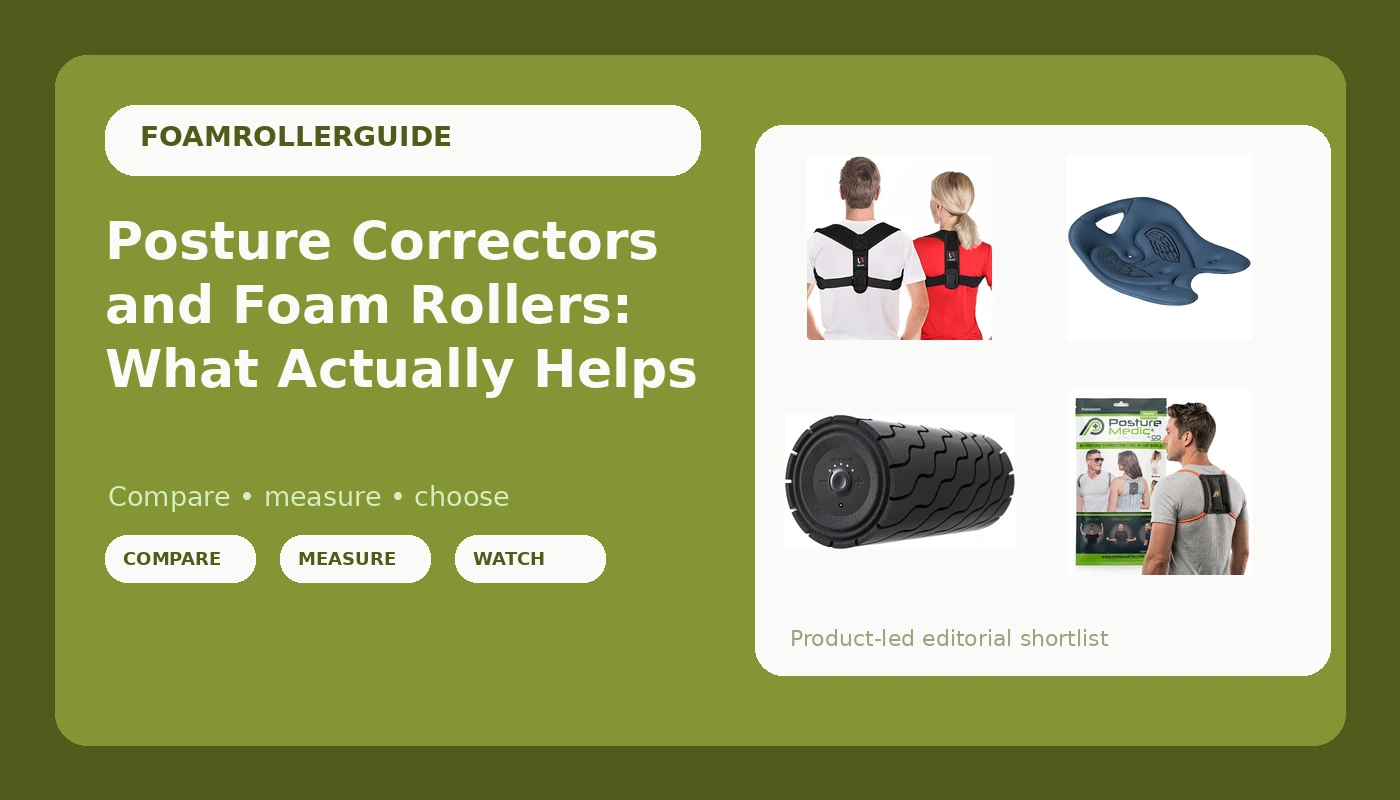
Most of the people who walk into my treatment room with a back that "just hurts" have already bought something. A brace, a cushion, a roller from a big box store, usually some combination of all three. This comparison is about four products in that space, posture correctors and foam rollers, and about the question underneath all of them: which one actually changes your body, and which one just makes you feel supported for twenty minutes?
I am a physical therapist in Minneapolis, twelve years in, and half of that time has gone to the specific kind of back that shows up after a decade of desk work. I prescribe foam rolling the way I would prescribe a medication: a specific tool, a specific dose, a specific reason. So when I look at a posture brace or a vibrating roller, I am not asking whether it feels nice. I am asking what it does after the novelty wears off.
The best pick for most people here is the TheraGun Therabody WaveRoller, because soft tissue work changes more backs than bracing does. It is also the most expensive item on this list, and if your problem is the chair you sit in for nine hours a day, the BackJoy posture seat is the smarter purchase. Those two sentences are the article in miniature. The rest is the reasoning, and the reasoning is the part that saves you money.
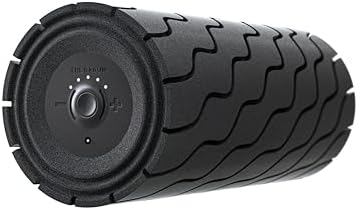
TheraGun Therabody WaveRoller
The most useful tool in this group for large muscle groups, with vibration that helps people tolerate real pressure
The priciest option here, tied to an app, and pointless if you will not roll consistently
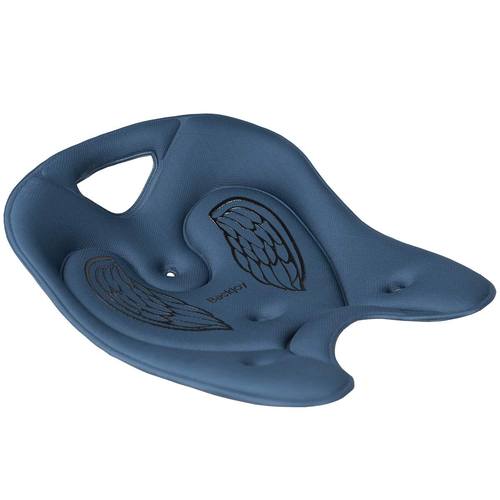
BackJoy SitSmart Angel Traction Posture Seat (Petite XS)
Addresses the chair you sit in all day, which is where most desk backs start
Listed in a petite XS size, so check the fit before ordering; a cushion cannot rescue a badly set up desk
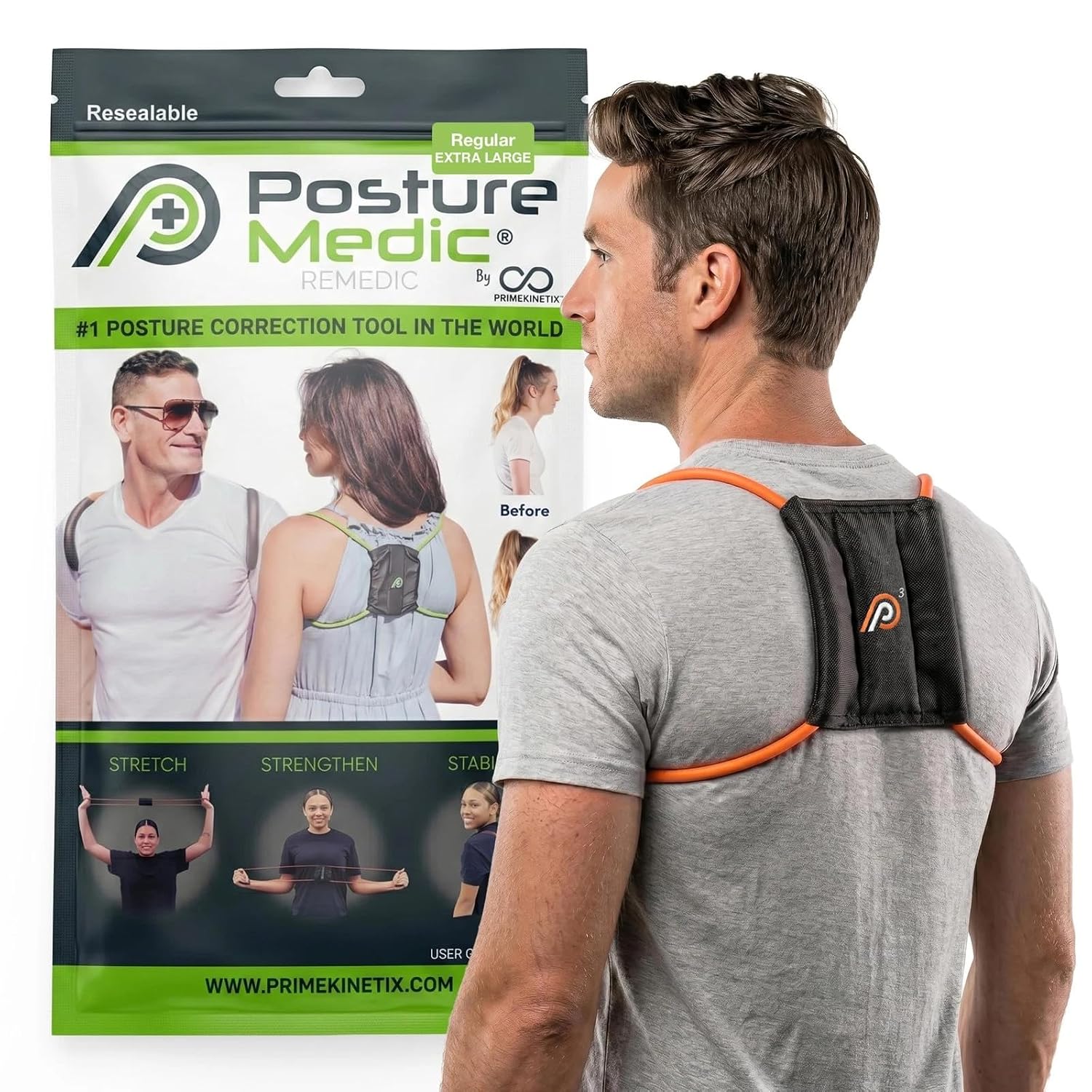
PostureMedic Plus Strength Dynamic Posture Corrector
Active resistance trains the muscles that hold you upright instead of just reminding you
It demands real effort and consistency, so it is a training tool, not a passive wear and forget brace
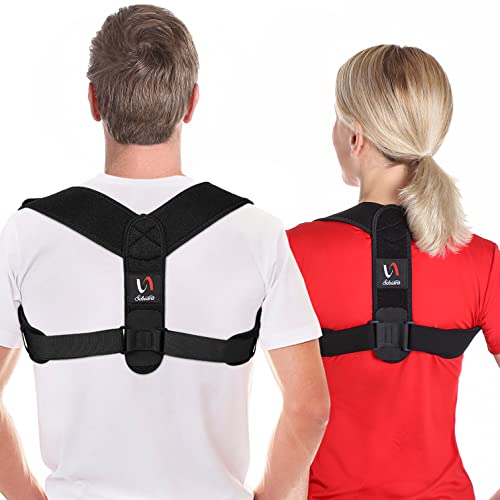
Schiara Posture Corrector
Simple, adjustable upper back and shoulder cue that is comfortable enough for short work blocks
Passive support builds nothing on its own, and it is easy to over-wear and start leaning on it
Prices and availability were captured from Amazon Creators API and may change.
How I judged these four
Four criteria, in the order they matter to me.
- Does the tool match a real clinical need, or does it match a marketing category?
- Can a normal person use it without hurting themselves on day one?
- Does it survive six months of real use, or does it become a closet paperweight?
- Would I prescribe it to a patient whose week I actually know something about?
One thing I want to be straight about: I am working from how each of these products is designed and from years of prescribing this category of tool, not from a sponsored week with each box. Where I cannot verify something, I say so instead of guessing. That is the standard I would want if I were the one spending the money.
The roller: TheraGun Therabody WaveRoller
A high density foam roller with Bluetooth and five customizable vibration frequencies controlled through the Therabody app. That is the short version of the listing, and it is an accurate description of what you get.
Here is my clinical read. Vibration is a genuine addition to rolling, not a gimmick. The buzz changes how the tissue tolerates pressure, which means people who normally brace against a hard roller will actually stay on it long enough to get something out of it. The five-frequencies-in-an-app part is where I get skeptical, not because it does not work, but because most people will pick one setting in week one and never open the app again. That is fine. You just should not pay a premium for a feature you will use once.
Density is the part that matters, and this is a high density roller, which makes it a tool for large muscle groups. Quads, hamstrings, calves, lats, the big sheets of tissue along the outside of the thigh. It is not the roller I would hand someone for their ribcage, and it is not the roller I would hand a beginner who has never rolled anything before. If you are new to this, start softer and work up. If you already roll and you want one tool that handles your legs properly, this is a defensible buy.
The desk fix: BackJoy SitSmart Angel Traction posture seat
This is the item in the group I have the least skepticism about, and also the one people misunderstand the most. The listing describes it as ergonomic pressure relief with hip and pelvic support, built for a home chair, an office chair, or a car seat, and that is exactly what a seat like this does. It changes the surface you sit on so your pelvis has a place to settle instead of sliding into a slump.
What it cannot do is fix a desk that is set up wrong. If your monitor is low and your chair is too high, no cushion on earth will hold you in a good position, because your body is doing math to see the screen and your posture is losing that fight. Buy the seat, then fix the monitor height. That order matters.
One practical note: this model is listed as a Petite XS in blue. That is a specific fit, and seat cushions are like shoes. If you are not in that size range, look at the other sizes in the SitSmart line rather than ordering this one and hoping. Also worth saying plainly: a seat cushion is the lowest risk purchase here. It is comfortable, it does not require a routine, and it will not hurt you. It is also the slowest to change anything, because it works passively while you sit.
The two braces are not the same tool
The Schiara Posture Corrector is a soft, adjustable upper back and shoulder brace for men and women. It pulls your shoulders back and gives you a physical reminder of where your shoulders are supposed to live. That reminder is the entire mechanism. There is no training stimulus, no resistance, no load. It is a cue you wear.
I prescribe this category in short blocks, twenty to thirty minutes at a time, usually tied to one specific activity, like the hour you spend answering email. Then it comes off. A brace worn all day becomes a crutch, and the muscles that hold your shoulders back get less work, not more. If you catch yourself reaching for it every morning out of habit rather than out of a plan, that is your signal to wean off it. It is also not a lifting belt, and it should never be worn under a barbell.
The PostureMedic Plus is a different animal entirely. It is described as a high resistance training system for performance and recovery, a dynamic posture trainer rather than a passive brace. Translated out of marketing: you wear it and it resists you, so your own muscles have to work to hold position.
That is a much better idea than passive bracing, and a much harder sell, because it requires you to actually do the work. It belongs in the same slot as a workout, not the same slot as a brace. If you want something that fixes your posture while you sit still and think about nothing, this is not it. If you are an athlete or a committed trainee who wants to load the postural muscles directly, this is the more honest tool of the two.
Where each one loses
The WaveRoller loses on price and on discipline. If you will not roll for two minutes per muscle group a few times a week, it is an expensive cylinder in your closet. The BackJoy seat loses on setup. It helps a decent chair and does nothing for a bad one, and the petite sizing narrows who it fits. The Schiara loses because passive support is a reminder, not a treatment, and reminders get ignored. The PostureMedic Plus loses because it demands effort and most people buy posture products precisely to avoid effort.
Notice the pattern: every one of these tools fails for the same reason, which is that it was bought as a substitute for movement instead of a support for it. That is the honest failure mode, and it has nothing to do with which brand you pick.
Dosing each tool without hurting yourself
For the roller: two minutes per muscle group, pressure that is uncomfortable but not painful. Rolling before a workout preps tissue. Rolling after it recovers. They are not interchangeable, and the after-session roll is the one most people skip. If you are holding your breath or grimacing, back off. Pain during rolling is a signal to reduce pressure, not a badge.
For the braces: short blocks, tied to a specific activity, with a plan to reduce the time over a few weeks. For the seat: it is a passive tool, so pair it with standing up every hour. For the dynamic trainer: treat it like a set in your program, not like a garment you put on and forget.
Questions I get every week
Can I wear a posture corrector all day? No, and I would rather you wear it for twenty focused minutes than eight unfocused hours.
Should I roll before or after training? Both, with different intent. Prep before, recover after.
Is a vibrating roller worth it over a plain firm one? Vibration helps, but a good firm roller gets you most of the way there. Buy the vibration if you already roll. Do not buy it hoping it will make you start.
Do I need a brace and a seat cushion? Probably not both. Pick the one that matches the eight hours you actually live in.
What I am watching next
The category is drifting toward app-connected recovery gear, and I am watching whether that connectivity earns its place or just adds a battery and a support ticket. My test stays the same as it has been for twelve years: does the tool match a real need, can a normal person use it safely, and will it still be in your living room in six months? Buy the one that passes all three, and skip the one that only passes the first.