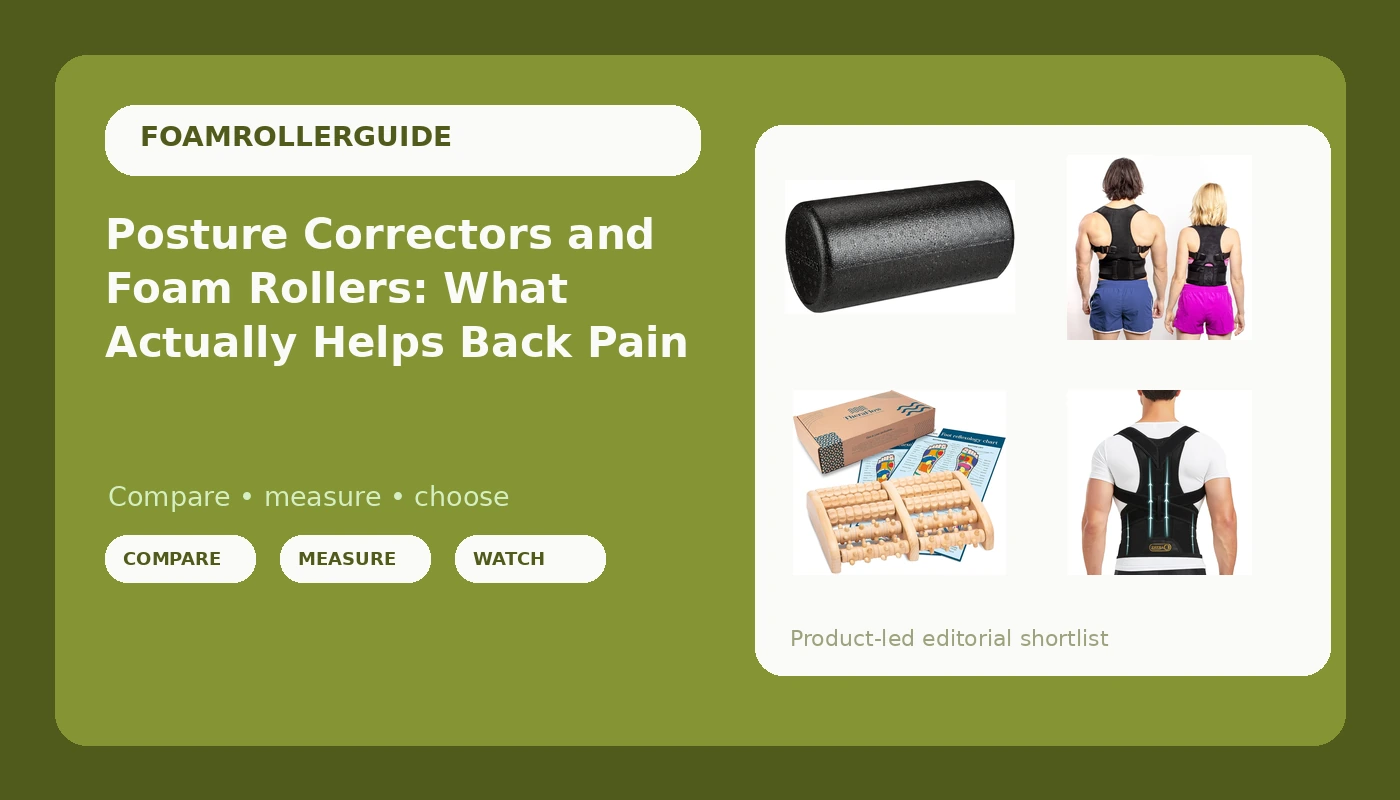
Related: Best Foam Roller for Stubborn Quads and Cranky IT Bands
Most people who come into my treatment room with a cranky lower back own two things: a posture corrector they wore faithfully for about nine days, and a foam roller that has been living under the bed since February. Neither tool is the problem. The problem is that nobody explained what each one is for.
I'm Nora. I've been a physical therapist for twelve years, and half of that was spent in a clinic treating backs that "just hurt" and legs that "won't loosen up." I prescribe rolling the way I would prescribe anything else: a specific tool, for a specific tissue, for a specific amount of time. This guide is the version of that conversation I have with patients, written down.
If you are trying to choose between a posture corrector and foam roller work, the short answer is that they are not competitors. One is a short-term reminder for your upper body during the day. The other is a daily dose of pressure and movement for the tissue that is actually tight. You can own both, and most people with desk jobs should.
Here is what I look at when I decide whether a recovery tool is worth the money, and how these four pieces of gear fit into a real routine.
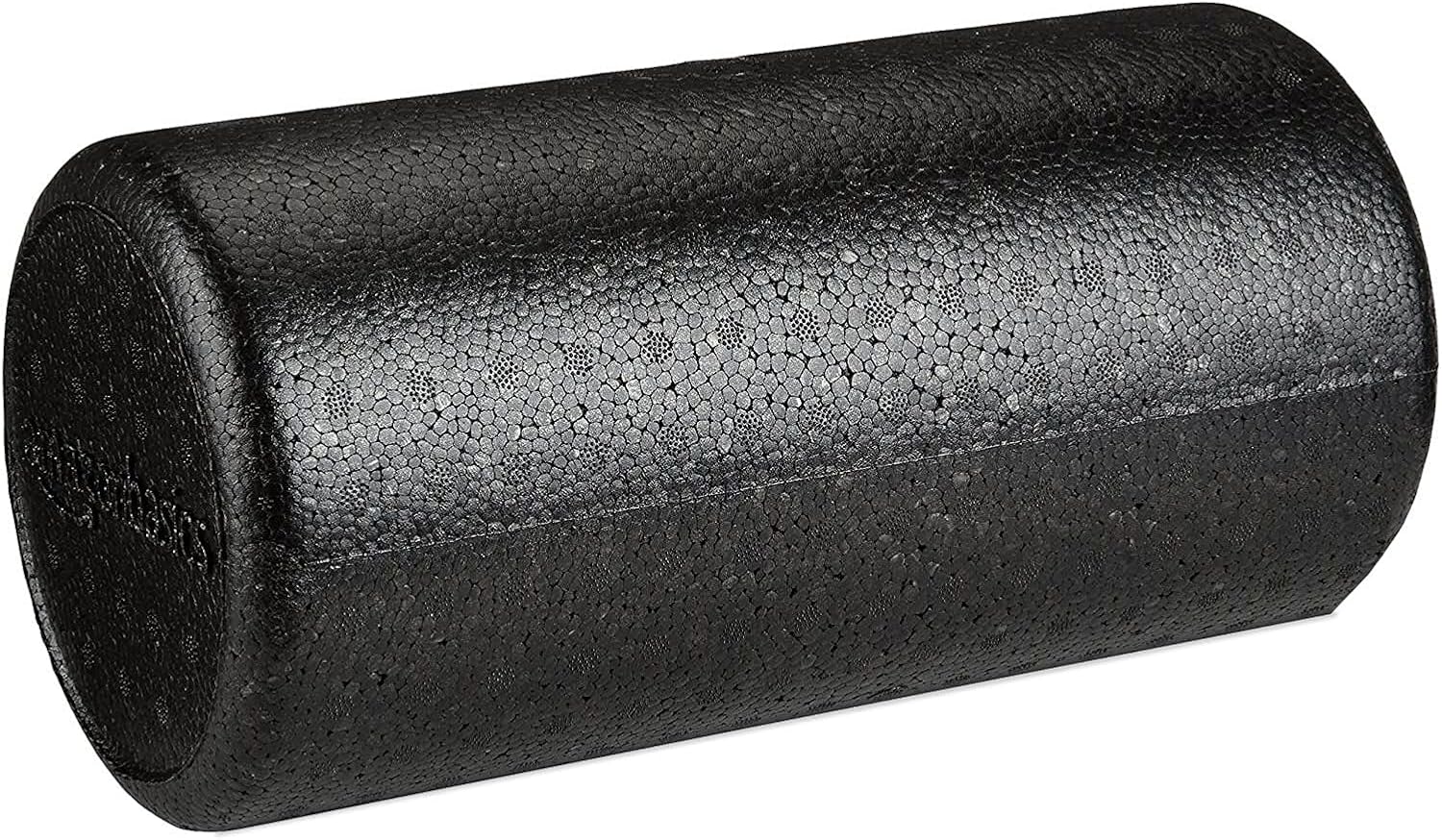
Best Overall Roller: Amazon Basics High Density Foam
For most bodies, the correct first roller is boring. You want a straight cylinder with uniform density, no ridges, no nubs, no vibration, and no marketing claims printed on the side. The Amazon Basics High Density Foam roller is exactly that, and that is a compliment.
A plain cylinder gives you the same surface every single time you lie on it, which matters more than people realize. When the surface is predictable, you can learn what "uncomfortable but not painful" actually feels like, and you can reproduce it tomorrow. Ridged rollers are fine later, once you know how to dose pressure. They are a terrible place to start, because you cannot tell whether the discomfort is coming from your tissue or from the shape of the tool.
High density foam is the honest middle ground for the muscles most people actually need to work: quads, hamstrings, glutes, calves. Roll two minutes per muscle group, slow, breathing, and stop when the sensation changes from "work" to "ow." That is the whole protocol. It does not need to be more complicated than that.
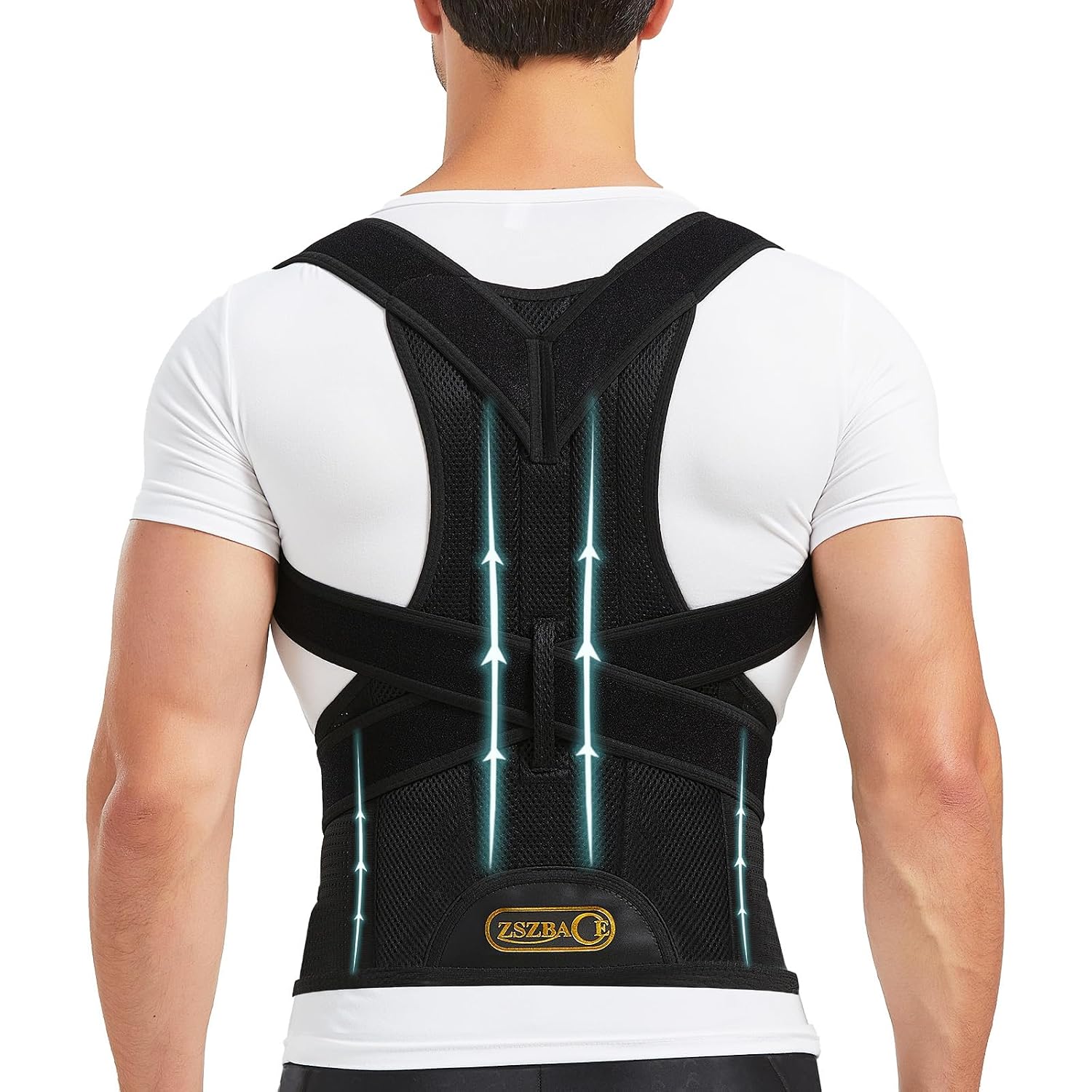
Best Posture Brace for Structured Support: Back Brace and Posture Corrector
This adjustable back straightener is the more structured of the two braces here. It wraps the upper and lower back, and the adjustable straps let you set the amount of pull rather than accepting whatever tension the factory decided on. For people who spend six hours a day folded over a laptop, that adjustability is the whole point.
Here is how I want you to use it, and this matters more than which brace you buy. Put it on over a thin shirt, not against skin, because straps that dig in get abandoned by day three. Set the tension so you can breathe into your belly and sit up without fighting it. Wear it for 20 to 30 minutes during the part of your day when you slump most, then take it off and keep the posture on your own.
A brace is a cue. It reminds you where your shoulders belong. It does not strengthen your mid back, it does not fix a spine, and it does not do anything at all while it is hanging in the closet. The people who get results from a brace are the ones who also do their own work, and who treat the brace as a timer for better habits rather than a substitute for them.
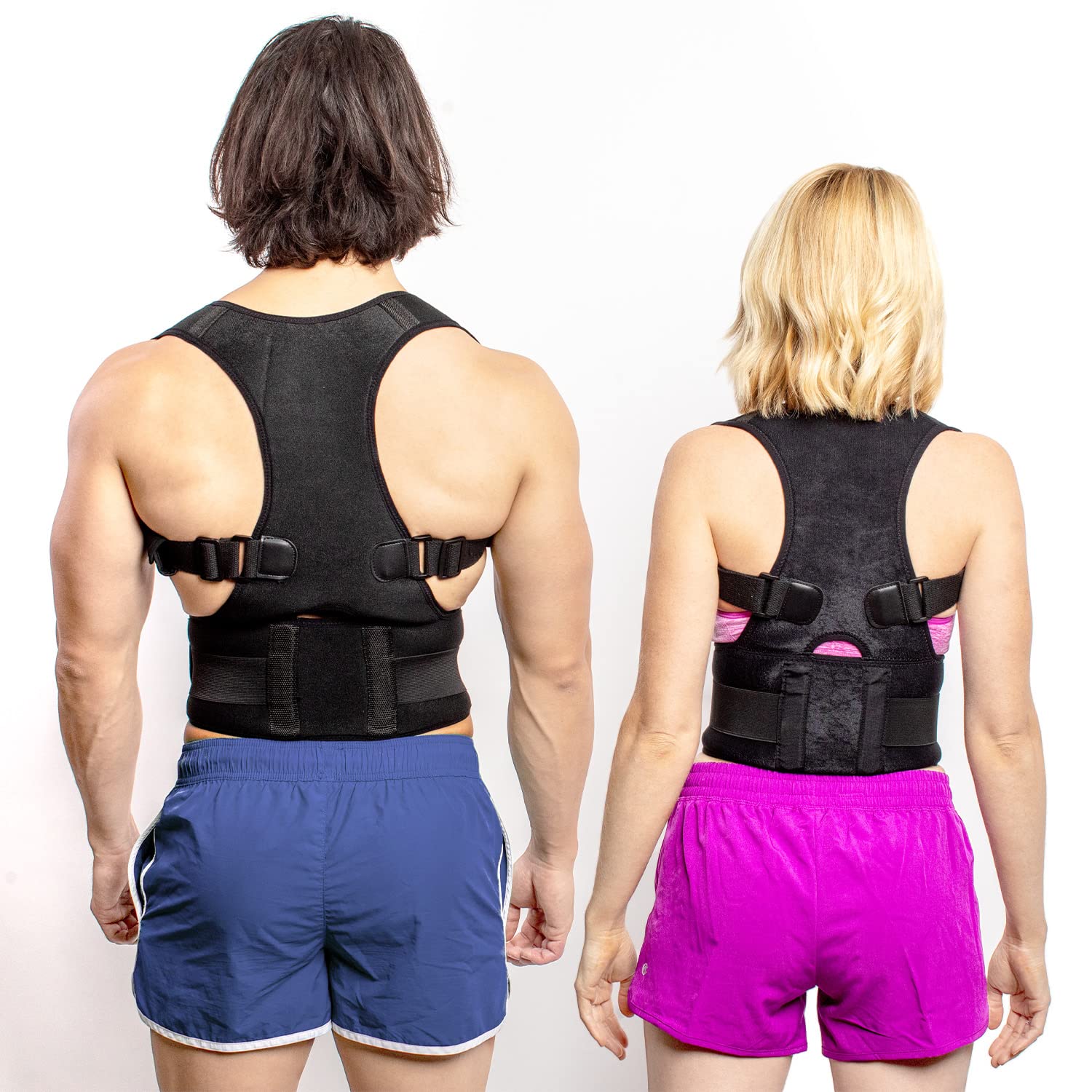
Best Budget Posture Brace: FlexGuard Posture Corrector
The FlexGuard is the low-commitment entry point. It is an adjustable shoulder and upper back brace aimed at pulling the shoulders back and down, and it comes in extended sizing, which matters because a brace that is too small gets returned and a brace that fits gets worn.
My honest read: this is the one I would suggest to someone who is not sure they will stick with a brace at all. Start with 15 minutes, not 30. Wear it while you answer email, not while you lift anything. If you find yourself reaching for it every afternoon at the same time, that is useful information about your day, and it is the moment to think about whether your chair and monitor height are the real problem.
Do not sleep in it. Do not wear it for a full workday. Do not wear it to the gym. A brace worn too long teaches your postural muscles that they are off duty, and that is the opposite of what you want.
Best for Feet: TheraFlow Foot Massager
Everyone talks about the back and forgets the feet, which is strange, because the feet are where the day's load actually lands. The TheraFlow is a wooden foot roller with deep tissue and reflexology nubs, and it ships with a reflexology chart, which I appreciate mainly because it gives you something to look at while you roll.
The use case is simple. Keep it under your desk. When your arches ache at the end of the day, roll each foot slowly for a minute or two, pressing hard enough that you feel it but not hard enough that you flinch. Plantar fasciitis symptoms respond well to consistent, low-level loading, and this is a low-effort way to get that in while you are doing something else.
It is not a replacement for calf work. Most stubborn foot pain traces back up the chain, so pair this with the foam roller on your calves and you will get more out of both.
How I judge recovery and posture gear
Four questions, every time.
First, does the density or the tension match a real clinical need, or is it a marketing number? A soft surface for a ribcage is correct. A soft surface for hamstrings is a lie, and you will feel that lie within a week.
Second, can a normal person use it without hurting themselves? If a tool requires a technique lesson before it does anything useful, most people will not use it, and a tool you do not use is a paperweight.
Third, does it survive six months of real life? Rollers that flatten, straps that fray, coatings that flake. That is the failure mode I see most.
Fourth, would I prescribe it to a patient and expect them to actually follow through? If the answer is no, it does not matter how clever the design is.
Analysis: what these tools can and cannot do
Let me be direct about the claims, because the marketing has gotten more creative than the engineering.
Rolling does not "break up scar tissue." It does not rearrange your fascia. What it does is apply pressure and movement, which changes blood flow and calms down the nervous system's guard response around a tight area. That is a real effect and a useful one, especially after training. It is just not the effect on the label.
Braces do not correct a spine or cure a hunchback. They provide a tactile reminder that your shoulders have drifted forward, and reminders work, at least while they are on. The honest framing is that a brace buys you awareness and rolling buys you tissue quality. Neither one builds strength, and strength is what changes posture over months.
Dosing is where most people go wrong in both directions. Rolling: two minutes per muscle group, pressure that is uncomfortable but not painful. Braces: 20 to 30 minutes, once or twice a day, then off. If you are gritting your teeth through either one, you are not recovering. You are just enduring, and endurance is not a protocol.
One more thing. Roll before a workout to prep and wake things up, roll after to recover, and understand that those are different sessions with different pressure. Rolling hard right before you squat is not prep. It is a way to feel loose and unstable under a bar.
The recovery and posture reference table
This is the version I would write on a whiteboard for a patient. Match the tool to the target and the time of day, and keep the dose short.
| Tool | Where it fits | Target area | Notes |
|---|---|---|---|
 Visit on Amazon → Amazon Basics High Density Foam |
Daily, after training | Quads, hamstrings, glutes, calves | Two minutes per muscle group, slow |
 Visit on Amazon → Back Brace and Posture Corrector |
Desk hours, when you slump | Upper and lower back | 20 to 30 minutes, then off |
 Visit on Amazon → FlexGuard Posture Corrector |
Budget first brace | Shoulders and upper back | Start at 15 minutes |
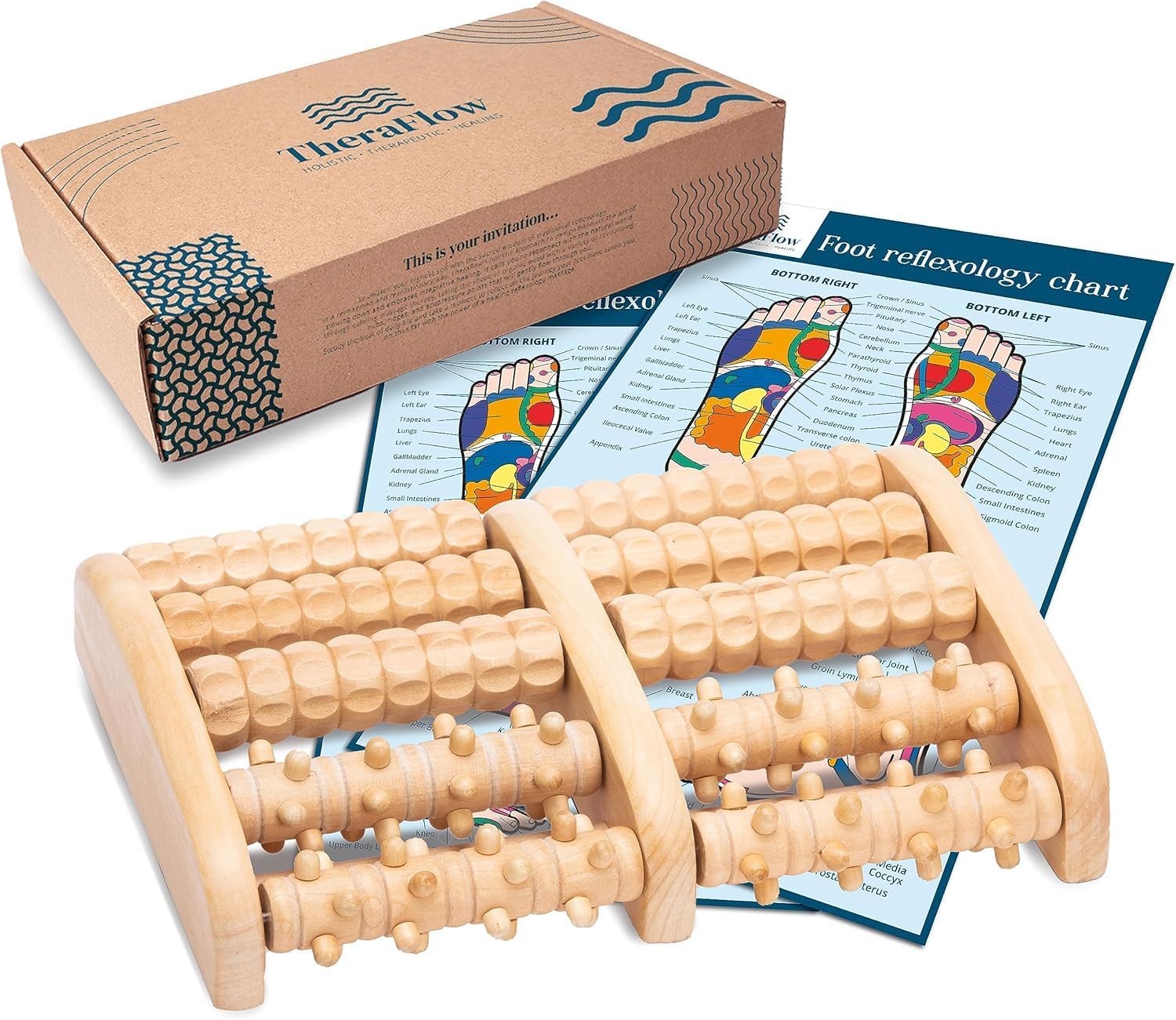 Visit on Amazon → TheraFlow Foot Massager |
Evenings, under the desk | Arches and feet | One to two minutes per foot |
The pattern in that table is short and frequent. Fifteen minutes of brace time beats three hours. Two minutes of rolling beats one long session on Sunday. The tools are cheap compared to the cost of not using them.
Should you buy the Amazon Basics High Density Foam roller?
Yes, if you are starting a rolling routine and you want one tool that does not lie to you. A straight cylinder with no ridges is the correct first purchase because it teaches you pressure. You learn the difference between a muscle that needs work and a spot that needs you to back off, and that skill transfers to every other roller you ever buy.
The limit is that it is a plain foam roller and nothing more. If you have been rolling for a year and your quads have stopped responding, you do not need a fancier version of this. You need a firmer or more textured surface, and you need to be honest about whether you are actually rolling or just lying on the floor with your phone.
Should you buy a posture corrector?
Yes, as a reminder, and with a hard limit on the clock. The adjustable back straightener is the one to get if you want to dial in the tension and cover both the upper and lower back. The FlexGuard is the one to get if you want to test whether you will wear a brace at all before spending more on one.
What I will not tell you is that either brace fixes anything on its own. Wear it for 20 to 30 minutes during your worst slumping hours. Take it off. Roll your quads and calves. Move more than you did yesterday. That combination is what changes a back, and the brace is the smallest part of it.