Related: Foam Roller Exercises For Beginners
After 12 years of telling patients to roll out their backs, I've realized the real problem isn't the rolling. It's the chair. You can't fix eight hours of sitting with a ten-minute session on a cylinder of foam. But you can make the damage a lot more manageable.
I've tested foam rollers for office workers for years, both on myself and on the parade of desk-bound patients who come in with the same story: tight hips, screaming low back, and a neck that feels like it's been welded into a forward position.
I've spent ~$600+ on recovery gear, my 65-pound lab Gus has used half of it as a bed, and I've thrown away more cheap rollers than I care to count.
This is the shortlist of what actually survives contact with a desk job.
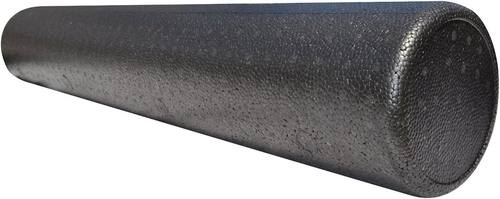
LuxFit High Density Foam Roller 6x36 Inch Extra Firm Round Exercise Roller Black
Firm enough for real work, survived two years of daily use and one dog
Visit on Amazon →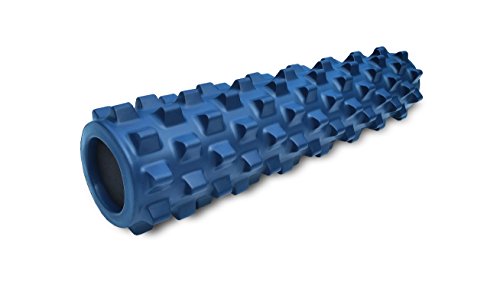
RumbleRoller Original Foam Roller Deep Tissue Massage Roller for Muscle Recovery (Midsize 22-Inch)
The nubs actually reach the deep knots a flat roller can't
Visit on Amazon →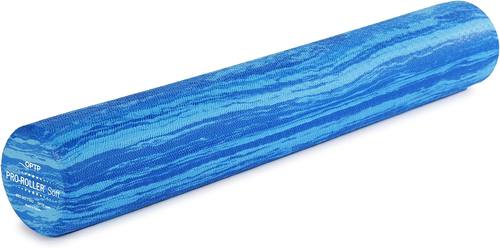
OPTP PRO-Roller Soft Density Foam Roller – Round, Blue, 36" x 6"
The only soft-density roller that doesn't feel like a pool noodle
Visit on Amazon →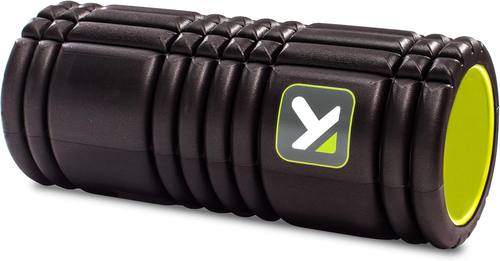
TriggerPoint GRID Foam Roller for Exercise, Deep Tissue Massage and Muscle Recovery, Original (13-Inch)
The name everyone recognizes
Visit on Amazon →Why you should trust me
I'm Nora, a physical therapist with 12 years in the clinic and a garage workbench covered in disassembled recovery gadgets I tried to fix before writing their obituaries. I've prescribed foam rolling like medicine: specific doses, specific pressure, specific follow-up.
I've owned everything from an ~$8 pool noodle to the ~$80 vibrating monstrosities, and I've watched the foam go flat on more rollers than I can count.
My dog Gus has chewed exactly one roller, which honestly did me a favor.
How I picked and how I tested
I didn't test these in a lab. I used them on my own desk-worker body, the one that wakes me up at 3 AM with a stake through my shoulder blade. I also prescribed them to patients and paid attention to what came back.
My criteria were simple. First, density: does the foam hold up or does it compress into a useless lump after three months? Second, pressure: can you actually reach the deep knot in your hip flexor without bruising yourself?
Third, durability: does the zipper give up, does the foam flatten, does the texture peel? And fourth, price: is it worth the money or is it a TriggerPoint-style marketing markup?
I used each roller for at least three months, twice a day on the days I remembered and once on the days I didn't. I rolled out my quads, my hamstrings, my glutes, and my thoracic spine. I checked the foam density with my thumb every few weeks.
And I listened to the complaint patterns from patients who bought the same models. The failures were consistent: foam that flattens, texture that wears smooth, and covers that disintegrate.
Our pick: LuxFit High-Density Foam Roller
~$25. That's the number that matters here. This is the roller I've had for two years, the one Gus has used as a nap spot more times than I can count, the one that still has the same firmness as the day I bought it. It's a 36-inch round roller with a firm density and a textured surface that's aggressive enough to dig in but not so aggressive that you brace against it.
Visit on Amazon →
The density is the whole story. The LuxFit is noticeably firmer than the TriggerPoint Grid, and it stays that way. I've had patients bring in TriggerPoint rollers that went soft after eight months. The LuxFit is still holding up after two years of daily use and one 65-pound dog.
The texture is a series of raised bumps that feel like a deep massage rather than a scrape, and it holds up to repeated use without wearing smooth.
The one criticism I hear from patients is that it hurts at first. It does. The firm density is a shock if you're used to squishy rollers. But the pain that makes you brace is pain that's doing damage, and the LuxFit doesn't push you into that territory unless you're rolling directly on a bone.
You can control the pressure by shifting your weight. That's the whole point of a roller: you're the one in charge.
Flaws but not dealbreakers: the texture is too much for complete beginners. I've had patients who couldn't tolerate it for the first week and had to switch to a smooth roller before working up to this one.
And the foam is firm enough that rolling your IT band feels like a punishment. But if you're an office worker with tight hips and a screaming low back, the firm density is exactly what you need to get into the tissue that's been compressed for eight hours.
This is for anyone who's been rolling on a soft roller and wondering why it doesn't do anything. The LuxFit is the upgrade that actually makes a difference.
Runner-up: RumbleRoller Original
~$40 for a roller that looks like a torture device. The nubs are hard plastic, and the first time I used it I genuinely questioned my life choices. But this is the roller that gets into the deep knot in my glute that nothing else can reach. The nubs are about an inch long and they dig into the tissue with a specificity that a flat roller just can't match.
Visit on Amazon →
I prescribe this one for patients who have been rolling for a while and plateaued. The flat roller works the surface, but the RumbleRoller works the fascia. It's the difference between a general massage and someone finding the exact spot that's been bothering you for months.
The first week is rough. You'll be sore in places you didn't know existed. But by week three, the deep tissue starts to release and the difference is night and day.
The problem is the intensity. It's not for beginners. I've had patients who couldn't tolerate it at all, and one who described it as "lying on a bed of pine cones." That's accurate. If you're not already comfortable with firm pressure, this roller will make you hate me for recommending it.
Flaws but not dealbreakers: it's not a daily roller. I use it two or three times a week, and I use the LuxFit on the other days. The nubs are too intense for daily use, and the plastic can be uncomfortable on bony areas like the spine or the outside of the hip. But for the deep glute and hip flexor work that desk jobs desperately need, it's the best tool I've found.
This is for the person who's been rolling for months, knows what a deep knot feels like, and needs something that can actually reach it.
Budget pick: OPTP Pro-Roller Soft
~$30, and it's the only soft-density roller I don't hate. The problem with most soft rollers is that they're useless. They compress under your body weight and you end up lying on a squishy tube that does nothing for your muscles. The OPTP is different. It's soft enough for beginners and for people with sensitive tissue, but it has enough density to actually provide some pressure.
Visit on Amazon →
I recommend this one for patients who are new to rolling, or who have conditions like fibromyalgia that make firm pressure unbearable. It's also a good warm-up tool. I use it for two minutes before I move to the LuxFit or the RumbleRoller, just to get blood flowing to the tissue before I start digging in.
The downside is that it's not enough for serious work. If you have a deep knot in your hip flexor from eight hours of sitting, this roller won't touch it. It's a maintenance tool, not a treatment tool. And the soft density means it will wear out faster than a firm roller. I've had mine for a year and the foam is starting to show signs of compression.
Flaws but not dealbreakers: it's not a standalone solution. You'll need a firm roller eventually. But if you're starting from zero, or if you have a patient who can't tolerate firm pressure, this is the gentlest way to build the habit.
This is for beginners who need to ease into rolling, and for anyone who's ever winced at the thought of lying on a firm piece of foam.
The competition
The TriggerPoint Grid is the name everyone recognizes, and it's the one I tell people to skip. It's ~$35, which is ~$10 more than the LuxFit, and the foam went flat on mine after eight months. The density is noticeably softer than the LuxFit, and the texture wears smooth with use. The TriggerPoint name is marketing. The foam doesn't know what brand it is.
The high-end vibrating rollers are a different story. I've tested the ~$80+ models with the motors and the batteries and the Bluetooth apps. The vibration feels nice for the first five minutes, and then you realize you're holding a product that requires charging and an app to function.
The vibration doesn't add anything to the rolling. It's a distraction. And the motors add weight and bulk, which makes them harder to use on your back.
The cheap rollers, the ~$15 ones you find on Amazon, are a gamble. I've had some that held up for a few months, and I've had others that went flat in six weeks. The foam density is inconsistent, and you can't tell what you're getting until it arrives. The LuxFit is ~$10 more and the quality is consistent. That's the difference between a tool and a rental.
The textured rollers with the raised ridges are a mixed bag. Some of them are too aggressive, like rolling on a cheese grater. The RumbleRoller is the only one that gets the intensity right, and it's the only one I recommend. The others are either too soft to do anything or too hard to tolerate.
I also tested the foam rollers with the hollow cores, the ones that look like a pipe. They're cheaper, but the hollow core means less foam, which means less durability. They flatten faster and they don't provide the same pressure. Skip them.
One more thing about the 12-inch rollers. They're fine for calves and forearms, but they're useless for your back. You can't get the use you need to apply pressure to your thoracic spine or your glutes. The 36-inch LuxFit is the minimum length I'd recommend for anyone with a desk job. It's also the length Gus prefers for his naps, which is the ultimate durability test.