Nobody has bad posture because they forgot to stand up straight. They have bad posture because their upper back is stiff, their deep neck flexors are tired, and their day is built around a chair, a laptop, and a phone that all encourage collapse. That is a recovery problem, not a character flaw, and it responds to a posture and recovery routine the same way a tight calf responds to a loading program. Slowly, then all at once.
I have been a physical therapist for twelve years, and half of that was spent in a clinic where people walked in with backs that "just hurt" and legs that "won't loosen up." I prescribe rolling and positioning the way other clinicians prescribe medication: specific, dosed, and with a reason. So when someone asks me how to fix their posture, I do not hand them a list of stretches. I hand them a sequence with a start time, an end time, and two pieces of equipment.
This guide is that sequence. It is built around a back brace that cues you during the hours you cannot think about your spine, and a vibration ball that reaches the tissue the brace cannot touch. Neither one is magic. Together, used correctly, they cover the two halves of the problem: the hours you spend collapsed, and the tissue that keeps pulling you back there.
Why you should trust me
I keep a pressure gauge in my treatment room for the "it hurts so it is working" crowd, because pain during rolling is a sign to back off, not a badge of honor. If you are crying, you are not recovering. I have tested rollers that cost less than a pizza and vibrating ones that cost more than a decent office chair, and I own a massage gun collection that takes up half a closet. My opinion about gear comes from watching what patients actually use at home, which is a much harsher test than anything I can run in a clinic for twenty minutes.
The pattern is always the same. People buy the most aggressive tool they can find, use it twice, and put it in the closet. A roller you keep in the closet is a waste of money. Buy the tool that fits your routine, not the one that fits your ambitions.
How I evaluated these two tools
I am not going to pretend there is a leaderboard here. I look at three things before I recommend anything for a posture and recovery routine.
First, does the tool match a real need? A brace addresses position during the day. A vibration device addresses tissue that has adapted to that position. If a product does not clearly do one of those jobs, it does not belong in a beginner routine.
Second, can a normal person use it without hurting themselves? This rules out a lot of aggressive gear. Anything that invites you to chase pain gets a no from me, because the "no pain no gain" crowd is the same crowd that shows up three weeks later worse off.
Third, does it survive six months of real use? Gear that flattens, pops, or loses its charge goes in the drawer and never comes out. Durability is not a premium feature. It is the whole point.
Both items below pass all three questions for a general beginner. They are not the only options, and neither one is a substitute for movement. They are the two I reach for first when someone asks where to start.
The two tools this routine is built around
You do not need a wall of equipment to fix a posture problem. You need one thing that reminds you where neutral is and one thing that helps your tissue get there.
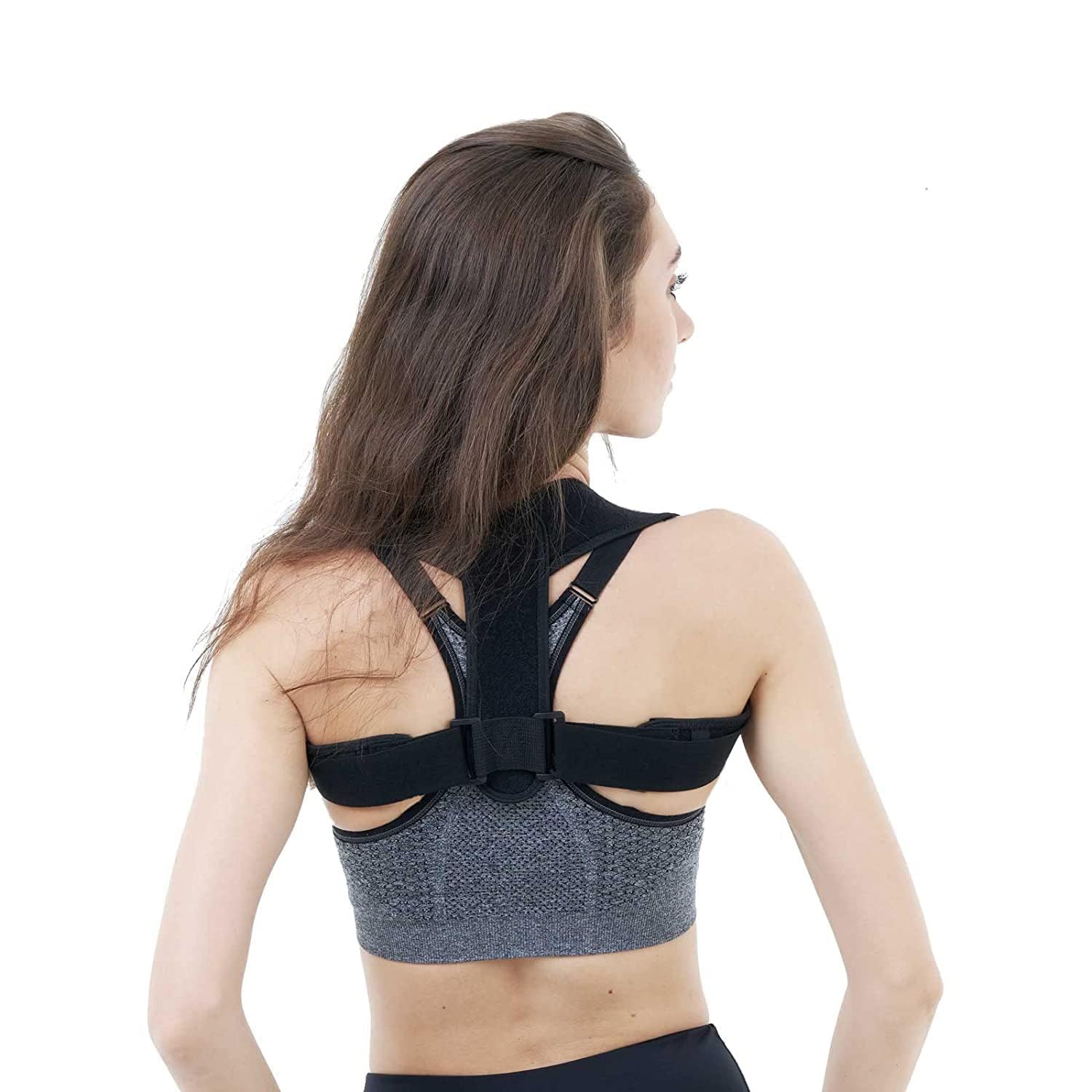
For the daytime hours: Posture Corrector for Women and Men, Back Straightener Brace
 Visit on Amazon →
Here is the honest version of what a brace does. It is a cue, not a cure. It pulls your shoulders back and gives your nervous system a reference point for what neutral actually feels like, which is useful information for a body that has spent four years hunched over a keyboard. What it does not do is strengthen anything. You still have to do that part yourself, and I will show you where it fits in the routine below.
The way I prescribe it is time-boxed. Twenty to thirty minutes a day, during a task you were already going to do, like your morning email or a walk around the block. Not all day. Not while you sleep. If you find that sitting up feels impossible once it comes off, that is a signal you are leaning on it instead of training, and the fix is to shorten the wear window and add more movement work.
Flaws but not dealbreakers: Fit is everything with a brace this simple. Measure your chest as the size chart instructs instead of guessing, because a brace that rides up or digs into your ribs is one you will stop wearing by day three. Get the sizing right and it disappears under a shirt.
Anyone who spends most of the day at a desk and needs a reminder more than a lecture will get real use out of this.
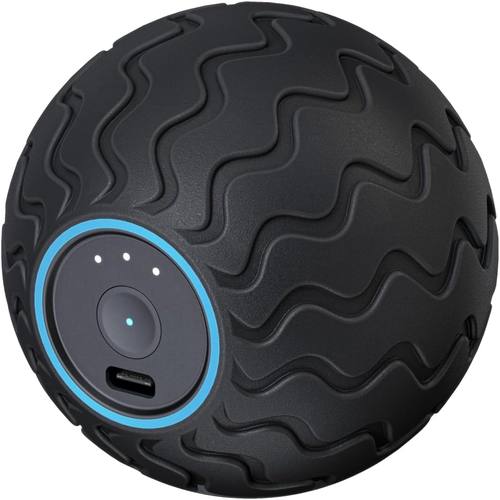
For the tissue side: Therabody WaveSolo - Handheld Bluetooth Enabled Massage Device, Ultra Portable Vibration Therapy Ball w/QuietRoll Technology & 3 Customizable Vibration Frequencies
 Visit on Amazon →
I will say the unpopular thing first. Vibration is a luxury, not a necessity. A good firm roller gets most people eighty percent of the way there for a fraction of the fuss. That said, the WaveSolo does something a roller cannot: it puts vibration directly into a small, specific spot without requiring you to get on the floor and roll your whole bodyweight over it.
The three vibration frequencies let you dose the input, which matters more than people think. Low frequency is for a slow warm-up or for tissue that is guarded and angry. Higher frequency is for tissue that is already warm and just needs to wake up. QuietRoll technology is the reason you can use it in front of the television without your family filing a complaint, and the handheld, ball-shaped form factor means you can work your upper back against a wall while standing, which is exactly how I want most people to use it.
Keep it on muscle. Upper back, glutes, quads, calves. Not the neck, not the spine, not your kneecap. Vibration on bone and joints does nothing useful and it is a great way to irritate something.
Flaws but not dealbreakers: It is a single ball, so you cannot trap a large area the way you would with a roller. If you want broad coverage of the whole back, this is not that tool. It is a precision tool, and it should be used like one.
Anyone who travels, sits at a desk, or has one or two specific spots that never seem to release will use this more than they expect.
The routine, step by step
Ten minutes. Same time every day if you can manage it, because consistency beats intensity every single time. This is the protocol I hand to patients.
Step one: Set the brace window. Put the brace on at a time you will actually remember, usually right after you sit down for your first block of work or right before a walk. Set a timer for 20 to 30 minutes. When the timer goes, take it off. The brace is teaching your body a position, and short, repeated exposure teaches better than a long, passive stretch of wear.
Step two: Reset while the brace is still on. Chin tucks, ten slow reps. Then wall angels, ten reps, moving only as far as your shoulders allow without your ribs flaring. This is not a workout. It is a rehearsal of the position the brace just showed you, done while the cue is still there.
Step three: Vibration on the upper back. Stand with your back to a wall, put the WaveSolo between your upper back and the wall, and lean in. Find the spot next to your shoulder blade, not on your spine. Sixty to ninety seconds per spot, and no more than two or three spots. Pressure should be uncomfortable but not painful. If you are bracing your jaw, you are pushing too hard.
Step four: Vibration on the lower half. Glutes, one side at a time, sixty seconds each. Then calves. This is the part people skip, and it is the part that makes the biggest difference for anyone who sits all day, because the glutes and calves are the tissues that go to sleep first.
Step five: Strengthen what the brace cannot. Five minutes, three or four times a week. Rows with a band, band pull-aparts, and dead bugs. A brace gives you a reference point, and strength is what lets you hold it without the brace. Skip this step and you have bought a reminder, not a fix.
Step six: Repeat tomorrow. The routine fails when people treat it as a project. It is not a project. It is ten minutes, and the goal is to still be doing it in March.
Common mistakes I see in the clinic
The first mistake is wearing a brace all day and calling it done. A brace that never comes off is a crutch, and crutches are for acute problems, not for a spine you plan to keep for forty more years.
The second is rolling or vibrating the spine itself, or the neck, because it feels productive. It is not. Keep the pressure on muscle bellies and let the joints do their job.
The third is chasing intensity. Deep tissue is a marketing phrase, not a dosage instruction. The right pressure is uncomfortable but not painful, and it should never leave you guarding the area afterward.
The fourth is buying gear instead of building a habit. If the routine is not on your calendar, the tool in the box does not matter.
How to tell it is working
You will not feel a transformation in three days. What you will notice over two to four weeks is smaller and more meaningful. You catch yourself sitting tall without thinking about it. The end of the workday hurts less. You stop shifting in your chair every four minutes during a meeting.
If none of that happens after a month, the problem is probably not the gear. It is the dosage, the frequency, or a tissue issue that needs a real evaluation. That is not a failure of the routine. That is information.
What this costs you
The real cost here is ten minutes a day, not the two pieces of equipment. Check current Amazon price on each tool and do the math against the number of days you will actually use them, because a cheap tool you never touch is more expensive than a good one you use every day.
If you want to start with one item instead of two, start with the brace, since daytime position is the bigger lever for most desk workers. Add the vibration ball second, when the routine is already a habit.
What I left out and why
I did not build this routine around a foam roller, even though I use them constantly with patients. A roller is a great broad-coverage tool, but it requires floor space, a warm-up, and enough shoulder mobility to roll without wrecking your neck, which makes it a poor first tool for someone whose posture is the problem. It belongs in phase two.
I did not include a massage gun. Percussion is fantastic on large muscle groups and dangerous on anything bony, and it has one speed on too many devices: earthquake. That is a tool for someone who already knows where their trigger points are.
I also left out posture apps, posture shirts, and anything described as infused. If a brand sells pool floats and a recovery device, buy the pool float.
Ten minutes, two tools, and a timer. That is the whole program. Your spine was built to hold this position. All you are doing is reminding it.