Forward head posture is not a moral failing. It is what happens when the screen you stare at for nine hours sits eighteen inches below your eyes, so your head drifts forward to meet it, and the muscles at the base of your skull spend the afternoon filing a complaint.
Most neck posture correction advice online is either a stretch you already do or a gadget that promises to undo a decade of desk work in ten minutes. Neither is a plan. A plan has a target, a dose, and a way to tell whether it is working.
I have been a physical therapist for twelve years, and this is the short version of what I actually give patients: one tool to create length and relief, one station to build the positions that hold, and a set of daily habits that matter more than both of them.
Why you should trust me
Twelve years as a physical therapist, half of them in a clinic where people came in with backs that just hurt and legs that would not loosen up. I keep a pressure gauge in my treatment room for the it hurts so it is working crowd, because it is not working, and I can show you the number that proves it.
I prescribe recovery tools the way a doctor prescribes medicine: specific, dosed, and with a reason. That means I care less about how a product photographs and more about whether it lets you control the force, whether a normal person can use it without hurting themselves, and whether it survives six months of real life.
Two honest notes. I have not run a lab test on either device below, so I am not going to pretend I measured anything. And no brand pays me. If you buy through a link on this page I earn a small commission, and that does not change what I tell you to skip.
What I look for in a posture tool
The category is crowded with things that look clinical and do nothing. I run every tool through four questions.
Does the force match the target? A collar that creates a gentle stretch through the neck and a tower that supports the upper back are doing different jobs. Confusing the two is how people end up worse.
Can a normal person use it without hurting themselves? If the honest answer is that you need a clinician standing next to you, it is a clinic tool, not a home tool.
Will it survive six months? Rollers that flatten, inflatable anything that pops mid-session, collars whose adjustment strips out by week three. Durability is not a luxury feature.
Would I prescribe it? That is the last filter and the one that eliminates the most products. A tool you keep in the closet is a paperweight. The same goes for a traction collar and a posture tower. Buy the one that fits your routine, not your ambitions.
The two tools that earn their place
There are dozens of gadgets in this category. Two of them do something specific, and they do it in a way you can dose at home without a clinician in the room.
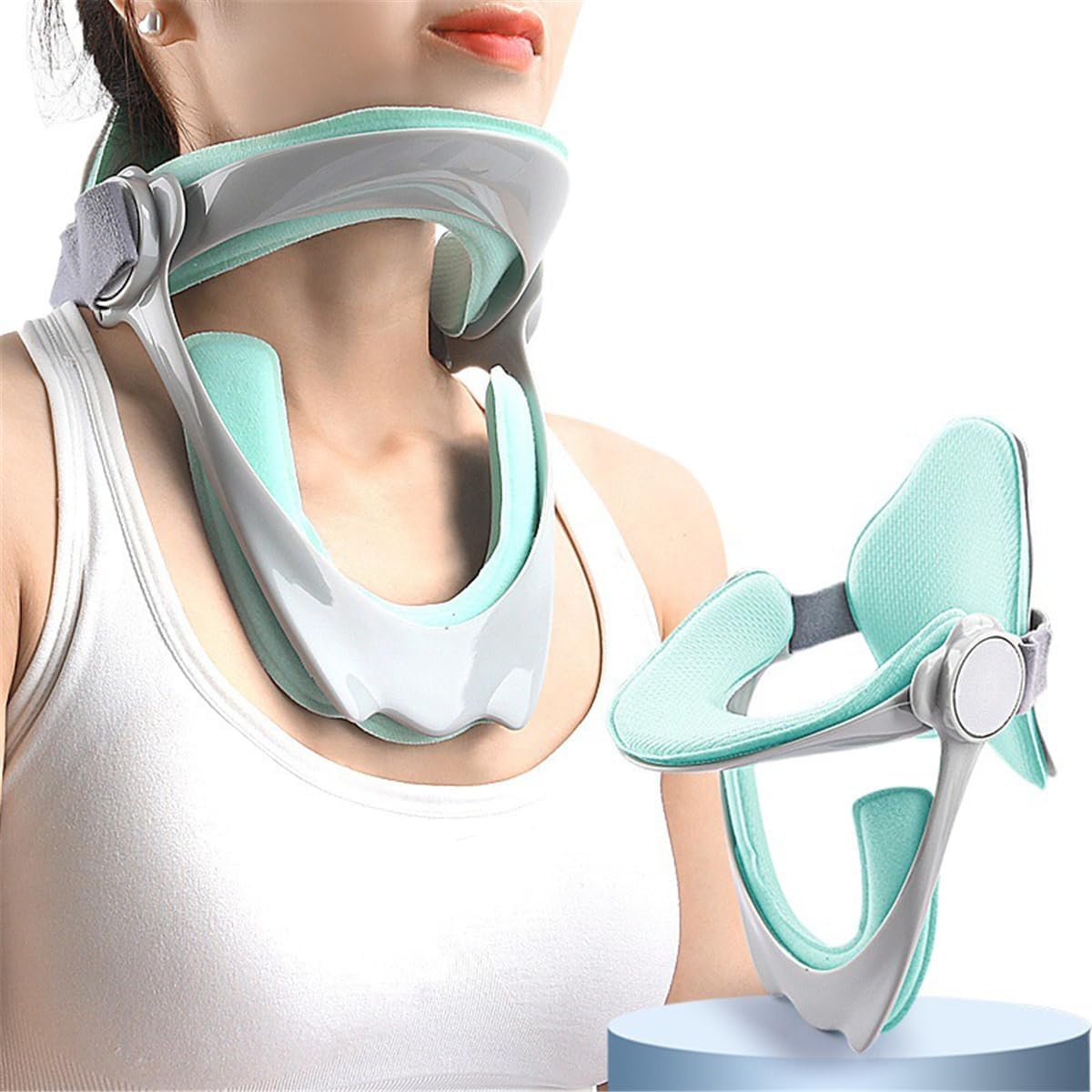
Budget pick: Adjustable Neck Brace, Neck Stretcher Cervical Collar Neck Traction Device for Neck Pain and Support, Neck Protector Forward Head Neck Posture Corrector for Women & Men Cervical Spine Pressure Relief
 Visit on Amazon →
This is the low-cost entry point, and it is the one I hand to patients who need relief before they can do any of the work. What it does is simple: it supports the head and creates a gentle stretch through the neck, and the adjustable design means you set how much rather than accepting whatever a fixed device gives you. Used in a supported sitting position for five to fifteen minutes, it can take the edge off a long screen day and make the exercises that follow feel possible.
What it is not is a correction. Passive traction buys you a window of comfort. It does not build the deep neck flexors that hold your head where it belongs, and if you wear it all day you are training your neck to depend on it, which is the opposite of the goal. Treat it like a hot shower: useful, temporary, and not a substitute for the work.
Two things before you order. Measure your neck circumference and match it to the size chart in the listing, because even an adjustable collar has a range. And if you have numbness or tingling into the arm, dizziness with head movement, a history of neck surgery, rheumatoid arthritis, or osteoporosis, get assessed before you put your neck in traction.
Flaws but not dealbreakers: It is a passive tool, so it builds nothing, and it is easy to overuse because it feels good. Cap it at fifteen minutes and use it as a warm-up for movement, not a replacement for it.
Anyone who spends the day at a screen and wants a way to decompress a stiff neck before exercising will get real use out of this.
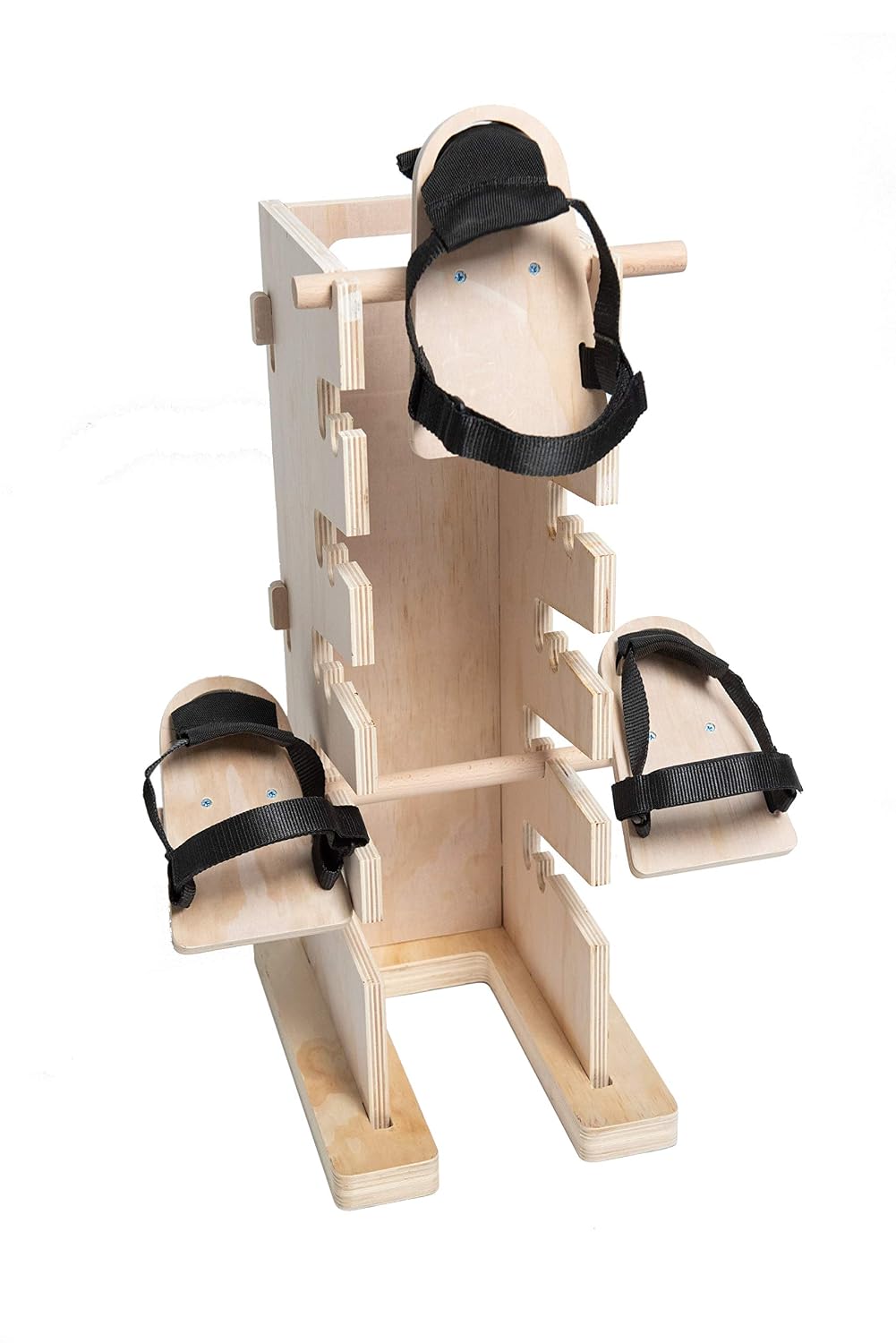
Upgrade pick: Pain Free at SEA Posture Therapy Multi-Positioning Tower (Includes Single and Double Pedal)
 Visit on Amazon →
The tower is the bigger investment and the bigger commitment. This is a multi-positioning station that includes a single and a double pedal, which means you can set supported positions for the upper back and neck and then change the load instead of holding one shape until your shoulders quit. That adjustability is the whole point. Posture work is about spending time in positions your body has stopped visiting, and a station lets you do that with support rather than willpower.
It is not a quick fix and it is not for everyone. It needs floor space, it needs a routine, and it needs you to show up four or more times a week to justify the footprint. What it replaces is the pile of pillows and rolled towels people build on the floor and abandon by week two. If you have been given a home program that involves supported positions, this is the version of that program that survives past the first month.
Flaws but not dealbreakers: It takes up room and it does nothing on its own. If you are not ready to use it several times a week, the collar plus a wall and a doorway will get you further for a fraction of the cost.
Anyone with the space, the routine, and the patience for a long game will get the most out of it.
The actual routine
Now the part you came for. This is the order I use, and the order matters: relief first, movement second, strength third.
Step one: rule out the red flags. Numbness or tingling into the hands, weakness that makes you drop things, dizziness with head movement, pain that wakes you at night, or a recent fall or car accident all go to a clinician, not to a collar. Traction on an undiagnosed neck is how people end up in my office worse than they started.
Step two: get a baseline you can measure. Stand with your heels, buttocks, and upper back against a wall, chin level. Notice how far the back of your head is from the wall, measured in fingers. Also note how many hours you can work before the ache starts. Recheck both in two weeks. Numbers beat vibes.
Step three: set the dose before you buy anything. Traction is five to fifteen minutes, once or twice a day, seated and supported, chin level, no cranking. Active work is two to three minutes per exercise. If it hurts more during or after, the dose is too high, not too low.
Step four: use the collar first if you are guarded. If turning your head is already uncomfortable, take the passive stretch before you ask the muscles to work. Five to ten minutes is plenty.
Step five: follow with chin tucks. Sitting tall, glide the head straight back rather than down, hold five seconds, ten reps, twice a day. It is a small movement and it should feel like effort, not strain.
Step six: add a deep neck flexor hold. Lying on your back, nod slowly as if saying yes, chin toward the throat, hold ten seconds, ten reps. This is the endurance that actually holds your head over your shoulders.
Step seven: train the upper back, because that is what carries the load. Rows, band pull-aparts, and prone Y raises, two to three sets, two to three times a week. A neck that sits on a strong upper back complains less.
Step eight: change the input. Monitor top at eye level, elbows at ninety degrees, feet flat, phone at eye level instead of chin level. No exercise undoes nine hours of a screen sitting at your sternum.
Step nine: dose the tower work. Ten to fifteen minutes in supported positions, several times a week, breathing the whole time. You are practicing a position, not winning a fight with it.
Where people go wrong
Rolling the neck on a foam roller. The cervical spine is not a hamstring. Putting your body weight on the back of your neck irritates joints and can make dizziness worse. Roll the upper back and leave the neck alone.
Massage guns on the neck or spine. Never. Those tools are for muscle bellies, not bones and joints, and I have seen the injuries that come from ignoring that line.
Wearing the collar all day. It feels supportive and it quietly weakens the muscles you need. Short sessions, then movement.
Chasing the crack. A pop is not a correction. Mobility you cannot control is just a party trick.
Buying the tool before the diagnosis. If you do not know what is driving the symptoms, you cannot pick the right dose or the right device.
Confusing relief with change. The stretch feels good for an hour. The strength work is what changes your default position over months.
The competition and why it lost
People expect a roller article on a site with this name, so let me explain the omission. A foam roller is a thoracic and lower body tool. It is excellent for the upper back and the quads, and it has no business under your skull. If your thoracic spine is stiff, roll it. If your neck is the problem, the collar and the tower are the tools that address it.
Massage guns lost here for the same reason they always do in neck articles: percussion belongs on muscle, and the neck is a neighborhood of joints, nerves, and small stabilizers that do not respond well to a hammer.
Passive posture braces that pull your shoulders back all day lost because they do the work for you, which means your muscles never learn to. The tower wins the same category because it puts you in position and then asks you to hold it yourself, which is the difference between a crutch and a training tool.
Ergonomic chairs and standing desks are fine purchases, but they change the input, not the tissue. They support the routine rather than replacing it.
What this costs, and what it is worth
The collar is the low-cost entry point and the tower is the larger investment. Neither is worth buying if it lives in a closet, so do the honest math on how many days a week you will actually use it. A tool used four times a week beats a better tool used twice.
Then compare that against the alternative, which is doing nothing and hoping the ache resolves on its own. It usually does not. It usually becomes the thing you mention to a friend at a barbecue and never address.
The routine above is free. The two tools make it easier to start and easier to keep going, and that is the entire job of a recovery purchase: remove the friction between you and the work. Pick the one that fits your space and your schedule, use it in the dose described, and give it six weeks before you judge it.
That is the job. Your neck was built to do this. Let it.