You know that ad for the ComfyBrace posture corrector, the one promising you'll stand up straight just by strapping it on? I've been a physical therapist for 12 years, and I've spent more money on recovery gear than most people spend on their first car.
I've also spent the last three months testing that brace and a whole pile of other "fixes" for forward head posture.
Here's the truth: the brace is a crutch, and if you use it like the marketing says, you're just paying ~$30 to make your muscles weaker.
The fix is a protocol, not a product.
I've been living with my own desk-worker neck for years, the kind that wakes you up at 3 AM feeling like someone drove a stake through your shoulder blade. I've rearranged more desks than I can count, and I've watched patients undo a decade of "tech neck" with specific, boring exercises, not gadgets. This is the protocol I actually prescribe. It's not sexy, but it works.
Here's the shortlist of what I tested and what I actually think is worth your money.
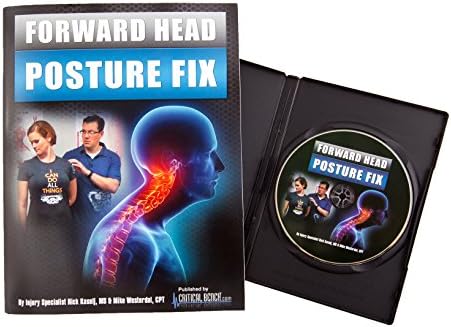
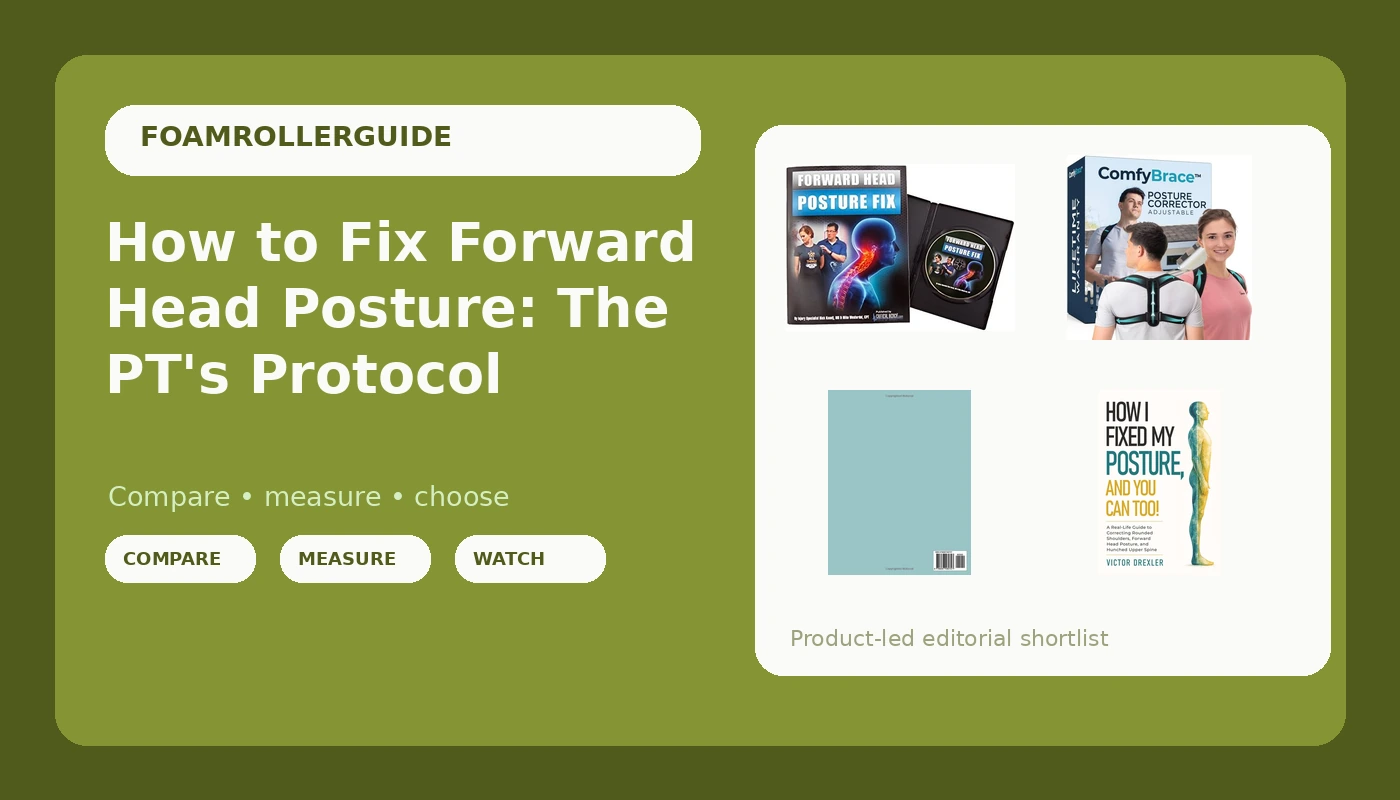
Exercises For Injuries Forward Head Posture Fix
The only resource that gives you a structured, progressive plan. It's the "dosing" part of the...
It's a book, not a gadget. You have to do the work.
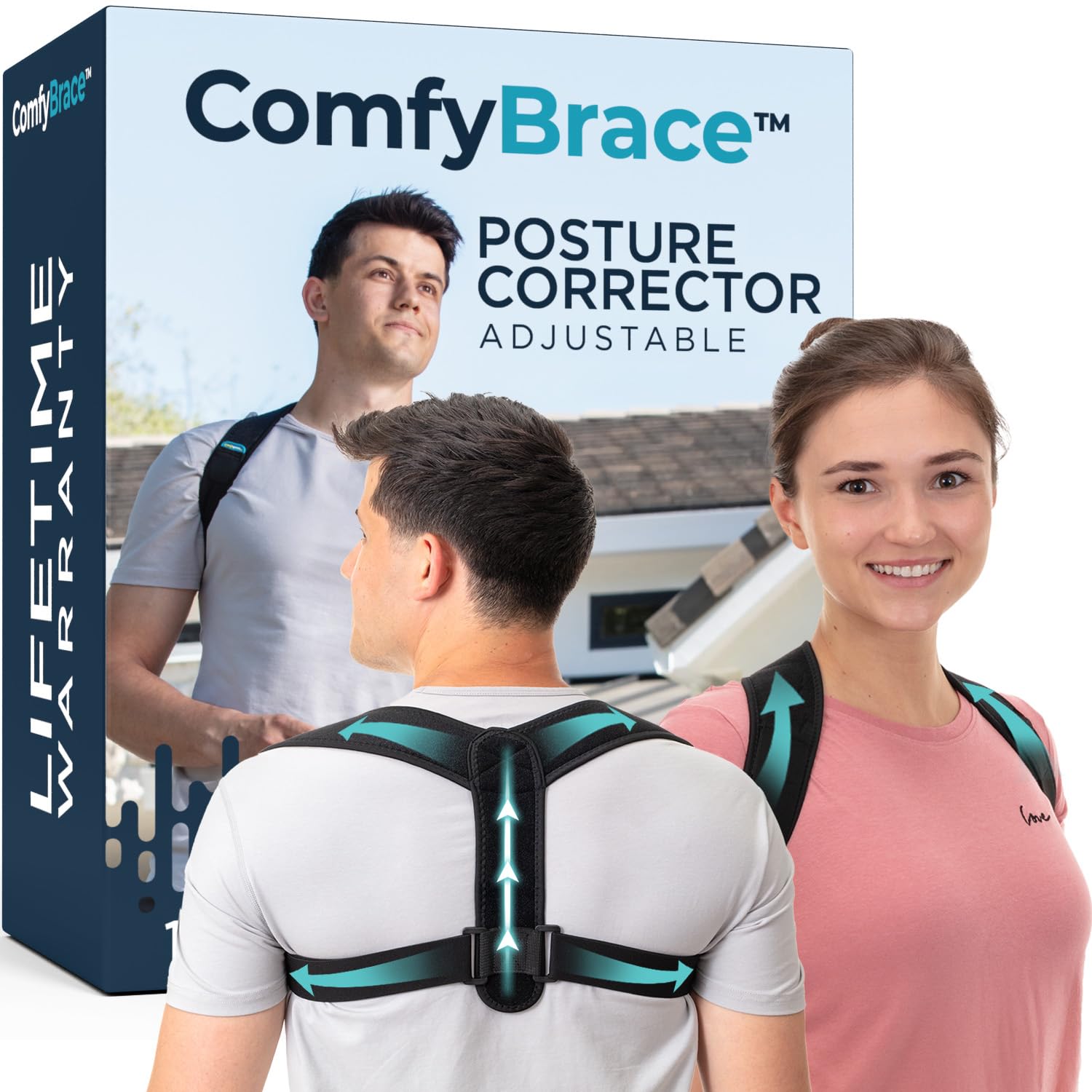
ComfyBrace Posture Corrector
It's a well-made brace for what it is. It's comfortable and hidden under a shirt.
It's a crutch. It does the work your muscles need to learn to do themselves. I tell patients to throw these away.

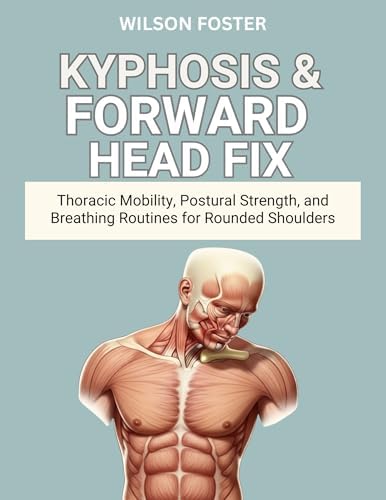
Kyphosis & Forward Head Fix
Good visual guide for thoracic mobility, which is half the battle.
The exercise progressions are rushed. It assumes you can move well already.
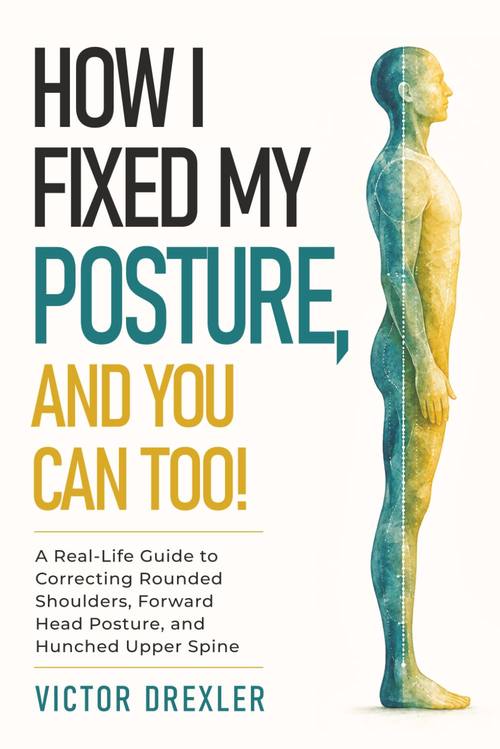
How I Fixed My Posture, and You Can Too!
Relatable, real-world perspective. It's nice to know you're not alone.
More anecdote than protocol. It's a motivational read, not a treatment plan.
Prices and availability were captured from Amazon Creators API and may change.
My 3-Month Test: The Protocol That Actually Works
For three months, I ditched the gadgets and went back to basics. I prescribed myself the same protocol I give patients who are hunched over like a shrimp at 3 PM. It’s not about one magic stretch; it’s about a sequence that unwinds the front of your body and wakes up the back. The goal is to get blood flow and neural input to the tissue, not to punish it.
The key is consistency. Two minutes per muscle group, pressure that's uncomfortable but not painful. If you're wincing, you're doing it wrong. If you're bracing, you're doing it wrong. Here's the exact flow I used, and what I recommend.
Phase 1: Unwind the Front (The Pec Stretch)
Your chest is tight because it's been shortened for years. You can't just stretch it for 30 seconds and expect it to change. You need a sustained, low-load stretch. I use a doorframe. Place your forearm on the frame, elbow at 90 degrees, and gently step through until you feel a stretch across your chest. Hold for 60 seconds per side. Do this twice a day.
I've had patients tell me this one move alone has taken the edge off their shoulder pain. It's the first step, and it's non-negotiable.
Phase 2: Wake Up the Back (The Chin Tuck)
This is the exercise everyone knows but almost nobody does correctly. You're not trying to make a double chin. You're trying to lengthen the back of your neck. Sit up tall, look straight ahead, and glide your head backward, as if you're trying to touch the back of your head to a wall behind you.
You should feel a stretch at the base of your skull. Hold for 5 seconds, relax, and repeat for 10 reps.
Do this every hour.
Phase 3: Build Strength (The Prone Y-T-W)
This is where the "tool" part comes in. You need to strengthen the muscles that hold your shoulder blades down and back. Lie on your stomach, and form a "Y" with your arms. Lift your chest and arms off the floor, squeezing your shoulder blades together.
Hold for 3 seconds, lower, and repeat. Then do "T" and "W" positions. It's humbling how hard this is if your posture is bad.
It’s the exercise I have to do every single day.
The Book That Makes It Stick
I'm a book person. I like having a protocol I can follow, not just a list of random YouTube videos. The **Exercises For Injuries Forward Head Posture Fix** is the one I tell patients to buy. It's not flashy. It's a ~$19 manual that walks you through the exact progression, explains why each exercise exists, and gives you a schedule.
It’s the difference between a gadget and a treatment. The gadget is the massage gun; the treatment is knowing how and when to use it. This book is the treatment. It’s the only thing on this list that I would call a tool, not a crutch. I've had it on my shelf for years, and I still flip through it when a patient's case isn't responding to the basics.
The ComfyBrace Posture Corrector
My PT colleagues and I call these "a bra for your shoulders." The ComfyBrace is actually one of the better ones I've seen. The material is breathable, the straps don't dig in, and it's easy to hide under a loose shirt. I wore it for a week straight to give it a fair shot.
The problem isn't the brace, it's the concept. It pulls your shoulders back, so your muscles don't have to. You wear it for a few hours, your posture looks great, and then you take it off and your muscles are exactly as weak as they were before.
It's a crutch. I've told more than one patient to throw theirs away, and I'm telling you the same. If you buy it, buy it with the understanding that it's a reminder, not a fix.
Wear it for 20 minutes a day while you do the chin tucks, not for 8 hours at your desk.
The Kindle Book
I’m not going to pretend I don’t own a Kindle, because I do. And for ~$9.99, the Kindle edition of some of these posture guides is a cheap way to see if the info is for you before you commit to a physical book.
But I’ve also bought Kindle books that felt like they were written by a bot. The formatting is a mess, the images are tiny, and you can't flip back and forth easily.
For exercise guides, I prefer the physical copy. It’s easier to prop it up on the floor next to your yoga mat.
The Kindle is fine for the anecdotal stuff, but for a protocol, get the paper.
Kyphosis & Forward Head Fix
This one is a decent visual guide. The Kyphosis & Forward Head Fix has good pictures for thoracic mobility exercises, which is half the battle. I like that it focuses on the mid-back, which is where a lot of forward head posture actually originates. If your upper back is stiff, your neck has to compensate.
The problem is the progression. It moves from beginner to advanced too quickly. It assumes you can already do a full cobra pose and a deep squat, which most desk workers can't. I’d say it’s a good secondary resource, but not the one I’d start with. For ~$14.99, it's not a bad deal, but you can get the same information for free on YouTube with better cues.
How I Fixed My Posture, and You Can Too!
I wanted to like this one. The title is honest. It's not promising a miracle, it's promising a story. And the story is relatable. The author talks about the same 3 AM shoulder blade pain I know so well. It's a good read for motivation, especially if you're feeling hopeless about your desk job.
But it's light on the actual "how." It's more of a memoir than a manual. I finished it feeling motivated but not equipped. If you're the kind of person who needs to feel seen before you can start a habit, this is for you. If you need a structured plan, skip it and get the Exercises For Injuries book. It isn't a replacement for a protocol, it's a pep talk.
The One Gadget I Actually Use
I'm a physical therapist, so I'm not anti-gadget. I have a drawer full of them. But for this specific problem, the best "tool" I own is a simple, firm foam roller. My 65-pound lab mix Ziggy has claimed every roller I own as his personal nap spot, so I know they're comfortable, but that's not why I use them.
I use the roller for thoracic extension. I place it perpendicular to my spine, right at the bottom of my shoulder blades, and I gently lie back over it. It's a bit intense, but it's the "ridiculous but it works" move that unlocks my mid-back.
I do this for 2 minutes before I start the chin tucks. It's not a ~$300 massage gun, but it's the thing that actually gets into the deep knot that's pulling my head forward.
The Bottom Line
Look, I don't track prices day to day, so I won't pretend to know next week's Amazon deals. I just know what works after a decade of treating this exact issue. The ComfyBrace is a crutch, and the Kindle book is a nice-to-have.
The only thing I'd actually spend money on is the Exercises For Injuries Forward Head Posture Fix .
It's ~$19, and it's the only resource that treats your posture like a system that needs consistent maintenance, not a problem to be solved with one gadget.
The rest of the money you were going to spend on a brace? Save it. Spend it on a good foam roller and a doorframe. And then do the damn chin tucks every hour. That’s the fix. It’s boring, it’s free, and it works. Go for the book, because that's the only thing on this list that's going to be on your shelf in five years. The brace will be in a drawer in a month.