I have spent twelve years as a physical therapist in Minneapolis, and the two complaints that fill my schedule are a neck that aches by mid afternoon and a lower back that feels like a door swollen shut. Both arrive with the same question: what should I buy? That question is harder than it sounds, because neck and back recovery tools are not one category. A roller stick, a cervical traction orthotic, an adjustable collar, and a firm spine roller do four different jobs, and buying the wrong one is how a forty dollar tool ends up behind the coats. This comparison covers the four tools I get asked about most, what each one actually does, and who should skip each of them.
If your problem is the lower back, the Back Pain Relief Roller matches the job. If your problem is your neck, the 360° Adjustable Neck Collar gives you daytime support while the Cervical Traction Orthotic does the short, dosed work. The ZanLLW roller stick is the pick for calves and quads, especially when getting on the floor is the part that stops you from being consistent.
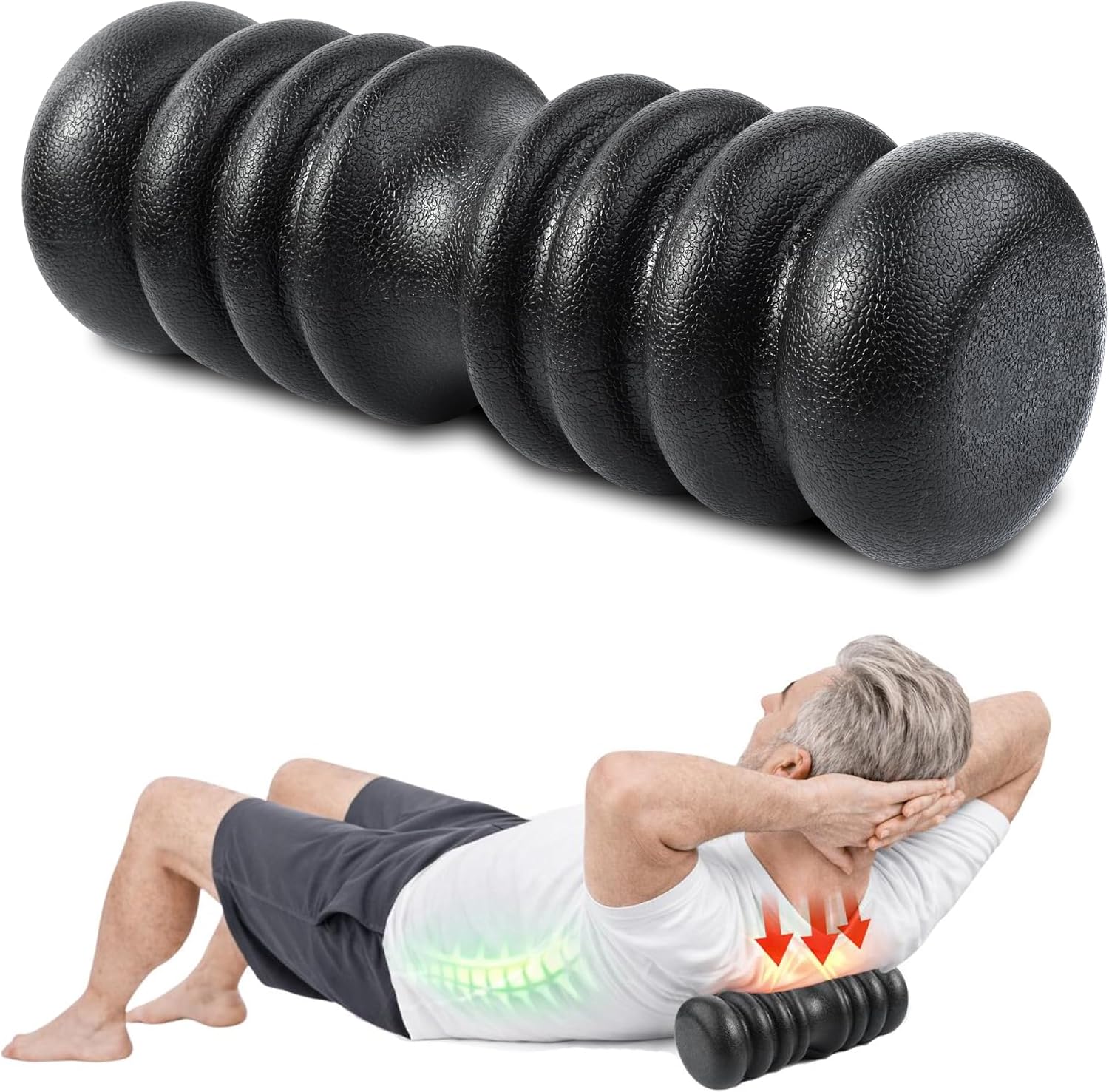
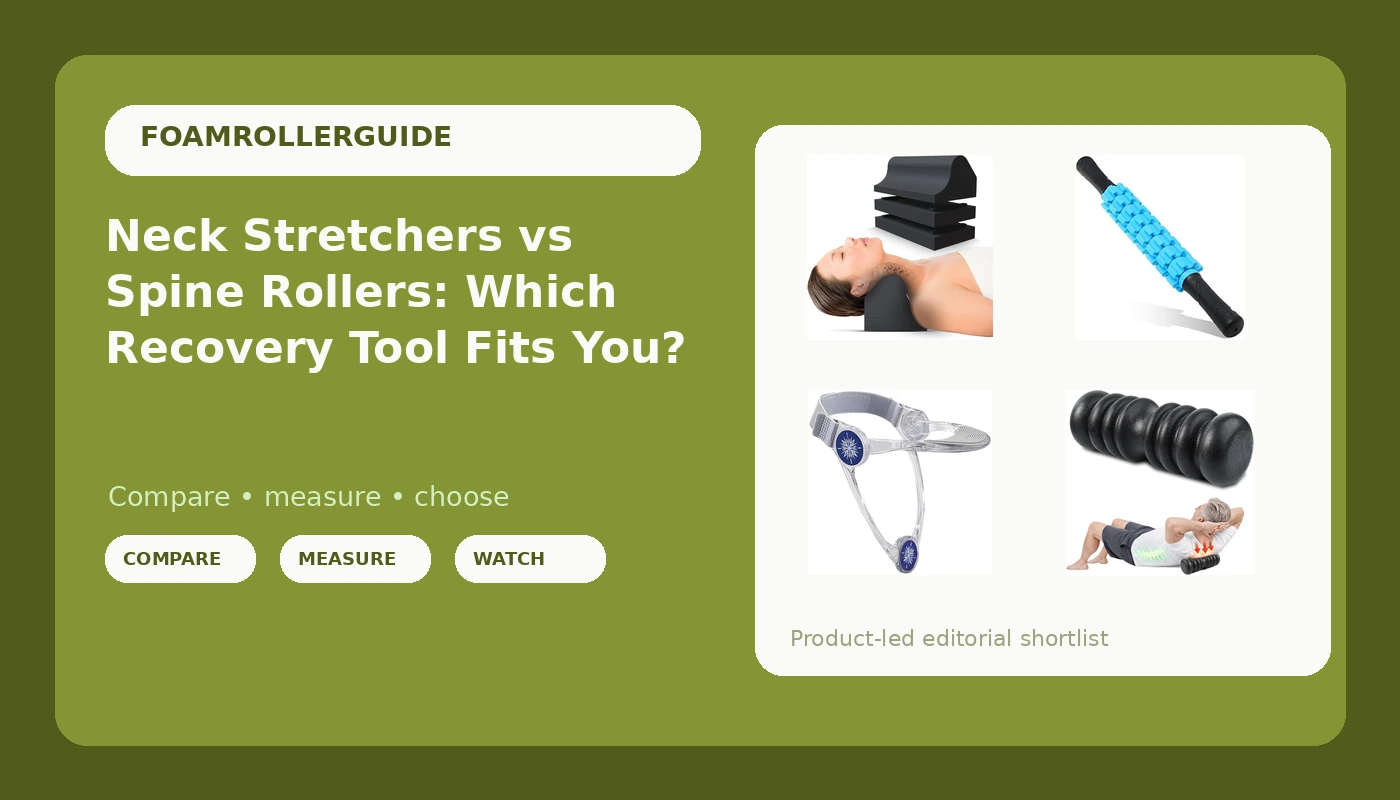
Back Pain Relief Roller
Firm, targeted pressure for the lower back and fascia work, and the lowest cost in this group
Too firm and too specific to be anyone's first roller, and it does nothing for the neck
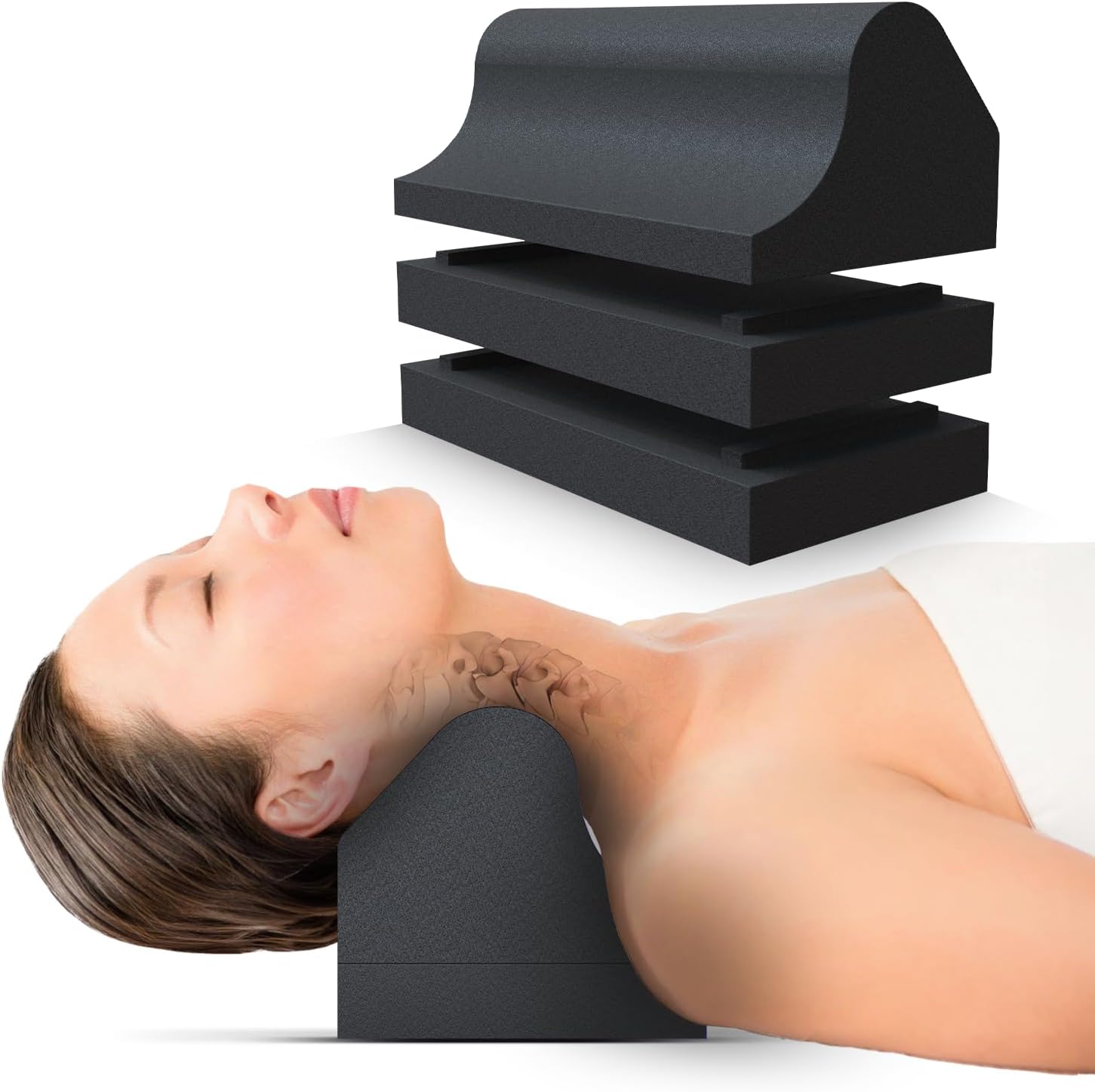
Cervical Traction Orthotic Neck Alignment Device
Works on the neck by unloading it instead of pressing on it, which is the right mechanism for forward head posture
Traction is a dose, not a default, and it needs a time limit and a clinician's clearance
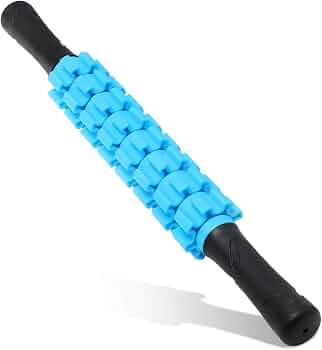
ZanLLW Massage Roller Stick
Handles let you dial pressure on calves, thighs, and hamstrings without getting on the floor
It is a stick, not a roller, so it cannot do broad work across a whole muscle group
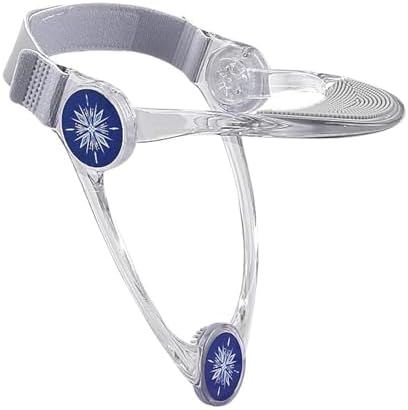
360° Adjustable Neck Collar with Neck Stretcher
Adjustable passive support that gives your neck a break during long desk days
Passive support becomes a crutch the moment it replaces the active work
Prices and availability were captured from Amazon Creators API and may change.
Four tools, four jobs
Recovery gear gets sold as if it were one product category with different price tags. It is not. The two neck tools here work by traction and support, which means they change the load on the cervical spine without you pressing anything into a muscle. The spine roller works the opposite way, by putting direct, firm pressure into tissue. The roller stick is a leverage tool: your hands do the work, and the handles decide how much pressure reaches the muscle.
That difference matters more than brand. If you have forward head posture and a stiff upper back, buying a firmer roller will not fix the neck, because the neck is not a muscle you can flatten into submission. And if your calves are screaming after a long run, a collar will do nothing for them. Match the mechanism to the complaint first, then compare the products inside that category.
The spine roller: lower back and fascia work
The Back Pain Relief Roller is built for the lower back, firm muscle recovery, and fascia release, and it is the least expensive tool in this comparison. It is also the most direct. Firm pressure, a shape meant to sit against the lower back, and a price that makes it easy to try.
One thing to check before you buy any spine roller: it should let you work the muscles beside the spine, not press down on the vertebrae themselves. Look for a channel or a contour that straddles the bony ridge so the pressure lands on the tissue either side. If you find yourself rolling directly over your spine, stop. That is not a flexibility exercise, it is a way to irritate a joint.
Who it fits: someone who already rolls and wants firmer, more targeted pressure for the lower back, glutes, and the fascia around the hips. Who should skip it: anyone in an acute flare, anyone who has never used a roller before, and anyone whose back pain comes with numbness, tingling, or pain that shoots below the knee. That last group needs an assessment, not a purchase.
The other honest limitation is that a lower back roller does not fix a hip problem. If your hips do not rotate and your thoracic spine does not extend, your lower back pays the bill every day, and no roller changes that on its own.
Cervical traction: the tool that needs a plan
The Cervical Traction Orthotic is the one device here that works on the neck by unloading it rather than loading it. Traction creates a small amount of separation and lets the muscles around the cervical spine stop bracing for a few minutes. In the clinic, I use traction with a specific angle, a specific force, and a stopwatch, and I reassess after every session. At home you are working without that feedback, so the rules get stricter, not looser.
Short sessions, then stop. If a traction session makes your neck feel better while you are in it and worse an hour later, that is information, and it usually means the dose was too long or the angle was wrong. If it makes you dizzy, gives you a headache, or sends anything into your arms, stop and get evaluated. Talk to a clinician before using any traction device if you have had a disc issue, a recent injury, spinal surgery, or a history of neck instability.
Who it fits: someone with forward head posture and tension that builds through the day, who will actually do a five minute session and then put it away. Who should skip it: anyone looking for a passive fix they can wear from morning to night, and anyone who has not been cleared for cervical traction. This is the tool in this group where a professional opinion is worth more than a product review, including mine.
The roller stick solves the floor problem
The ZanLLW Massage Roller is a stick with handles, made for legs, calves, thighs, and trigger points. The reason I like a stick for certain people is leverage. You sit in a chair, grip both handles, and roll the calf or the quad with both arms doing the work. Pressure control is entirely in your hands, which is exactly what a beginner needs and exactly what a firm foam roller does not give you.
It also solves the floor problem. If getting down onto the ground and back up is a production, you will skip rolling, and skipping is the only thing that actually fails. A stick keeps you consistent, and consistency is what changes how a muscle tolerates load over time.
The limits are real, though. A stick is narrow, so it cannot cover the broad surface of the quads the way a roller can, and the pressure concentrates in a small area. That is good for one stubborn spot and bad for a whole muscle group. Roll slowly, roughly two inches per second, breathe, and stop on the spot that makes you hold your breath rather than grinding through it. Pain during rolling is a sign to back off, not a badge.
The adjustable collar is support, not treatment
The 360° Adjustable Neck Collar is passive support with an adjustable fit, and it is the tool I prescribe least and explain most. Used well, it is a reminder: it holds your head closer to over your shoulders for a defined stretch of the day while you retrain what neutral actually feels like. Used badly, it becomes the thing that replaces the work, and the muscles that hold your head up get weaker while you feel briefly better.
So the rule is blocks, not all day. Wear it during a specific task, like a long drive or a heavy desk morning, then take it off and move. Pair it with active work: chin tucks, thoracic extension over a roller, and short traction sessions if your clinician has cleared you for them. Passive support buys you a window. What you do in that window is the treatment.
Who it fits: someone whose posture collapses during desk work and who needs a cue they can physically feel. Who should skip it: anyone with an acute injury, unexplained numbness or tingling in the arms, or a plan to sleep in it. A collar is not a brace for a broken neck, and it is not a substitute for strength.
How I judge recovery gear
Four questions, every time. Does the density match the actual need? A soft tool for a ribcage is correct, a soft tool for hamstrings is a lie, and a firm spine roller for someone in an acute flare is a mistake. Can a normal person use this without hurting themselves? If the answer requires a clinician standing next to you, that is a clinic tool, not a home tool. Will it survive six months of real use? Rollers that flatten and inflatables that pop are the reason people quit. And would I prescribe it to a patient? That is the only test that matters.
Notice what is not on the list: price, color, and how aggressive the marketing language is. "Deep tissue" printed on a soft roller does not make it deep tissue. Vibration is a nice luxury, but a good firm roller gets most people most of the way there, and a tool you use daily beats a better tool you use twice.
Dosing, pressure, and timing
Two minutes per muscle group, pressure that is uncomfortable but not painful. That is a protocol, and it works better than an hour of suffering on a Sunday. The most common mistake I see is treating soreness as the goal. Soreness is a side effect, not a score.
Rolling before a workout and rolling after a workout are not interchangeable. Before, you are prepping: shorter time, lighter pressure, keep moving, wake the tissue up. After, you are recovering: slower passes, longer holds on the spots that feel tight, and more total time. Same tools, different dose.
For the neck specifically, remember that pressure tools are for muscles, not for bones, joints, or the spine. I have seen the injuries from people who treated a neck like a hamstring. The collar and the traction device exist precisely because the neck needs a different approach.
Where each one loses
The spine roller is too firm and too specific for a beginner, and it does nothing for the neck. The cervical traction orthotic is the most useful neck tool here and the one most likely to be misused, because it demands clearance, a time limit, and attention to how you feel an hour later. The roller stick cannot do broad work and concentrates pressure in a narrow band. The adjustable collar is supportive and easy to overuse, and it will quietly weaken you if you let it.
None of the four fixes a strength problem, a sleep problem, or a workstation that has your monitor at chest height. Tools buy you a window. They do not do the work.
What I would buy first
If your lower back is the complaint and you already have some rolling experience, start with the Back Pain Relief Roller. If your calves and quads are the problem, or the floor is the obstacle, the ZanLLW roller stick is the one you will actually keep using. If forward head posture is the issue, the adjustable collar gives you daytime support, and the cervical traction orthotic does the dosed work on top of it, assuming you have been cleared to use traction.
Pick the tool that matches the body part and the experience level you actually have, not the one you aspire to. A roller you keep in the closet is a forty dollar paperweight. A stick you use every night after your run is a habit.