Most people who search for posture correction tools are not shopping for a hobby. They are standing in front of a mirror noticing that their head sits forward of their shoulders, that their upper back rounds when they sit, or that their neck aches by 3 p.m. every day. The reflex is to buy something. That reflex is not wrong, but it is incomplete, because posture correction tools do three very different jobs and the marketing treats them as if they do one. Some tools change your position passively. Some teach you a routine you have to repeat for months. Some just keep the equipment you already own from falling apart. Confusing those categories is how people end up with a $300 device gathering dust next to a $10 book they never opened.
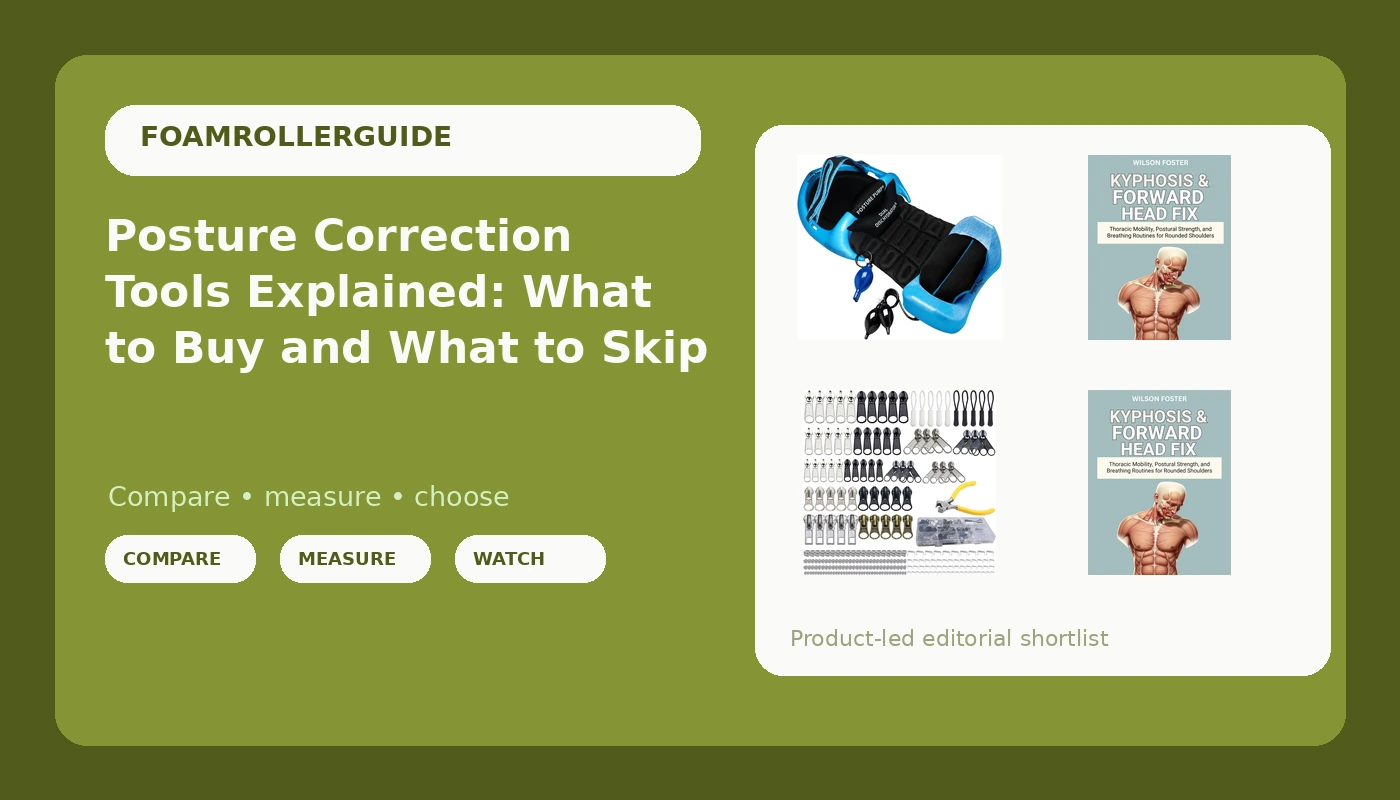
Below is an honest map of the category, using four specific products as anchors: a full spine decompression device, a thoracic mobility and breathing program, and a repair kit for the gear that holds your routine together.
Related: How to Foam Roll Your Upper Back Without Making It Worse →
Quick answer
No single product fixes posture, because posture is a behavior plus a tissue capacity problem, not a broken part. A decompression device can change spinal position for the minutes you use it. A guided mobility and breathing program can build the capacity to hold a better position on your own. A repair kit keeps the bag, vest, or boot you train in usable so your routine does not stall on a broken zipper. Buy the category that matches your actual bottleneck, and expect consistency, not a cure, from any of them.
Four useful options
| Model | Best fit | What stands out |
|---|---|---|
| Posture Pump® Model 4100-D Dual Deluxe Full Spine Decompression Device | Buyers who want a passive, position-based device for the whole spine | A home decompression device rather than a roller or a brace, sold in the dual deluxe configuration |
| Kyphosis & Forward Head Fix: Thoracic Mobility, Postural Strength, and Breathing Routines for Rounded Shoulders | Buyers with rounded shoulders and forward head who need a repeatable routine | Covers three separate inputs: thoracic mobility, postural strength, and breathing |
| 254 Pcs Zipper Repair Kit with Case Include Zipper Replacement and Pull, Universal Zippers Replacement kit for Cloting, Jackets, Coat, Boot, Backpack, Purse and Outdoor Gear | Anyone whose gym bag, weighted vest, or boot zipper has failed | 254 pieces in a case, with replacement zippers and pulls, sized for clothing and gear |
| Kyphosis & Forward Head Fix: Thoracic Mobility, Postural Strength, and Breathing Routines for Rounded Shoulders | The same routine guide, purchased through the alternate listing | Same title as the listing above, offered as a separate product record |
The device: Posture Pump® Model 4100-D Dual Deluxe Full Spine Decompression Device
Here is the trade-off with any decompression device. It does something you cannot do with a foam roller, which is apply a sustained, hands-free positional change to the spine while you relax. That is genuinely useful for the person who cannot get comfortable on the floor or who needs to lie down anyway. The cost is that it is passive by design. If you use it for ten minutes and then spend the rest of the day in the same rounded position, you have borrowed a better alignment rather than built one. It is also the largest and most expensive commitment in this set, so it makes sense for someone with a specific, persistent complaint, not for general "I should probably fix my posture" shopping.
The program: Kyphosis & Forward Head Fix
The reason I put a routine ahead of a device for most people is simple dosing logic. A device gives you ten or fifteen minutes of better position. A mobility and strength routine gives you a slightly better position for the other twenty-three hours, but only if you do it often enough for the tissue to adapt. The breathing component matters more than it sounds. Ribcage position drives thoracic position, and people who breathe shallowly into their chest tend to hold their ribcage in a way that keeps the upper back rounded. A guide that pairs mobility with breathing is doing the unglamorous work that a gadget cannot do for you.
The maintenance item: 254 Pcs Zipper Repair Kit
The practical case for keeping a kit like this is that a broken zipper takes an entire piece of equipment out of commission. A weighted vest with a dead zipper is a weighted vest you cannot load. A gym bag that will not close is a bag you stop carrying, which means the resistance bands and the roller stay home. The honest limitation is that a universal kit asks you to match the replacement part to the original hardware, and zipper sizes are not standardized across brands. It is a fix-it-yourself product, not a service. If you are not willing to measure the old zipper and compare, this will sit in a drawer.
The alternate listing: the same routine guide
I am not going to pretend two listings with the same title are two different products. They are not. What they are is a reminder that marketplace records duplicate, and that the same title can appear under more than one entry with different seller, format, or edition details attached. If you want this program, open both listings and compare what is actually being sold: format, edition, and who is shipping it. Do not assume the lower number on the page is the same item, and do not assume it is a different one either. Read the listing.
Prices and availability may change. Product images, names, and retailer links must be matched by verified ASIN. Do not state a current price, rating, stock status, or measured result without current evidence.
What posture correction tools can and cannot do
The most useful reframe I give patients is that posture is not a shape you achieve, it is a position you can access and a capacity you can hold. Those are two different problems and they need two different tools.
Position access is about mobility. If your thoracic spine will not extend, no amount of "sit up straight" cueing will produce a tall posture, because the joints are not available. That is the domain of mobility work, and it is why the thoracic portion of a routine matters more than any cue or reminder device.
Position capacity is about strength and endurance. Plenty of people can get into good alignment for thirty seconds. Almost nobody can hold it for three hours of desk work, because the muscles that hold the shoulder blades and ribcage in place fatigue. That is a training problem, and it takes weeks, not sessions.
What no tool does is erase the effect of the position you spend most of your day in. A decompression device used for ten minutes does not outvote eight hours of sitting collapsed. Neither does a roller. The tool buys you a window; the routine and the daily setup decide what happens in it.
There is also a limit worth naming plainly. Rolling, stretching, and decompression work through blood flow, nervous system input, and joint position. They do not "break up scar tissue," and anyone selling you a posture product on that promise is selling you a story. If a product claims to realign your spine permanently, that claim is not supported by anything I have seen in twelve years of practice.
How to dose a posture routine
The tool matters less than the dose, and dose is where most people go wrong in both directions. Here is the framework I use with patients.
- Pick the target first. Rounded upper back and forward head is a thoracic and ribcage problem. Lower back stiffness is a different problem with a different tool. Do not buy gear before you can name the body part.
- Set a duration you will actually repeat. Two minutes per area, daily, beats twenty minutes twice and then never again. Frequency drives tissue adaptation, not intensity.
- Stay under the pain threshold. Pressure that is uncomfortable but conversational is productive. Pressure that makes you hold your breath and clench is a sign to back off, not a badge.
- Pair passive work with active work. If you use a decompression device, follow it with two minutes of thoracic mobility and one set of postural strength. Passive position without active reinforcement fades fast.
- Reassess at four weeks, not four days. Mobility changes show up in weeks. Strength endurance takes longer. If nothing has changed at all after a month of consistent work, change the approach, not the effort.
Practical rules for buying posture gear
- Name the body part and the goal before you open a product page. "Better posture" is not a target.
- Match the tool to the job: devices for position, programs for capacity, repair kits for the equipment that carries both.
- Budget for the routine, not just the gadget. A guide and a plan will outperform a device you do not have time to lie on.
- Check that your existing gear still works before buying new gear. A dead zipper on a weighted vest is a training interruption you can fix for the cost of a kit.
- Expect marketing language, not evidence. "Deep tissue," "realigns," and "corrects" appear on products that do none of those things.
- Buy for the routine you already have, not the one you are imagining. The best tool is the one that stays within reach.
Which option should you choose?
Choose the Posture Pump® Model 4100-D Dual Deluxe Full Spine Decompression Device when you have a specific, persistent spinal complaint and you want a passive, hands-free way to spend time in a better position, and you are willing to pair it with active work. Choose the Kyphosis & Forward Head Fix: Thoracic Mobility, Postural Strength, and Breathing Routines for Rounded Shoulders when your problem is rounded shoulders and forward head posture and you have not yet built a routine, because that is the gap a device cannot fill. Choose the 254 Pcs Zipper Repair Kit with Case Include Zipper Replacement and Pull, Universal Zippers Replacement kit for Cloting, Jackets, Coat, Boot, Backpack, Purse and Outdoor Gear when a failed zipper has sidelined a bag, vest, or boot that your routine depends on. And when you go to buy the routine guide, compare both listings carrying that title before you commit, because two records exist for the same program.
One caveat that applies to all four: none of these products come with an assessment. A device cannot tell you whether your thoracic spine is stiff or your deep neck flexors are weak, and those two problems look identical in a mirror. If you have pain that radiates, numbness, or symptoms that get worse with use, get evaluated before you buy anything.
The bottom line
Posture correction tools are not interchangeable, and the category labels hide that. A decompression device changes your position while you are on it. A mobility, strength, and breathing program changes what your body can do when you are off it. A repair kit keeps the equipment that supports the routine from quitting on you. Most people who feel stuck with rounded shoulders need the middle one first and the device second, and they need both far less than they need to keep doing the routine after week three. Buy the category that matches your bottleneck, dose it consistently, and judge it at a month, not a weekend.