Related: How to Roll Your Upper Back Without Wrecking Your Neck
Most people who walk into my treatment room with a stiff neck and rounded shoulders do not need another gadget. They need to move more and sit less. That advice is useless, though, at 4 p.m. on a Tuesday when your shoulders are pinned to your ears and your upper back feels like a closed fist.
So I prescribe posture correction tools the way I prescribe anything else: specific, dosed, and with a reason. A tool that matches your target and your actual routine earns a spot in your life. A tool you use wrong, or too long, or on the wrong body part, makes the problem worse while you feel like you are being productive about it.
The four items here cover the whole range. One supports you while you lie down, one takes the load off your neck while you sit, one teaches you the programming, and one reminds your shoulders where neutral is. None of them replace movement. All of them beat doing nothing while you wait for motivation.
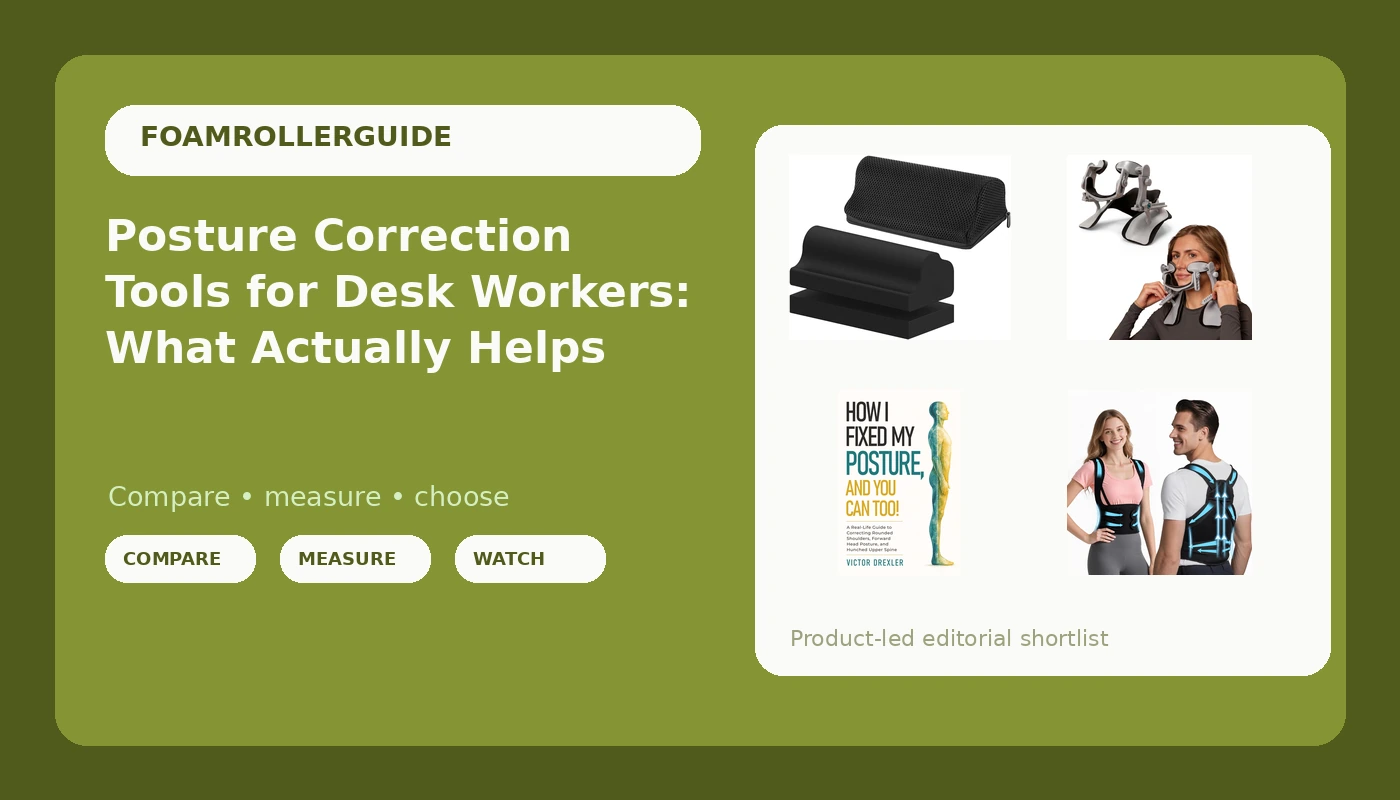
Best for Lying Down: StrongTek Cervical Neck Wedge, Firm Foam Support Block, Contoured Design
Some of the most useful posture work you will ever do happens lying flat on your back with your head supported and your shoulders dropped. That is the entire job of this wedge. It is a firm foam block with a contoured channel, built to cradle the base of your skull and let the cervical spine settle back toward its natural curve instead of being held forward by a screen.
Firmness is the point. A soft pillow under the neck lets the head sink until there is no support at all, which is why so many people tell me neck support "does not work for them." They were using the wrong density. The contour matters just as much: the channel gives the back of your head somewhere to rest while the raised edges support the sides of your neck.
The dose is short. Two to five minutes at a time, on the floor, not on your bed. Start at two, and work up only if it feels like a gentle stretch rather than a stretch you are gritting through. If you feel tingling, numbness, or a headache building, come off it. That is not a stretch talking, that is a nerve talking, and nerves do not negotiate.
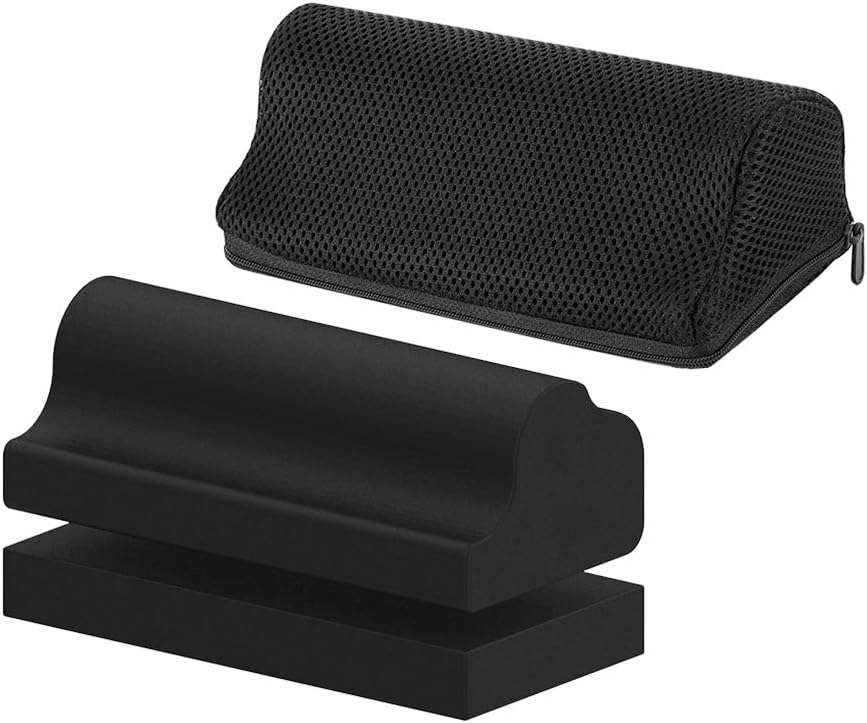
Best for Traction: Forward Head Posture Corrector Neck Collar
This is the most misunderstood item in the entire posture category, and it is not the collar's fault. A device like this is a passive support. It cradles the chin and the base of the skull, which means the muscles at the front of your neck are not fighting the full weight of a forward-hanging head for a little while. That is a real break, and on a long desk day it can be a welcome one.
The sizing note in the name matters. This one comes in small and medium, so fit is not an afterthought. A collar that is too big lets your chin drop into it. A collar that is too tight is just a new source of tension. You want contact, not compression.
Where people go wrong is duration. This is a 10 to 20 minute tool, used while seated and awake. Not while driving, not while sleeping, not for a full shift. If a collar does the work of holding your head up all day, the muscles designed for that job get weaker, and you have traded one problem for another. Think of it as a break for the tissue, not a substitute for the muscle.
If you have a disc issue, a history of neck surgery, or pain that shoots down an arm, get assessed before you put anything around your neck. I mean that.
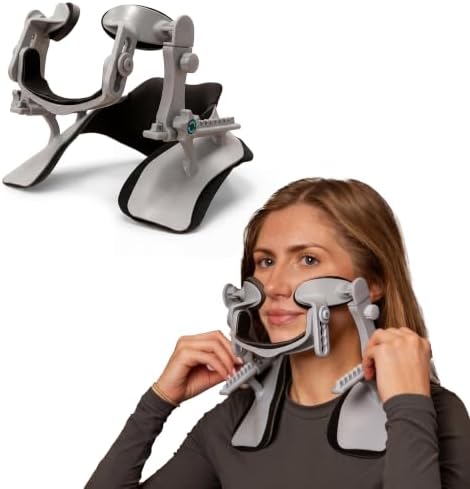
Best for Programming: How I Fixed My Posture, and You Can Too!
If you only buy one thing from this list, buy the one that tells you what to do with the other three. This book works through rounded shoulders, forward head posture, and a hunched upper spine, which is the exact trio I see in people who spend nine hours a day at a laptop and then drive home to a couch.
What I like about the framing is that it treats posture as a habit problem rather than a hardware problem. That matches what I see clinically. Nobody holds a position because they lack a device. People hold a position because their environment and their routine keep pulling them back into it.
Read it the way you would read a training plan, not a novel. Pick the sections that match your actual complaints, run the drills for a few weeks, and be honest about whether anything changed. It is also a decent book to hand to a skeptical partner who thinks stretching is nonsense, since it is written for a normal person rather than a clinician.
Standard caveat applies: a book cannot examine you. If your pain is sharp, wakes you at night, or travels down a limb, that is a clinician conversation, not a chapter.
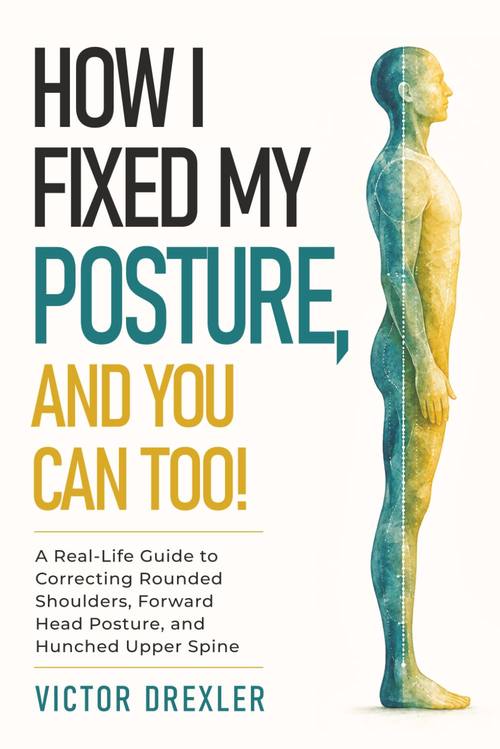
Best for Shoulder Reminders: Posture Corrector for Men & Women, Medical-Grade Back Brace
Let me be blunt, because this is the product people get the most wrong. A brace like this does not fix your posture. It provides feedback and a bit of external support, which is a genuinely useful thing in the first few weeks of building a new habit and a genuinely useless thing as a permanent fixture.
The mechanism is simple. The straps sit over the shoulders and pull them back into a more neutral position. For a stretch, you get to feel what "shoulders back" actually means, especially if you have forgotten. That sensory reminder is the value.
So dose it like a reminder, not a treatment. Twenty to thirty minute blocks, a few times a day, ideally during the hours when you know you collapse. Then take it off and do the strengthening work. Wearing it all day means the muscles that hold you upright never get asked to do their job, and a muscle that is never asked gets worse at answering.
Fit is the other thing. A medical-grade brace should feel snug and even, never pinching under the arms or digging into the front of the shoulder. If it is leaving marks, it is too tight, and no amount of "getting used to it" changes that.
How I evaluate a posture tool
Four questions, every time:
- Does it match a real target? A support tool for the neck and a reminder tool for the shoulders are different jobs. Buying one when you need the other is how people end up with a drawer full of regret.
- Can a normal person use it without hurting themselves? If the instructions assume you already know anatomy, that is a problem.
- Will it survive six months of daily use? A wedge that goes soft or a brace whose straps stretch out is just clutter.
- Would I actually hand it to a patient? That is the only test that matters to me.
The posture tool reference table
Every row below is one of the four items in this guide. "Dose" is the starting point I give people, not a limit you have to earn. If it hurts, the dose is wrong.
| Tool | What it targets | How to dose it | Watch out for |
|---|---|---|---|
 Visit on Amazon → Visit on Amazon →StrongTek Cervical Neck Wedge |
Base of the skull and the deep neck curve | 2 to 5 minutes, on the floor, once or twice a day | Numbness, tingling, or a headache coming on |
 Visit on Amazon → Visit on Amazon →Forward Head Posture Corrector Neck Collar |
The weight of a forward-hanging head | 10 to 20 minutes, seated and awake | Never sleep or drive in it, never wear it all day |
 Visit on Amazon → Visit on Amazon →How I Fixed My Posture, and You Can Too! |
Rounded shoulders, forward head, hunched upper spine | Pick your sections, run them for a few weeks | It cannot examine you |
 Visit on Amazon → Visit on Amazon →Posture Corrector for Men & Women, Medical-Grade Back Brace |
Shoulder position and postural awareness | 20 to 30 minute blocks, then off | Pinching under the arms means it is too tight |
Analysis: what these tools can and cannot do
Here is the part the marketing never says out loud. None of these devices changes tissue length in a meaningful way. What they change is load, awareness, and time. The wedge takes load off the back of your neck. The collar takes load off the front. The brace changes awareness. The book changes time, because it gives you something to do with the hours you are not wearing anything.
Load matters because tissue adapts to what you ask of it. A neck that spends nine hours a day forward and fifteen minutes a day supported is a neck that spends nine hours a day forward. The fifteen minutes is not nothing, it is a genuine drop in sustained tension, but do not confuse it with transformation.
If you want the fastest return on a posture purchase, buy the tool that fits the part of your day where you are most stuck. Desk worker with a frozen neck? The collar and the wedge. Chronically rounded shoulders and no plan? The book, then the brace as a reminder while the plan takes hold.
And one thing I will not budge on: no percussion gun, no rolling, and no pressure of any kind goes on the front or back of your neck. Muscles tolerate work. Bones and joints and the structures in your neck do not. If a device requires you to ignore that, it is not a recovery tool.
Should you buy the StrongTek Cervical Neck Wedge?
Yes, if your neck feels better when your head is supported instead of hanging forward. It is a firm contoured foam block, not a pillow, so it does support work a soft pillow cannot. Two to five minutes at a time, on the floor, and come off if you feel tingling or numbness. It is a reset, not a place to nap.
Should you buy the Forward Head Posture Corrector Neck Collar?
For short seated sessions, yes. It supports the weight of your head and gives the deep neck muscles a break, which is exactly what a long desk day calls for. Ten to twenty minutes, seated, awake, and never all day. If you have a disc issue or radiating pain, talk to a clinician first.
Should you buy How I Fixed My Posture, and You Can Too!?
Yes, and read it before you buy hardware. It works through rounded shoulders, forward head posture, and a hunched upper spine with real programming rather than vague encouragement. A tool supports you for fifteen minutes. A plan changes the other twenty-three hours.
Should you buy the Medical-Grade Back Brace?
For feedback, yes. It reminds you where neutral is, and that reminder is worth a lot in the first weeks of a new habit. It is not a fix. Use it in blocks, take it off, and do the strengthening work, because the muscle that never gets asked never gets better.
The bottom line
Posture correction is not a purchase, it is a routine with a couple of props. Pick the prop that matches where your day breaks down, use it in short doses, and put it away when the dose is done. Start with the wedge if your neck is the complaint. Start with the book if you do not know where to begin. Give any of them six weeks of consistent, boring use, and judge the results then.