Related: How to Roll Your Calves Without Bruising Them
I have spent twelve years as a physical therapist in Minneapolis, and half of those in a clinic where the most common opening sentence was some version of "my neck just hurts and I don't know why." Most of those necks belonged to people who spend nine hours a day looking at a screen, then drive home, then look at another screen. The muscles at the front of the neck get short and cranky, the ones at the back get long and tired, and the head drifts forward an inch at a time. That is the entire story behind most forward head posture, and no single gadget undoes it.
What a posture corrector and cervical traction can do is buy you a little room. They remind, they support, they stretch. They do not strengthen anything, and they do not erase a decade of desk posture in a week. I say that up front because the marketing in this category is relentless, and because the people who get hurt are usually the ones who expected a brace to do the work of a training program.
Here is how I sort the four tools I keep coming back to, who each one is actually for, and where I would spend my own money. I do not print prices anywhere in this article, because they move constantly. Every product below carries a "Check current Amazon price" note instead.
For the desk worker: Slim Lightweight Posture Corrector
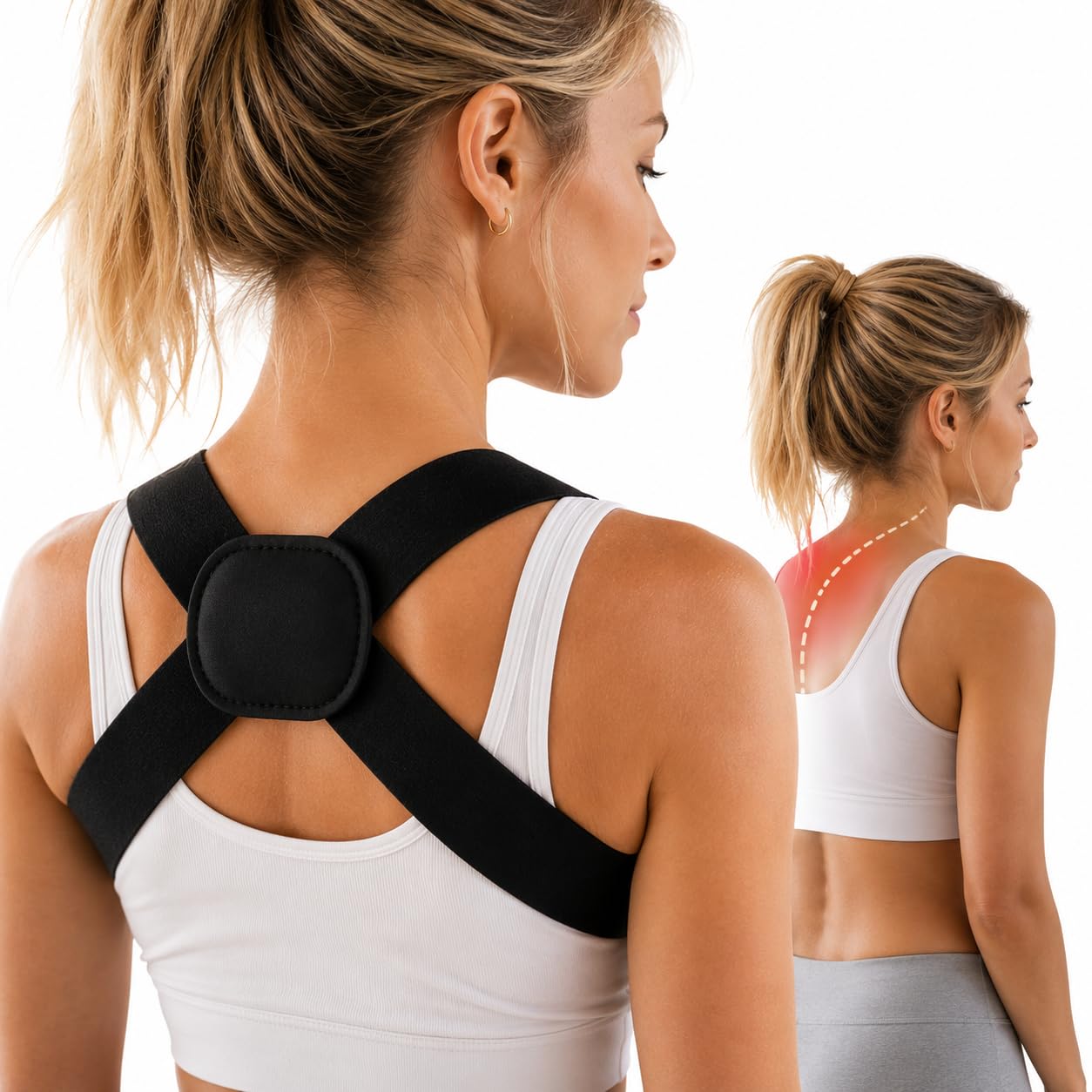
This is the one I hand to people whose shoulders have migrated forward and stayed there. It is a slim strap that crosses the upper back and draws the shoulder blades into a slightly retracted position. The point is not that it holds you up. The point is that it makes you notice the moment you slump, and noticing is the only thing that changes anything.
It is thin, which matters more than people think. A brace you can wear under a work shirt is a brace you will actually wear. The Medium is a reasonable starting point for most adults, and if you are between sizes, go up rather than down. Break it in the way you would break in any support: twenty minutes at a time for the first week, then longer as your tolerance builds. Do not sleep in it. Do not run in it. Do not decide on day one that more is better and wear it for eight hours, because your upper back muscles will happily hand over their job to a piece of elastic and get weaker for it.
The honest limitation is right there in the name. It is a corrector, not a conditioner. Pair every hour in it with a couple of minutes of chin tucks, band pull-aparts, or rows, and it earns its place. Skip that part and you have bought a very reasonably priced reminder that you ignore.
For stretching and tension: Cervical Traction Orthotic
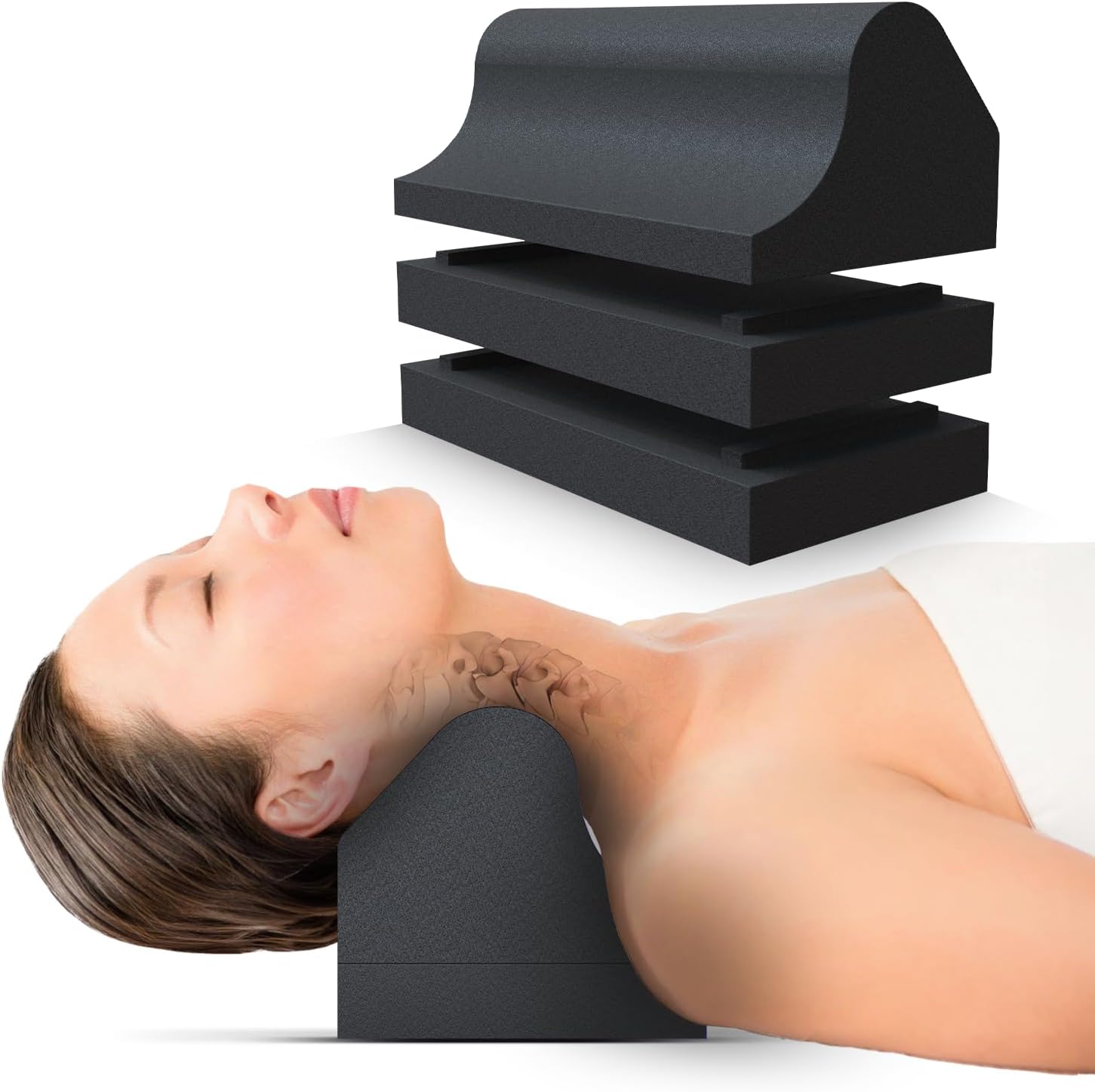
This is a molded orthotic that cradles the base of the skull and follows the curve of the neck. You lie on your back on a firm, flat surface, and the weight of your own head provides the traction. There is no inflatable bladder, no pump, no straps to crank, and that is exactly why I like it for home use. It is very hard to overdo it, which is more than I can say for most traction devices sold to people who are in pain and motivated to go too hard.
The protocol is boring on purpose. Start with five minutes. Work toward ten or fifteen. Breathe. Let the neck settle into the curve instead of forcing it. If you feel dizzy, or if you get tingling or numbness down an arm, stop and talk to a clinician before you try again. Anyone with a known disc issue, a recent injury, or instability in the neck should clear traction with their doctor first, and that is not a disclaimer I am throwing in to cover myself. It is the boundary I hold with my own patients.
Here is the part nobody selling traction wants to say: the evidence for it is modest. What it reliably does is give your neck a few minutes in a position it never reaches during a normal day, and for a lot of people that alone is worth the money. Relief that lasts an evening is still relief. Just do not expect it to rebuild the curve of your spine while you watch television.
For rigid support: 360° Adjustable Neck Collar
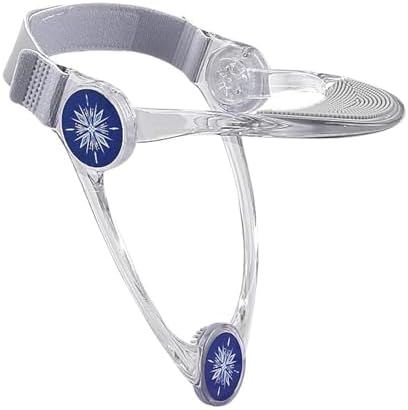
This one is made of plastic, and the plastic is the point. It is an adjustable collar with a built-in stretcher, so you can dial in how much height and support you want rather than accepting whatever shape the manufacturer guessed at. Necks come in different lengths, and a rigid collar that is too tall for your frame will push your chin up and make everything worse.
It has two jobs. The first is support: on a bad day, after a long drive, or in the middle of a flare-up, it holds the head in a neutral position and lets the muscles at the back of the neck stop clenching for a few minutes. The second is stretching, and that is where the adjustable height earns its keep, because you can increase the stretch gradually instead of jumping straight to the maximum.
The caveat with any rigid collar is time. Fifteen to twenty minutes is a session. An afternoon is too long. A whole day is a problem. Muscles that are supported constantly stop doing their job, and you end up dependent on the collar rather than done with it. Treat it like a tool you pick up, use, and put down.
For the rest of the body: ZanLLW Massage Roller Stick
This is the odd one out and the tool I reach for most. It is a handheld roller with a handle at each end, built for legs, calves, thighs, and the trigger points that show up when you have been guarding a sore neck for three weeks. That is the connection people miss. When your neck hurts, you brace, and when you brace, your calves and quads take on a load they were not designed to carry all day. Then your legs ache and you assume it is a separate problem.
The roller stick is not a foam roller, and it is not for your neck. I will say that twice, because someone always tries it. Not for your neck. Not for your spine. It is for the long muscles of the legs and the meaty parts of the upper back, worked slowly along the length of the muscle, about two minutes per area. Pressure that is uncomfortable but not painful. If you are grimacing and holding your breath, you are not recovering, you are just enduring something.
The advantage of a stick over a roller on the floor is control. You can sit on the couch, work a calf, and stop the instant something feels wrong, which is much harder to do when your entire body weight is on a cylinder.
How I judge recovery gear
I run every tool through the same four questions before it gets near a patient. Does the design match a real clinical need, or is it a shape someone thought would sell? Can a normal person use it without hurting themselves, including the person who will not read the instructions? Will it survive six months of being thrown in a gym bag? And would I hand it to someone I actually treat, knowing I will hear about it if it fails?
That last question kills more products than the other three combined.
What these four tools have in common
Every one of them is passive. The brace reminds, the traction stretches, the collar supports, the roller loosens. Not one of them makes a muscle stronger, and strength is what holds a head up over a keyboard for nine hours. So each tool gets paired with a small amount of active work: chin tucks, rows, band pull-aparts, whatever your shoulder and neck can tolerate. Five minutes of that is worth more than an hour in any brace.
Dosing works the same way it does for rolling. Two minutes per muscle group, pressure that is uncomfortable but not painful, done consistently. Consistency beats intensity every single time, and the people who recover fastest are almost never the ones who went hardest.
The reference table
This is the table I keep in my head when someone asks me what to buy first. Match the tool to the target area, not to the price tag.
| Tool | Target area | Best for | Price |
|---|---|---|---|
 Visit on Amazon → Slim Lightweight Posture Corrector |
Upper back and shoulders | Desk posture reminders, wear under clothing | $6.99 |
 Visit on Amazon → Cervical Traction Orthotic |
Base of skull and neck curve | Gentle daily decompression, lying down | $39.95 |
 Visit on Amazon → 360° Adjustable Neck Collar |
Cervical spine, rigid support | Flare-ups, post-drive tension, short sessions | $19.99 |
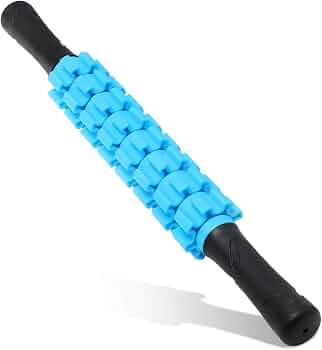 Visit on Amazon → ZanLLW Massage Roller Stick |
Legs, calves, thighs, upper back | Trigger points, sore muscle recovery | $8.99 |
How to sequence them in a day
Morning, at the desk: twenty minutes in the posture corrector, then take it off and do two minutes of chin tucks. Evening, on the floor: ten minutes on the traction orthotic, breathing, no forcing. Then two minutes per area with the roller stick on whatever legs are complaining. The collar comes out only on the days your neck is genuinely angry, fifteen to twenty minutes at a time, and then it goes back in the drawer.
That is a routine that takes under thirty minutes total and does not require a gym, a subscription, or a machine with a battery. Which is the whole argument for keeping this category simple.
Should you buy the Slim Lightweight Posture Corrector?
Yes, with realistic expectations. It is thin enough to disappear under a shirt, so it fits a real workday rather than a fantasy one, and it is the lowest risk way to find out whether a tactile cue changes how you sit. Wear it in twenty minute blocks, build up slowly, and never sleep in it. If you wear it all day and never do anything active for your upper back, you have bought a belt, not a fix. Check current Amazon price and start there, because it is the cheapest experiment on this list.
Should you buy the cervical traction orthotic?
Yes, if your problem is a stiff, tired neck at the end of the day. It is the gentlest home option here: no bladder to inflate, no straps to crank, no way to accidentally go too hard. Start at five minutes, build to ten or fifteen, and stop if you feel dizzy or get tingling down an arm. If you have a disc issue or a recent injury, get cleared first. Check current Amazon price before you decide, and remember that relief that lasts an evening is still real relief.
Should you buy the 360° Adjustable Neck Collar?
Yes, for short sessions and specific days. The adjustability is what separates it from a generic collar, because a rigid support that is too tall for your neck does more harm than good. Use it during a flare-up, after a long drive, or when you need twenty minutes of genuine support, then take it off. If you find yourself reaching for it every single day, that is a signal to see someone, not to buy a second one.
Should you buy the ZanLLW Massage Roller Stick?
Yes, and it is the one I would buy first if your legs are the loudest complaint. It is the most versatile tool here, it works sitting down, and it puts you in control of the pressure in a way a floor roller does not. Just keep it off your neck and off your spine. Check current Amazon price and treat it as what it is: a two minute per area habit that pays you back in how your calves feel on stairs.
Posture work is not complicated. It is just boring, and boring is what works. Pick one tool, use it on a schedule, and give it a month before you decide anything.