Related: Foam Roller Density: Soft, Medium, or Firm?
Most of the home recovery and posture gear in people's closets was bought in a moment of optimism and used twice. That is not a character flaw, it is a design problem. A tool that hurts, that you cannot figure out in thirty seconds, or that lives behind a winter coat is a tool you will not use, and unused gear recovers nothing.
I am a physical therapist, twelve years in, and half of that spent with backs that "just hurt" and legs that "will not loosen up." When someone asks me what to buy, I do not start with brands. I start with the target: which tissue, which range of motion, which part of the day. Then I pick the tool that matches, because the best piece of equipment is the one that gets used on a Tuesday night when you are tired.
The four tools below cover the three jobs I actually prescribe at home. Release tissue that is guarding, load it through a range it can tolerate, and give it a reminder of where neutral is. Skip the middle step and you have a brace doing work a muscle should be doing. That order matters more than any single product on this page, and it is the reason I would not hand someone a brace and call it a plan.
Best for Large Muscle Groups: BOB AND BRAD T2 Ultra Deep Tissue Massage Gun, Heat & Red LED, Percussion
Percussion on a large muscle is one of the few places where more power genuinely helps. A quad or a glute absorbs a lot of input before anything underneath notices it, so a small tool on a big muscle means you spend ten minutes chasing a result you could have had in two. The T2 Ultra is a full-size percussion gun with heat and red LED built into the treatment head, and the heat is the part I care about most. Warm tissue tolerates pressure better, and a heated head means you are not spending the first ten minutes of a session waiting on a heating pad before you can work a cold morning hamstring.
The dosing protocol I hand out is boring on purpose. Two minutes per muscle group. Slow passes, the head moving, never parked in one spot. Pressure that is uncomfortable but not painful. If you are holding your breath or bracing against it, back off. Pain during release work is a sign to reduce, not a badge of honor, and I say that to the "it hurts so it is working" crowd every single week.
Where it does not belong: bone, joints, the front of the neck, the spine, and anything you cannot put a name to. I have treated the injuries that come from ignoring that list, and they take longer to resolve than the tightness you were chasing. This is a tool for muscle bellies, and the muscle bellies it handles best are the big ones: quads, glutes, calves, lats, and the thick postural muscles around the shoulder blades.
Best for Travel and Small Muscles: BOB AND BRAD Q2 Ultra Mini Massage Gun with Red Light Infrared Heating Head, Pocket-Sized Deep Tissue Massager for Muscle Therapy
The listing name runs long, so here it is in full: BOB AND BRAD Q2 Ultra Mini Massage Gun with Red Light Infrared Heating Head, Pocket-Sized Deep Tissue Massager for Muscle Therapy, HSA Portable Percussion Massage Gun for Pain Relief FSA Eligible. What matters for a buying decision is the size and the head. This is the gun that lives in a gym bag, a carry-on, or a desk drawer, and it is the one people actually use because it is already within reach when the thought crosses their mind.
Small muscles are where a mini earns its place. Forearms after a long week at a keyboard. Calves after a run. Feet, arches, and the muscles between the shoulder blades that nobody can reach with their own hands. The red light infrared heating head does the same job the heat does on the bigger gun, warming tissue so pressure is better tolerated, which is the whole point of heat in a recovery tool.
The tradeoff is mass. On a big quad, a pocket-sized tool means longer sessions and more passes to get the same effect. That is fine, because the alternative is a full-size gun sitting at home while you are on the road. The gun in your bag is the gun you use, and the one on your shelf is the one you feel guilty about.
For anyone managing a budget across several tools, this is also the one to check against a flexible spending account, since it is listed as HSA and FSA eligible. Confirm that with your plan administrator before you assume it, the same way you would for any other health purchase.
Best for Posture Cueing: Posture Corrector for Men & Women, Medical-Grade Back Brace
I will say the unpopular thing first. A posture corrector does not fix posture. It is a cue. What it does well is remind you, through gentle pull across the shoulders, where neutral is while you sit through a meeting or drive a long stretch of highway. That reminder is genuinely useful, especially in the first few weeks when your sense of "upright" has drifted so far that upright feels wrong.
Medical-grade here means the construction and the strapping are built for support rather than a soft fashion piece. Men and women wear it the same way: straps over the shoulders, panel across the upper back, adjusted so you can breathe and move your arms without fighting it. If you have to shrug your shoulders to keep it in place, it is too tight. If it slides down your back when you raise your arms, it is too loose.
My rules for wearing one are short. Bouts of twenty to thirty minutes, during the tasks where you collapse. Not all day. Not overnight. Not as a workout accessory. If a brace holds you for eight hours a day, the muscles that should be doing that job get weaker, and you end up more dependent on it, not less. That is not a knock on the product, it is a knock on how it gets used.
Think of it the way you would think of training wheels. You use it to feel the position, then you practice holding that position without help. The brace teaches the cue. Your own tissue has to do the rest, and that work looks like rows, pull-aparts, and time spent moving rather than sitting.
Best Budget Addition: Pedal Resistance Band with Handles, 6-Tubes Natural Rubber Exercise Band
If you only have ten dollars of recovery budget, spend it here. A pedal band with handles and six natural rubber tubes covers the boring, high-value work: ankle and calf work, hip abduction, rows, pull-aparts, and the low-load, high-repetition sets that tendons actually respond to. Pedal style means you can anchor it under a foot and work one side at a time, which is how most people should be training anyway, because the strong side tends to do the heavy lifting when both legs work together.
Natural rubber is the honest material for a band, and it is also the caution. If you have a latex allergy, this is not the band for you. Check the listing and pick a latex-free option instead, and do not talk yourself into it because the price is good. A reaction is not a bargain.
The band is not glamorous and it will not show up in a recovery gear haul video. It is the tool I would hand a patient before anything else on this page, because load you can dose beats pressure you cannot. Sets of fifteen to twenty reps at a slow tempo, two or three rounds, and you have trained the tissue instead of just poking at it.
How I evaluate recovery tools
Four questions, in this order. If a tool fails any of them, the marketing does not matter.
- Does the intensity match a real clinical need? A soft roller for a ribcage is correct. A soft roller for hamstrings is a lie. The same logic applies to percussion: a mini gun for forearms, a full-size gun for quads.
- Can a normal person use it without hurting themselves? If using it correctly requires a degree in anatomy, it is designed for the wrong customer.
- Does it survive six months of real use? Rollers that flatten, bands that snap, and braces whose straps stretch out are not bargains.
- Would I prescribe it to a patient? That is the whole test, and it is why this list is short.
Notice what is not on the list: how it looks on a shelf, how many speeds the box advertises, and how many times the words deep tissue appear in the listing. Deep tissue printed on a soft roller is still a soft roller, and a gun with one speed is an earthquake with a handle.
The recovery and posture tool comparison
This is the table I run through in my head when someone asks what to buy first: the target, the dose, and the caution I repeat every week.
| Tool | Best for | How I would dose it | Cautions |
|---|---|---|---|
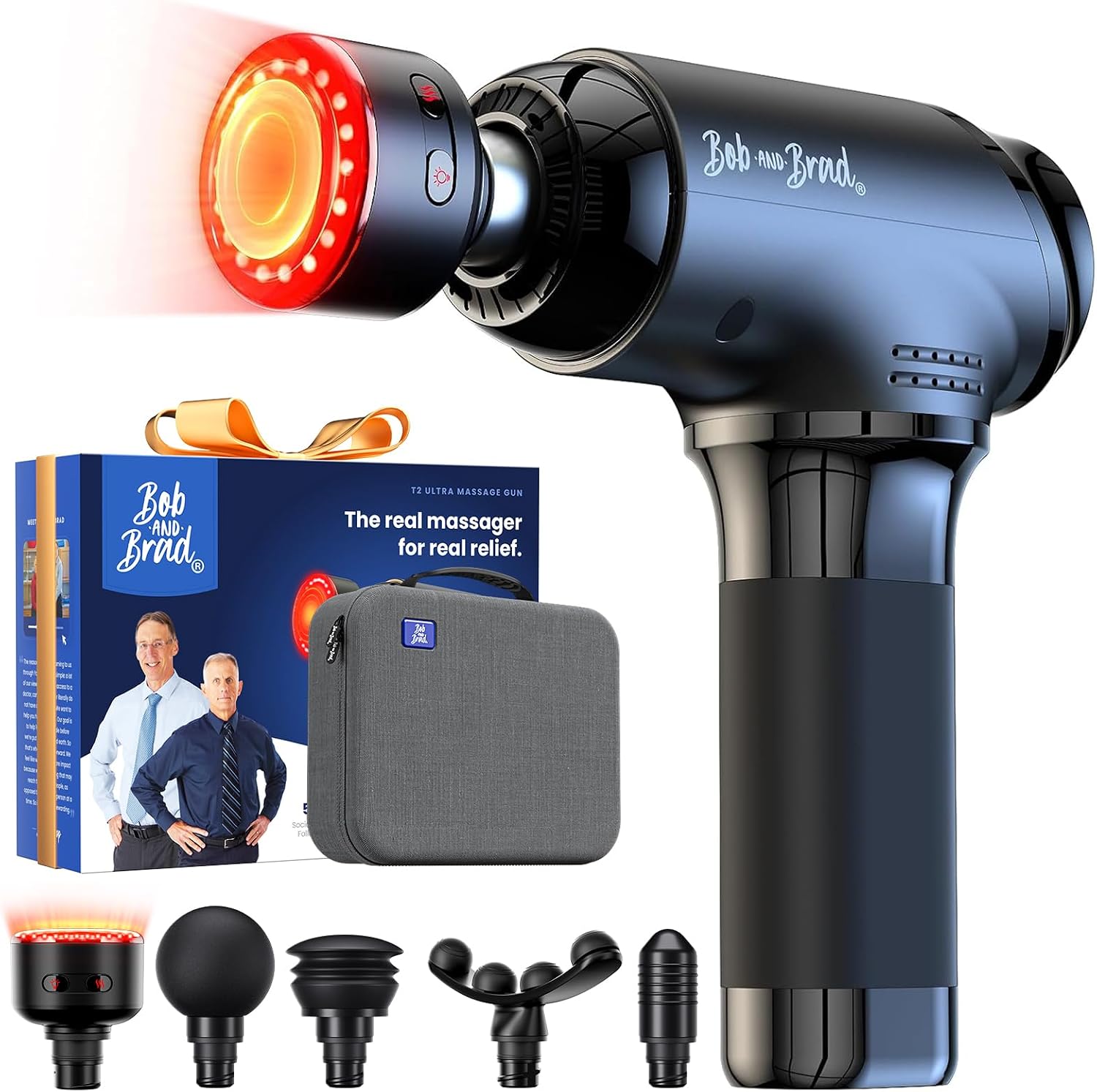 Visit on Amazon → Visit on Amazon →BOB AND BRAD T2 Ultra Deep Tissue Massage Gun, Heat & Red LED, Percussion |
Quads, glutes, calves, lats | 2 minutes per muscle group, slow passes, uncomfortable but not painful | Never on bone, joints, neck, or spine. Visit on Amazon → |
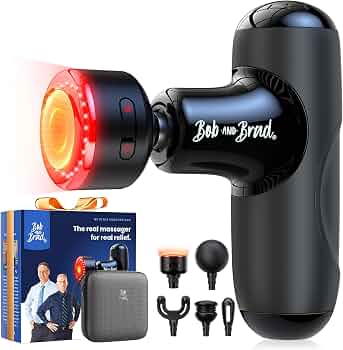 Visit on Amazon → Visit on Amazon →BOB AND BRAD Q2 Ultra Mini Massage Gun with Red Light Infrared Heating Head |
Forearms, calves, feet, travel days | Same 2 minute dosing, expect more passes on large muscles | Same no-go zones as any percussion tool. Visit on Amazon → |
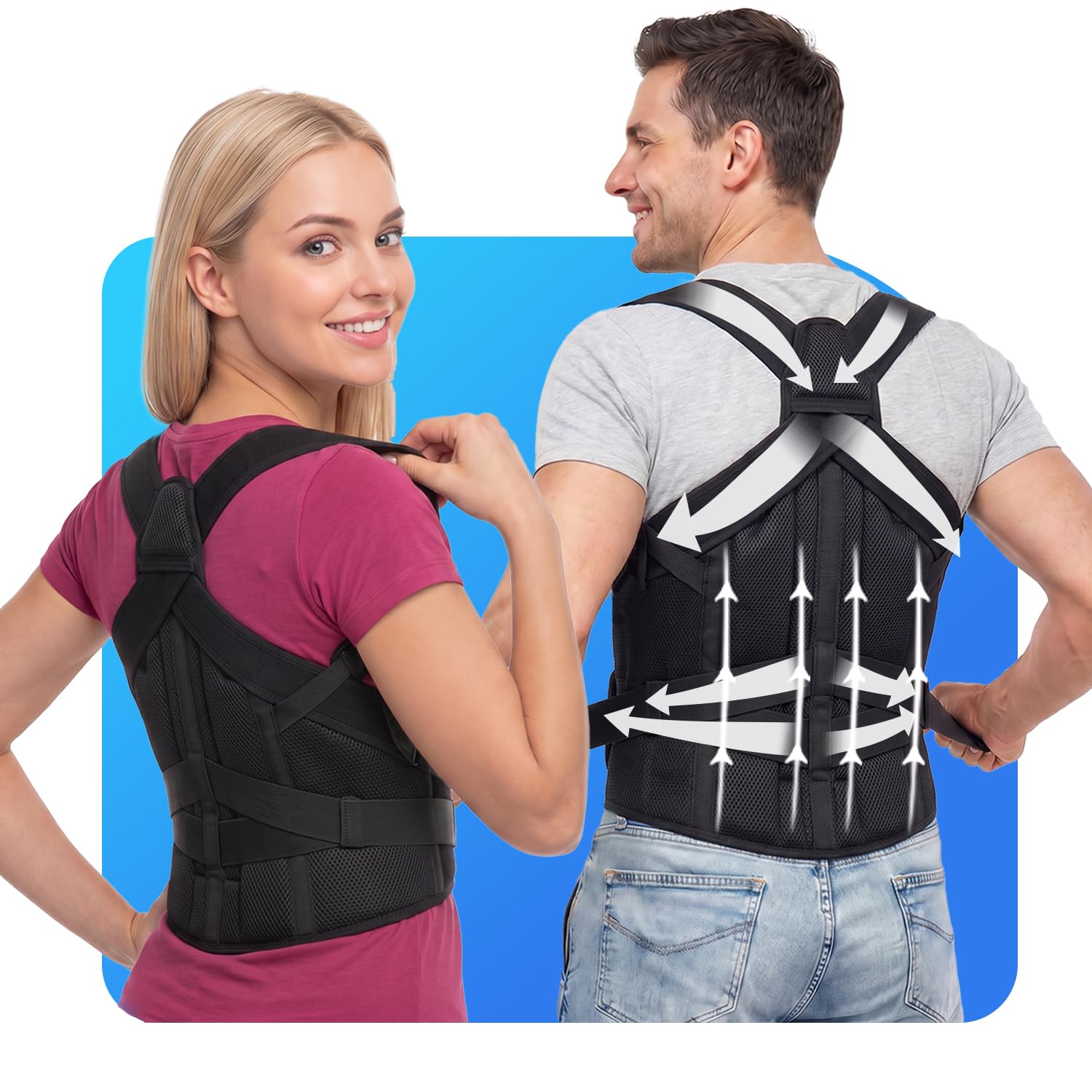 Visit on Amazon → Visit on Amazon →Posture Corrector for Men & Women, Medical-Grade Back Brace |
Desk posture cueing, long drives | 20 to 30 minute bouts, during tasks where you collapse | Pair it with movement or it becomes a crutch. Visit on Amazon → |
 Visit on Amazon → Visit on Amazon →Pedal Resistance Band with Handles, 6-Tubes Natural Rubber Exercise Band |
Ankles, hips, rows, pull-aparts | 2 to 3 sets of 15 to 20 reps, slow tempo | Latex allergy. Visit on Amazon → |
Read the table left to right and you have a plan, not a shopping list. Release the big muscles, load the small ones, cue the posture, and check the cautions before you buy anything.
Should you buy the BOB AND BRAD T2 Ultra?
Yes, if your target is a large muscle group and you want heat built into the head rather than a separate heating pad. It is the tool for quads, glutes, calves, and lats, and the two minute per group protocol is easy to remember and hard to overdo. It is not the tool for your neck, your spine, or a sore spot you cannot name. If you are the person who wants one device for everything, this is the closer of the two guns, but it is also the one that punishes careless use.
Should you buy the BOB AND BRAD Q2 Ultra Mini?
Yes, if you travel, if your problem areas are forearms and calves, or if you know yourself well enough to admit that a full-size gun will stay in the closet. Pocket-sized means it comes with you, and the red light infrared heating head gives you the warmth that makes pressure tolerable. Expect to work longer on big muscles. Expect to use it more often than the bigger one, which is the trade that actually matters.
Should you buy the posture corrector?
Yes, with rules, and the rules are not optional. Twenty to thirty minutes at a time, during the tasks where your posture falls apart, paired with the band work that builds the muscles doing the job. If you wear it all day, you are borrowing posture from a strap instead of building it. Used the right way, it is a teaching tool. Used the wrong way, it is a very comfortable way to get weaker.
Should you buy the pedal resistance band?
Yes, and if you are buying one thing from this page, buy this one first. It costs less than a lunch, it covers ankle, hip, and upper back work, and it makes the brace and the guns more effective by giving the tissue something to do besides get pressed on. Skip it only if you have a latex allergy, in which case find a latex-free band and follow the same plan.
The order I would buy them in: the band first, the gun that matches your target second, and the brace last, once you have a movement habit for it to support. That is the sequence I would write on a prescription pad, and it has not changed in twelve years.