Related: Foam Rolling for Posture: Where to Roll and Where to Leave Alone
I have fit posture braces on marathoners, nurses, and a 68-year-old man who spent forty years in a truck cab. The pattern never changes. Someone buys a posture corrector for slouching because their upper back aches by 2 p.m., wears it for three days, then buries it in a drawer because it digs into their armpits.
Here is the honest version of what a brace does. It cues your shoulders back while you have it on. It does not strengthen the muscles that hold your shoulder blades down and back, and it does not undo eight hours of hunching. Muscles do that work, and they only do it when you train them. A brace buys awareness during the hours when you cannot think about your posture, and for a lot of people that awareness is the difference between a sore Tuesday and a tolerable one.
I keep four tools in the same conversation with patients. Three are braces, sized and built for different bodies and different tolerance levels, and one is a foot roller, because the feet are often where a posture problem starts. If your plantar fascia is angry, you stand differently, you walk differently, and your upper back pays the bill. Here is how I sort them.
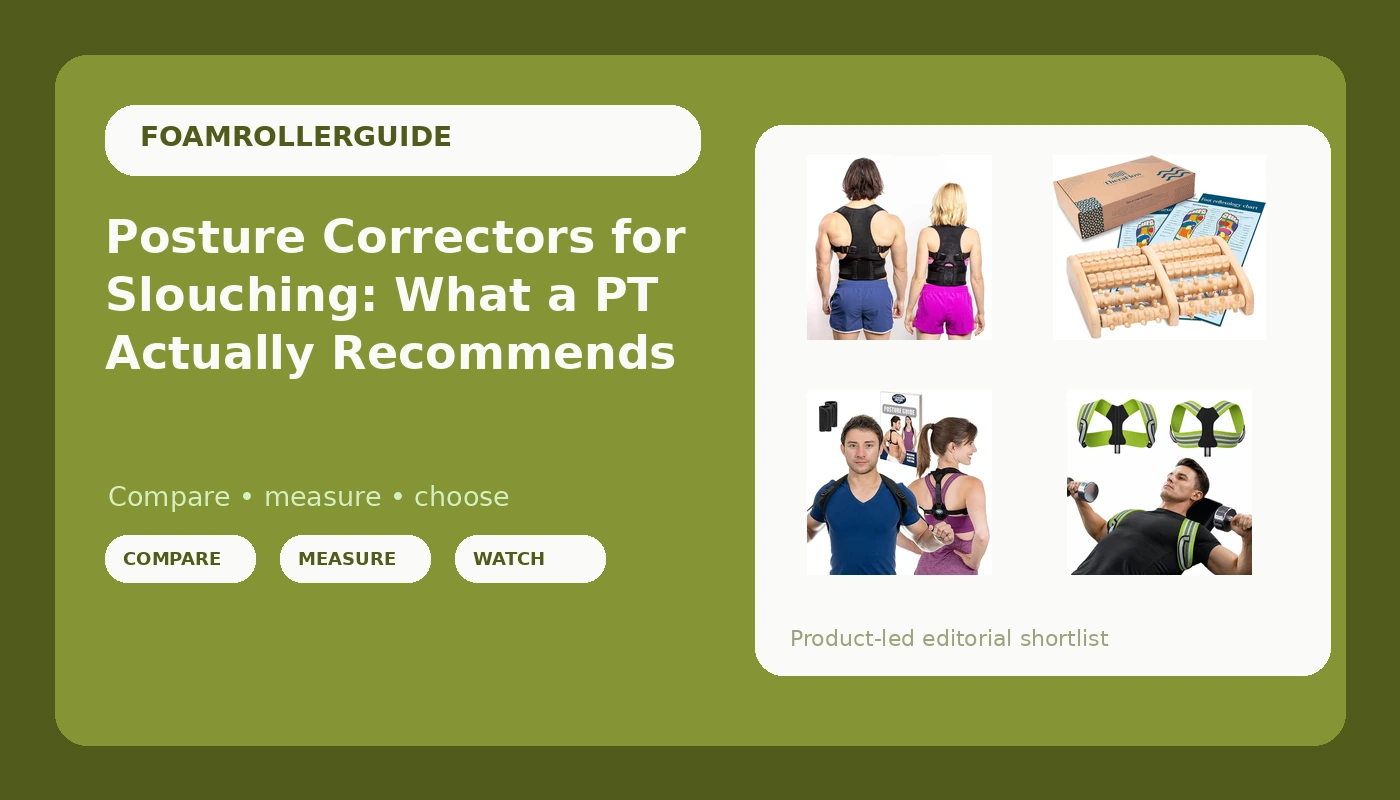
Best Overall: FlexGuard Posture Corrector, X-Large
This is the brace I hand to someone who has never worn one. The FlexGuard is adjustable in more places than the others here, which matters more than any marketing claim on the package. A brace that cannot be tuned to your torso will either slide down or bite, and both of those end with the brace in a drawer.
The shoulder straps pull the shoulders back and slightly down, which is the direction you want. Down and back, not up and pinched. The back support panel sits against the upper spine and gives you something to lean into when you start to round forward at hour four of a desk day.
Sizing runs generous, and the X-Large fits a real X-Large torso rather than a hopeful one. Start with 20 minutes at a time, twice a day, over a t-shirt. If you can slide two fingers under the straps without a fight, the tension is about right. If you cannot take a full breath, you have it too tight, and that is the number one mistake I see.
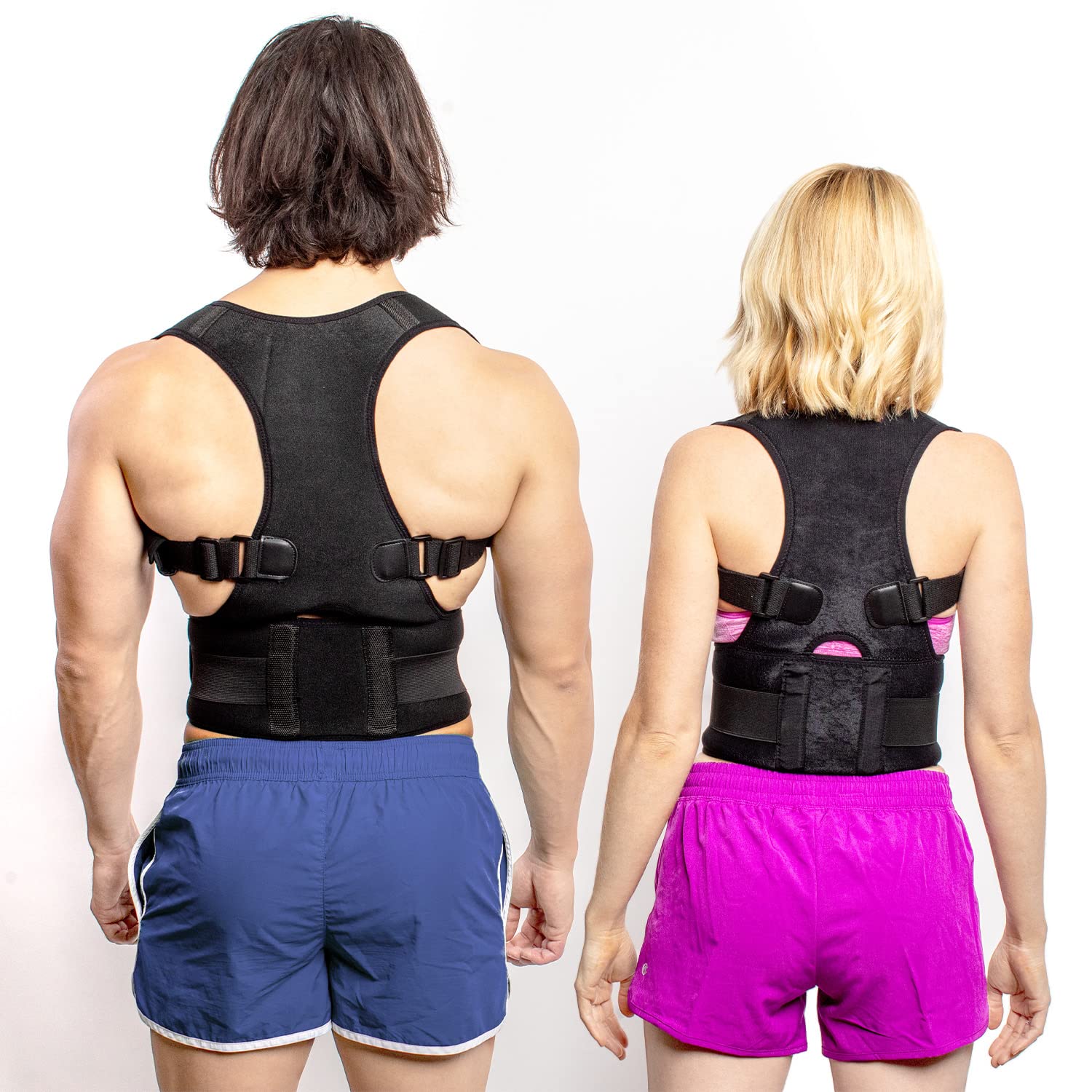
Best for Slouching and a Neck Hump: Adjustable Upper Back and Shoulder Trainer, Medium/Large
This one is built around the slouch itself, meaning the rounded upper back and the shoulders that creep forward and up toward the ears. The straps cross the upper back and pull the shoulder heads back, which is the cue most desk workers are missing by mid-afternoon.
I want to be careful about one word in the product name: neck hump. A brace cannot erase a structural change, and anyone selling you that is selling you something. What a brace can do is stop feeding the position that makes the hump more pronounced. If your head sits forward all day, the tissues at the base of your neck adapt to that. Change the position for part of the day and you stop adding to the problem.
Medium/Large is the fit here, so measure before you order rather than guessing from your shirt size. This is the one I suggest for people who slouch mostly at the shoulders rather than collapsing through the low back.
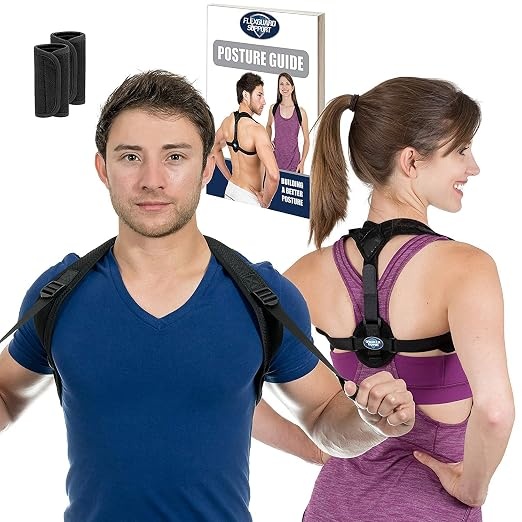
Best for a Firmer, Wider Fit: Pro-Gym Posture Brace for Men
The Pro-Gym brace is the answer to a specific complaint I hear constantly: the straps dig in. It uses 8 cm straps, and the wider band spreads pressure across more surface area instead of concentrating it into a thin line under the armpit. That is not a gimmick. Thin straps on a broad ribcage are how you end up with red grooves and a brace you resent.
It feels more structured than the FlexGuard, closer to a piece of equipment than a piece of clothing. If you are broad through the chest and shoulders, that structure is the point. If you are narrow, the same width can bunch up near the armpit, so fit it before you decide.
The dosing rules do not change. Twenty to thirty minutes, working up slowly, never tight enough to restrict breathing. A brace you can forget you are wearing for half an hour is doing its job. A brace you notice with every step is a brace you will stop using by Friday.
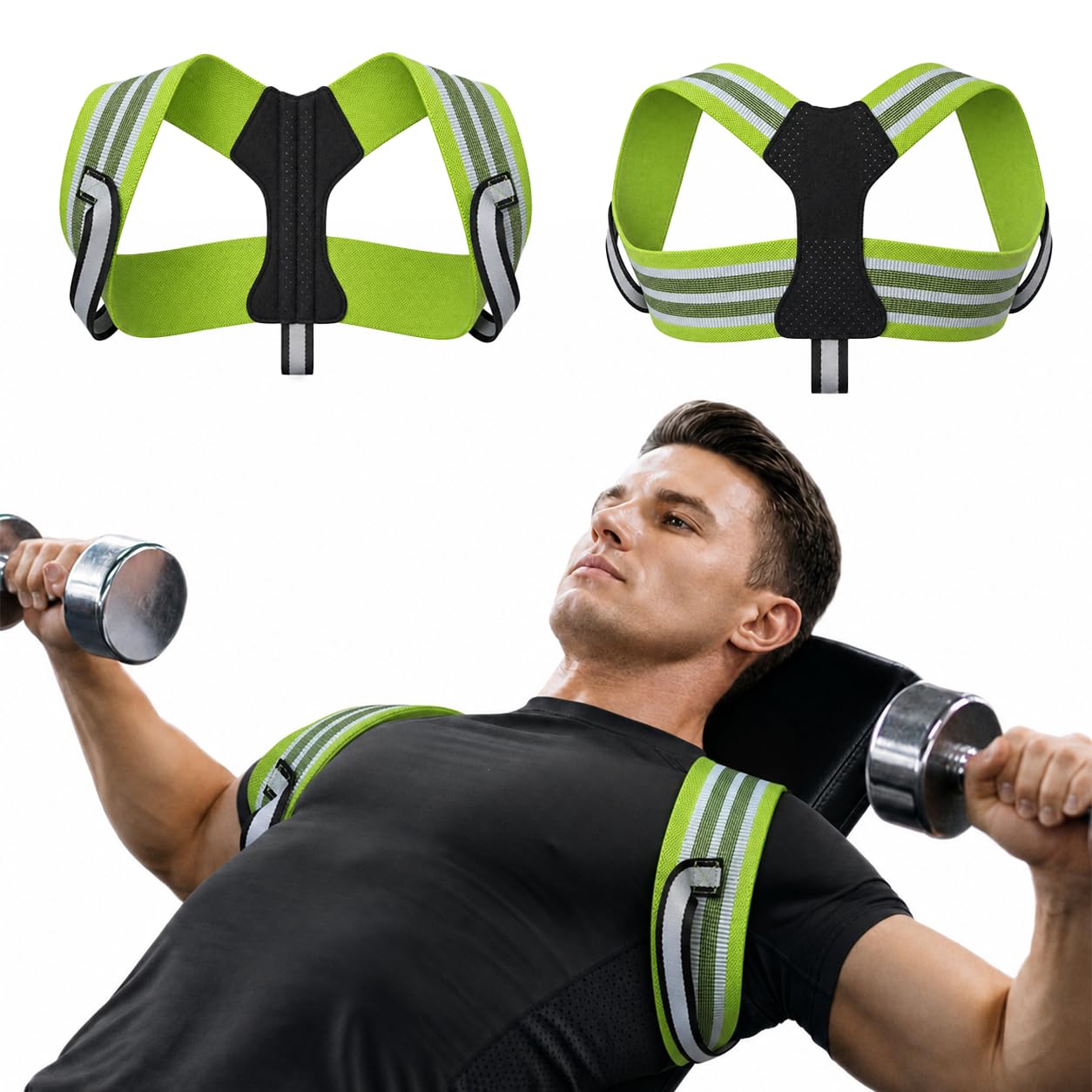
Best for the Feet Under All of It: TheraFlow Foot Massager for Plantar Fasciitis Relief
This is the odd one out in a posture article, and it belongs here anyway. Feet change posture. When the arch hurts, you shift weight to the outside of the foot, your knee drifts, your hip follows, and your upper back compensates. Treat the foot and some of the upper back complaint quiets down on its own.
The TheraFlow is a wooden roller with deep tissue nubs and a reflexology chart in the box. Wood is the right material for this job: it does not squish, so the pressure is honest, and it does not go flat the way a soft plastic roller does. You use it seated, rolling from the heel to the ball of the foot, one or two minutes per foot.
The reflexology chart is a nice extra, though I will be straight with you: the evidence for reflexology as a system is thin. The mechanical part, rolling the plantar fascia and waking up the small muscles of the foot, is the part that earns its keep. Roll before you get out of bed in the morning and after a long standing day.
How I evaluate a posture brace
I do not care what the packaging promises. I care about four things.
First, the armpit. If a strap crosses the front of the shoulder joint and rubs, the brace is a failure no matter how good the idea is. Second, adjustability. Bodies are not symmetrical, and a brace with one adjustment point will fit almost nobody well. Third, whether you can put it on by yourself in under thirty seconds. If it takes a mirror and a wrestling match, it stays in the closet. Fourth, whether it stays put when you move. A brace that rides up when you reach for a coffee cup is not cueing anything.
The test I trust most is boring: does the person come back a week later still wearing it? That single question has told me more about brace design than any spec sheet.
What the fit differences actually mean
The three braces here are not ranked by quality. They are ranked by which body they fit.
The FlexGuard wins on adjustability and forgiveness. It is the best first brace because it is the least likely to hurt you while you learn what a brace feels like. The adjustable upper back and shoulder trainer is the most specific to the slouch and the forward head, which makes it the right pick for the classic desk-worker shape. The Pro-Gym is the pressure-spreading option for broader frames, and the wide straps are the entire reason to choose it.
None of them strengthen anything. The strengthening happens in the ten minutes you spend doing rows, band pull-aparts, and chin tucks after you take the brace off. Think of the brace as the reminder and the exercises as the fix. That framing is why I dose wear time instead of telling people to live in a brace all day. All-day wear trains you to lean on it, and the muscles you wanted to wake up go back to sleep.
Pair the whole routine with two minutes of rolling for the upper back and the feet. That is the part people skip, and it is the part that makes the brace feel less necessary after a month.
The posture and recovery reference table
This is how I sort these four for patients. Wear windows are starting points for a healthy adult with no underlying condition. If a brace causes numbness, tingling, or pain that travels down an arm, take it off and get evaluated.
| Product | Best for | Wear window | Watch out for |
|---|---|---|---|
 Visit on Amazon → FlexGuard Posture Corrector, X-Large |
First brace, adjustable fit, all-day desk jobs | 20 minutes, twice a day, then build | Over-tightening until you cannot breathe |
 Visit on Amazon → Adjustable Upper Back and Shoulder Trainer, Medium/Large |
Rounded upper back, forward head, shoulder slouch | 20 to 30 minutes during your worst posture hours | Expecting it to change structure, not position |
 Visit on Amazon → Pro-Gym Posture Brace for Men |
Broader frames, thin straps that dig in | 20 to 30 minutes, working up slowly | Bunching near the armpit on narrow shoulders |
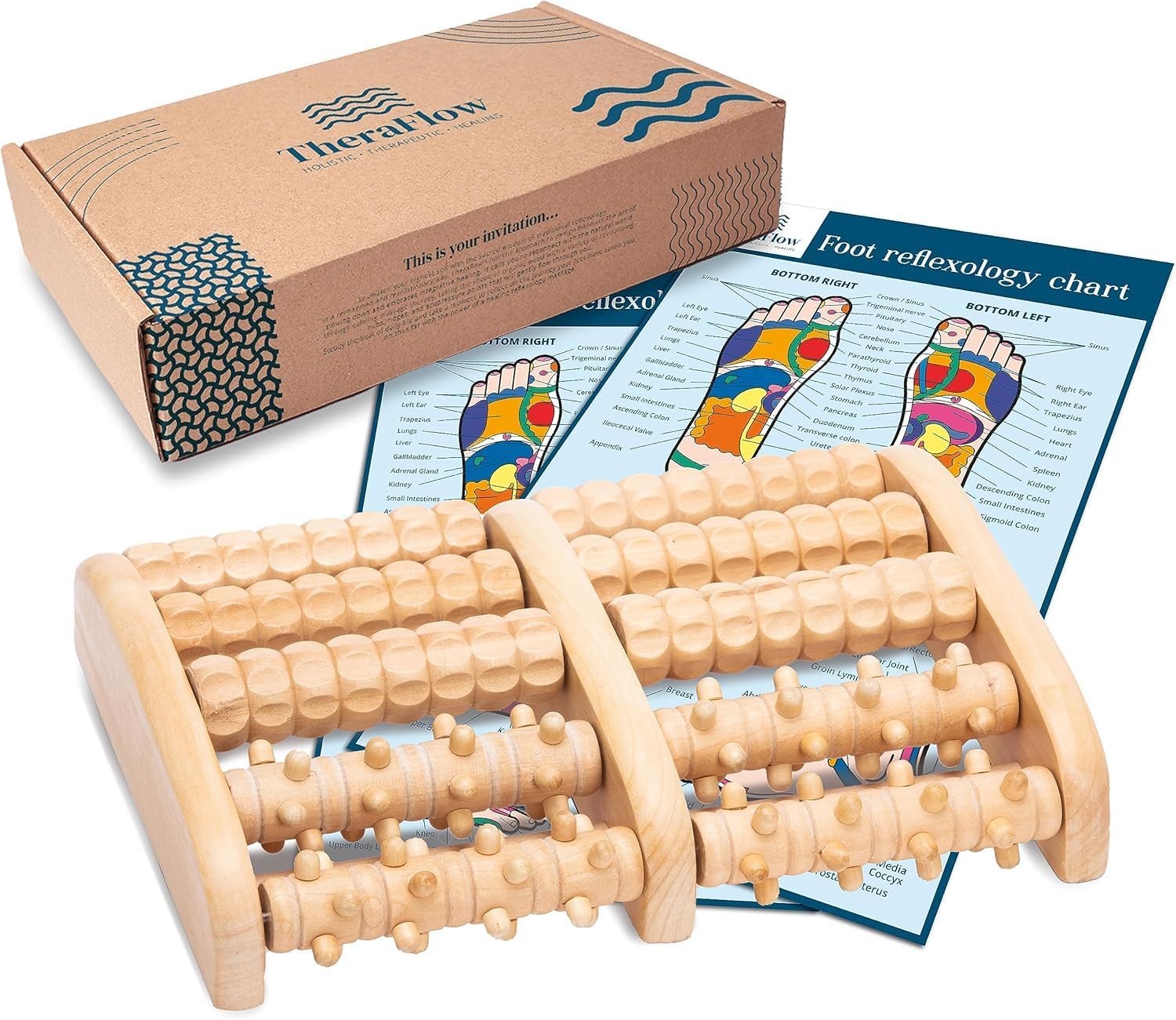 Visit on Amazon → TheraFlow Foot Massager |
Arch tightness that changes how you stand and walk | 1 to 2 minutes per foot, morning and evening | Rolling hard on an acutely angry arch |
The pattern in that table is simple. The braces cue the top of the chain, the foot roller addresses the bottom, and the middle does whatever it wants until you train it. Two minutes per muscle group, pressure that is uncomfortable but not painful. That is the whole protocol.
Should you buy the FlexGuard Posture Corrector?
Yes, if you are new to braces and you want the most forgiving starting point. It is the one I would hand a patient on day one because the adjustability lets you find a fit instead of fighting one. It is not the firmest of the group and it will not feel like armor, which for a beginner is a feature, not a flaw.
Should you buy the adjustable upper back and shoulder trainer?
Yes, if your slouch lives in your shoulders and your head drifts forward when you read a screen. It is the most targeted to that specific shape. Just drop the expectation that it will flatten a neck hump. It will not, and no brace will. It will stop you from spending nine hours a day reinforcing the position that built it.
Should you buy the Pro-Gym Posture Brace?
Yes, if thin straps have already failed you. The wider straps spread pressure, and if you have a broader chest and shoulders, that difference is the whole reason to pick it over the others. If you are narrow through the shoulders, try the FlexGuard first, because width without a matching frame is just extra material near your armpit.
Who should skip a posture brace entirely
If your pain travels down an arm, wakes you at night, or comes with numbness or tingling, skip the brace and get evaluated. That is not a posture problem, and no strap on Amazon fixes it. If you want a brace because you plan to wear it twelve hours a day and change nothing else, skip it too. Buy the brace, wear it for the hours when you forget your posture, then take it off and do the ten minutes of work that actually changes your baseline. That combination is the one that holds up.